Dalzero Arianna, Ross Cody T, Lukas Dieter
Department of Human Behavior, Ecology and Culture, Max Planck Institute for Evolutionary Anthropology, Deutscher Platz 6, 04103 Leipzig, Germany.
Evol Hum Sci. 2022 Nov 29;5:e3. doi: 10.1017/ehs.2022.55. eCollection 2023.
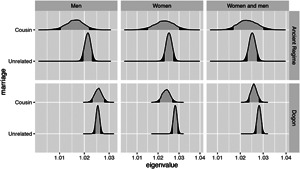
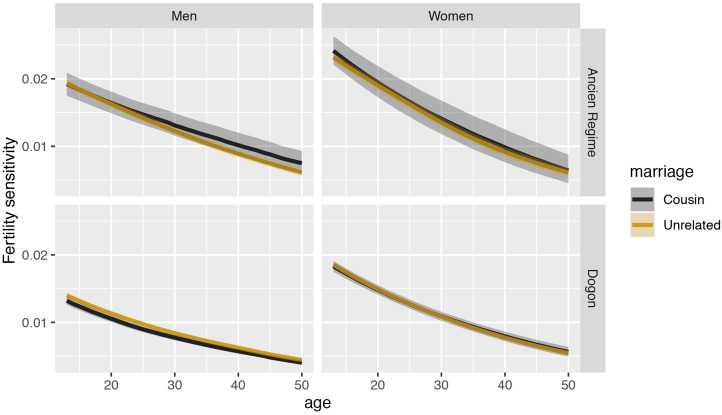
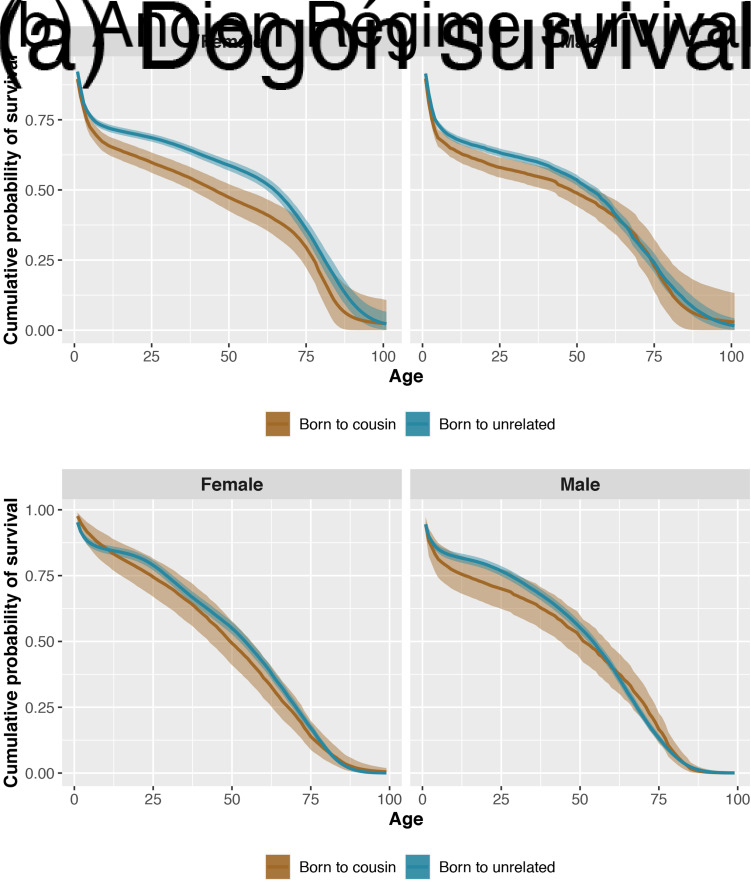
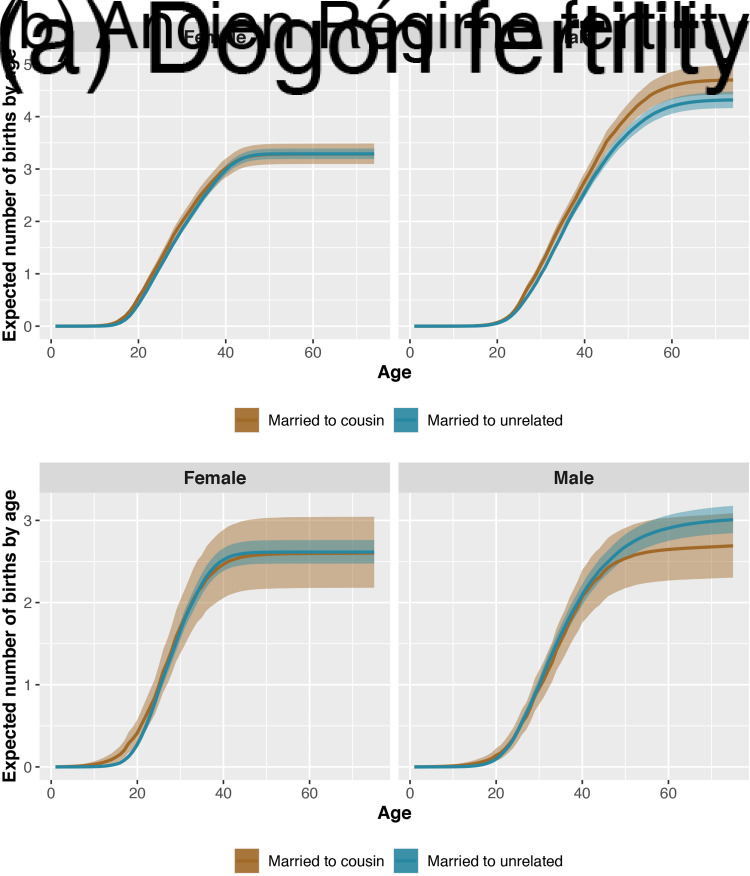
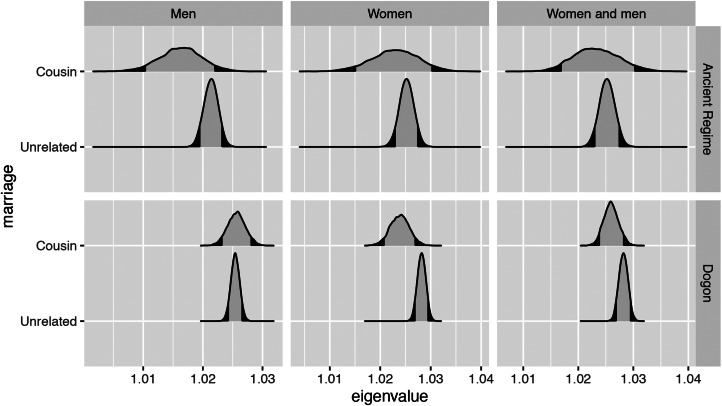
Cousin marriage, a spousal union between close kin, occurs at high frequencies in many parts of the world. The rates of cousin marriage in humans are concordant with empirical studies that challenge the traditionally held view that reproduction with kin is generally avoided in animals. Similarly, some theoretical models in animal behaviour show that inbreeding avoidance is more constrained than previously thought. Such studies highlight the importance of quantifying the costs and benefits of reproduction among close kin over the whole life-course. Here, we use genealogical data from two human populations with high frequencies of cousin marriage (the Dogon from Mali, and the Ancien Régime nobility from Europe) to estimate these potential costs and benefits. We compare age-specific fertility and survival curves, as well as the projected growth rates, of subpopulations of each marriage type. Fitness costs of cousin marriage are present in terms of reduced child survival (in both populations), while benefits exist as increased fertility for men (in the Dogon) and for women (in the Ancien Régime nobility). We also find some differences in the projected growth rates of lineages as a function of marriage type. Finally, we discuss the trade-offs that might shape marriage decisions in different ecological conditions.
近亲结婚,即近亲之间的配偶结合,在世界许多地区都有较高的发生率。人类近亲结婚的比例与实证研究结果一致,这些研究对传统观点提出了挑战,传统观点认为动物通常会避免近亲繁殖。同样,一些动物行为的理论模型表明,避免近亲繁殖的限制比以前认为的要多。此类研究凸显了在整个生命历程中量化近亲繁殖的成本和收益的重要性。在这里,我们利用来自两个人类群体(来自马里的多贡人和欧洲旧制度时期的贵族)的族谱数据来估计这些潜在的成本和收益。我们比较了每种婚姻类型亚群体的特定年龄生育率和生存曲线,以及预计的增长率。近亲结婚的适应度成本表现为儿童存活率降低(在两个群体中都是如此),而收益则表现为男性(在多贡人中)和女性(在旧制度时期的贵族中)生育率增加。我们还发现,不同婚姻类型的谱系预计增长率存在一些差异。最后,我们讨论了在不同生态条件下可能影响婚姻决策的权衡因素。