Marigi Erick M, Elahi Muhammad Ali, Cancio-Bello Alexandra M, Duquin Thomas R, Sperling John W
Department of Orthopedic Surgery, Mayo Clinic, Rochester, MN, USA.
Mayo Clinic Alix School of Medicine, Mayo Clinic Arizona, Scottsdale, AZ, USA.
JSES Rev Rep Tech. 2022 Aug 27;2(4):442-450. doi: 10.1016/j.xrrt.2022.08.001. eCollection 2022 Nov.
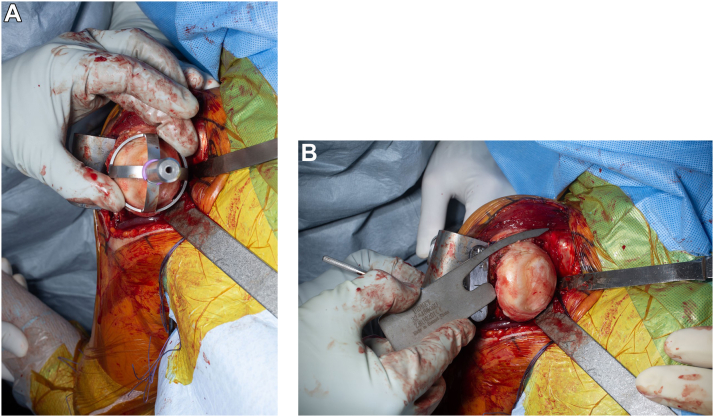
Stemless anatomic total shoulder arthroplasty (aTSA) is a promising option for the treatment of degenerative disease in patients. This novel technique avoids the stem-related complications associated with the traditional stemmed aTSA. Stemless aTSA offers additional benefits such as decreased operative time, preservation of bone stock, improved radiographic outcomes, and easier revision. Moreover, loading of the metaphyseal region rather than the diaphysial region with traditional stemmed implants can decrease stress shielding. When compared to stemmed-implants, stemless aTSA has demonstrated similar outcomes and complication rates. The purpose of this article is to analyze published outcomes and complications following the utilization of stemless aTSA. Additionally, key aspects of the surgical technique that may promote optimal results in stemless aTSA implantation are presented.
无柄解剖型全肩关节置换术(aTSA)是治疗患者退行性疾病的一种有前景的选择。这种新技术避免了与传统带柄aTSA相关的柄部并发症。无柄aTSA还具有其他益处,如缩短手术时间、保留骨量、改善影像学结果以及更容易进行翻修。此外,与传统带柄植入物相比,无柄aTSA在干骺端区域而非骨干区域加载可减少应力遮挡。与带柄植入物相比,无柄aTSA已显示出相似的结果和并发症发生率。本文的目的是分析使用无柄aTSA后的已发表结果和并发症。此外,还介绍了在无柄aTSA植入中可能促进最佳结果的手术技术的关键方面。