
心血管疾病的创新治疗策略。
Innovative therapeutic strategies for cardiovascular disease.
作者信息
Maiese Kenneth
机构信息
Cellular and Molecular Signaling, New York, New York 10022.
出版信息
EXCLI J. 2023 Jul 26;22:690-715. doi: 10.17179/excli2023-6306. eCollection 2023.
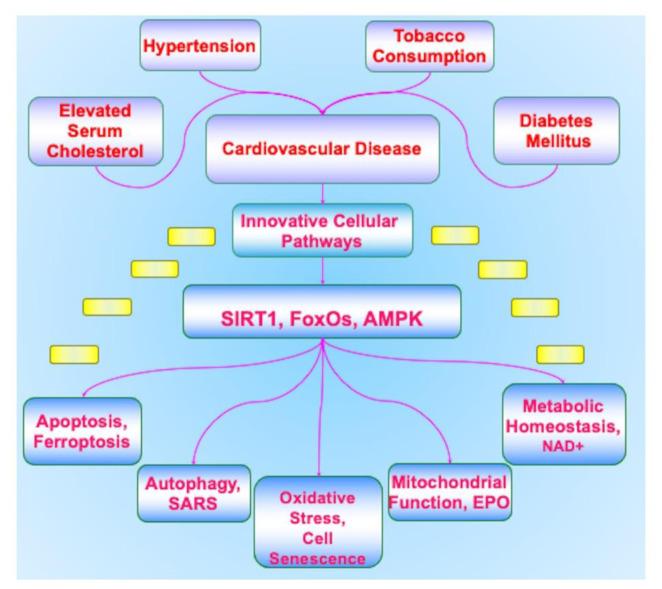
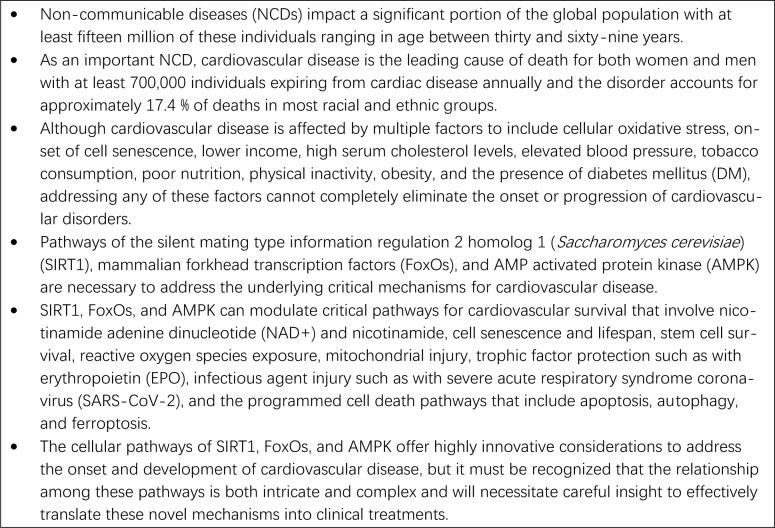
As a significant non-communicable disease, cardiovascular disease is the leading cause of death for both men and women, comprises almost twenty percent of deaths in most racial and ethnic groups, can affect greater than twenty-five million individuals worldwide over the age of twenty, and impacts global economies with far-reaching financial challenges. Multiple factors can affect the onset of cardiovascular disease that include high serum cholesterol levels, elevated blood pressure, tobacco consumption and secondhand smoke exposure, poor nutrition, physical inactivity, obesity, and concurrent diabetes mellitus. Yet, addressing any of these factors cannot completely eliminate the onset or progression of cardiovascular disorders. Novel strategies are necessary to target underlying cardiovascular disease mechanisms. The silent mating type information regulation 2 homolog 1 ) (SIRT1), a histone deacetylase, can limit cardiovascular injury, assist with stem cell development, oversee metabolic homeostasis through nicotinamide adenine dinucleotide (NAD) pathways, foster trophic factor protection, and control cell senescence through the modulation of telomere function. Intimately tied to SIRT1 pathways are mammalian forkhead transcription factors (FoxOs) which can modulate cardiac disease to reduce oxidative stress, repair microcirculation disturbances, and reduce atherogenesis through pathways of autophagy, apoptosis, and ferroptosis. AMP activated protein kinase (AMPK) also is critical among these pathways for the oversight of cardiac cellular metabolism, insulin sensitivity, mitochondrial function, inflammation, and the susceptibility to viral infections such as severe acute respiratory syndrome coronavirus that can impact cardiovascular disease. Yet, the relationship among these pathways is both intricate and complex and requires detailed insight to successfully translate these pathways into clinical care for cardiovascular disorders.
作为一种重要的非传染性疾病,心血管疾病是男性和女性的主要死因,在大多数种族和族裔群体的死亡中占近20%,全球20岁以上的人群中超过2500万人受其影响,并给全球经济带来了深远的财政挑战。多种因素可影响心血管疾病的发病,包括高血清胆固醇水平、血压升高、烟草消费和二手烟暴露、营养不良、缺乏身体活动、肥胖以及并发糖尿病。然而,解决这些因素中的任何一个都不能完全消除心血管疾病的发病或进展。需要新的策略来针对潜在的心血管疾病机制。沉默交配型信息调节2同源物1(SIRT1)是一种组蛋白脱乙酰酶,可限制心血管损伤,协助干细胞发育,通过烟酰胺腺嘌呤二核苷酸(NAD)途径维持代谢稳态,促进营养因子保护,并通过调节端粒功能来控制细胞衰老。与SIRT1途径密切相关的是哺乳动物叉头转录因子(FoxOs),其可调节心脏病,以减少氧化应激,修复微循环紊乱,并通过自噬、凋亡和铁死亡途径减少动脉粥样硬化的发生。AMP激活的蛋白激酶(AMPK)在这些途径中对于监督心脏细胞代谢、胰岛素敏感性、线粒体功能、炎症以及对可影响心血管疾病的严重急性呼吸综合征冠状病毒等病毒感染的易感性也至关重要。然而,这些途径之间的关系既复杂又难懂,需要深入了解才能成功地将这些途径转化为心血管疾病的临床治疗。
 Zotero 插件