Sukmawan Romi, Wildan Muhammad Waziz
Department of Mechanical and Industrial Engineering, Faculty of Engineering, Universitas Gadjah Mada, Jalan Grafika No. 2, Yogyakarta 55281, Indonesia.
Department of Mechanical Technology, Politeknik LPP, Jalan LPP 1A, Balapan, Yogyakarta 11840, Indonesia.
ACS Omega. 2023 Jul 20;8(30):27117-27126. doi: 10.1021/acsomega.3c02178. eCollection 2023 Aug 1.
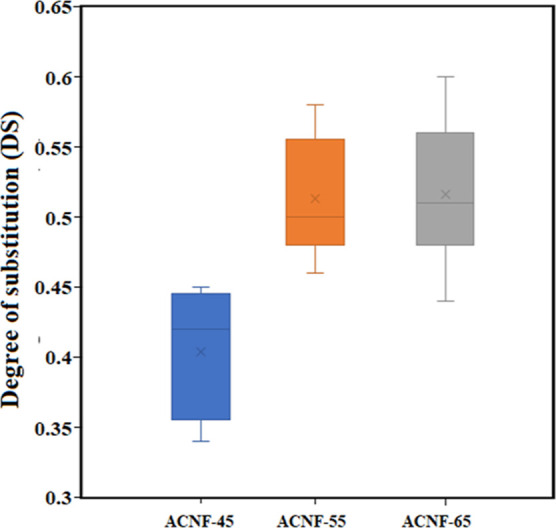
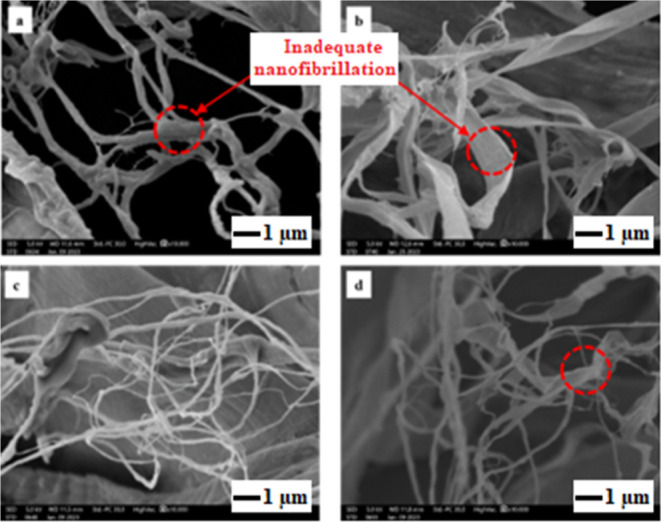
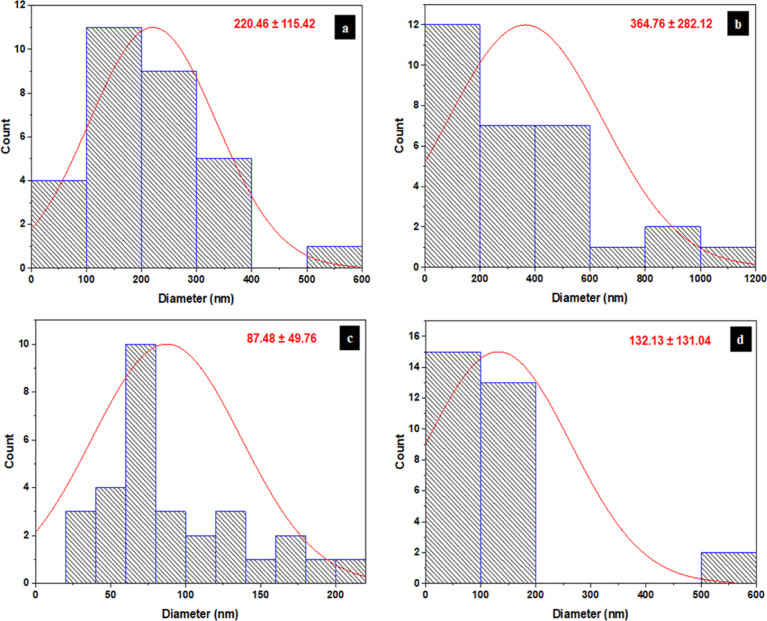
Acetylated cellulose nanofibers (ACNFs) have shown a great potential for strengthening non-polar polymer matrices and better dispersion which can improve composite properties. However, insufficient acetylation may cause inadequate nanofibrillation ACNF during the fibrillation process. The objective of this work was to evaluate the effect of different amounts of acetic anhydride (0, 45, 55, and 65 mL) on the degree of substitution (DS), morphology, crystalline structure, and thermal properties of ACNF obtained from sisal fiber produced using a high-speed blender. The attenuated total reflectance-Fourier transform infrared spectroscopy revealed the success of the acetylation process by the presence of the carbonyl signal around 1724 cm. Furthermore, the DS of ACNF was increased with the acetic anhydride amounts. X-ray diffraction analysis revealed that the crystalline structure of ACNF and non-ACNFs were cellulose I, and the crystallinity index of CNF was increased after acetylation treatment. Thermogravimetric analysis showed that the thermal stability of CNF was improved considerably after the acetylation process. The water contact angle of ACNF was higher than that of CNF, indicating that the structural property of CNF altered from hydrophilic to more hydrophobic after acetylation. In addition, the thermal resistance of CNF was improved significantly after acetylation treatment. The optimum amount of acetic anhydride was achieved in 55 mL of acetic anhydride (ACNF-55) which produced ACNF with a DS value of 0.5, a crystallinity index of 77%, a diameter of 87.48 nm, a maximum degradation temperature of 351 °C, and a contact angle of 37.7°. Overall, it was concluded that the obtained ACNF had great potential as reinforcement materials for nanocomposites based on non-polar polymeric matrices.
乙酰化纤维素纳米纤维(ACNFs)在增强非极性聚合物基体以及实现更好的分散性方面展现出巨大潜力,而这能够改善复合材料的性能。然而,乙酰化不足可能会导致在原纤化过程中ACNF的原纤化不充分。本工作的目的是评估不同量的乙酸酐(0、45、55和65毫升)对使用高速搅拌机制备的剑麻纤维ACNF的取代度(DS)、形态、晶体结构和热性能的影响。衰减全反射傅里叶变换红外光谱通过1724厘米附近羰基信号的存在揭示了乙酰化过程的成功。此外,ACNF的DS随着乙酸酐用量的增加而提高。X射线衍射分析表明,ACNF和非ACNF的晶体结构均为纤维素I,乙酰化处理后CNF的结晶度指数增加。热重分析表明,乙酰化过程后CNF的热稳定性有显著提高。ACNF的水接触角高于CNF,表明乙酰化后CNF的结构性质从亲水性转变为更具疏水性。此外,乙酰化处理后CNF的耐热性显著提高。在55毫升乙酸酐(ACNF - 55)中实现了乙酸酐的最佳用量,其制备的ACNF的DS值为0.5,结晶度指数为77%,直径为87.48纳米,最大降解温度为351℃,接触角为37.7°。总体而言,得出的结论是,所获得的ACNF作为基于非极性聚合物基体的纳米复合材料的增强材料具有巨大潜力。