Pamplona Gustavo Santo Pedro, Heldner Jennifer, Langner Robert, Koush Yury, Michels Lars, Ionta Silvio, Salmon Carlos Ernesto Garrido, Scharnowski Frank
Sensory-Motor Laboratory (SeMoLa), Jules-Gonin Eye Hospital/Fondation Asile des Aveugles, Department of Ophthalmology/University of Lausanne, Lausanne, Switzerland.
InBrain Lab, Department of Physics, University of Sao Paulo, Ribeirao Preto, Brazil.
Brain Behav. 2023 Oct;13(10):e3217. doi: 10.1002/brb3.3217. Epub 2023 Aug 18.
Neurofeedback based on functional magnetic resonance imaging allows for learning voluntary control over one's own brain activity, aiming to enhance cognition and clinical symptoms. We previously reported improved sustained attention temporarily by training healthy participants to up-regulate the differential activity of the sustained attention network minus the default mode network (DMN). However, the long-term brain and behavioral effects of this training have not yet been studied. In general, despite their relevance, long-term learning effects of neurofeedback training remain under-explored.
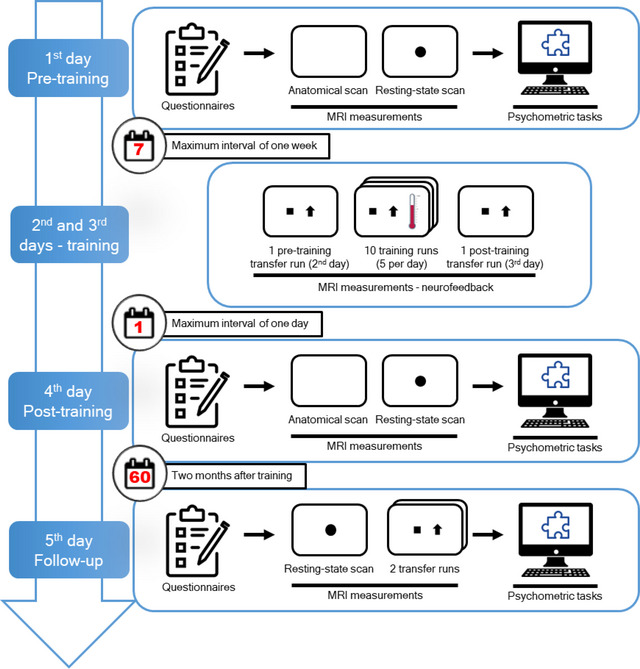
Here, we complement our previously reported results by evaluating the neurofeedback training effects on functional networks involved in sustained attention and by assessing behavioral and brain measures before, after, and 2 months after training. The behavioral measures include task as well as questionnaire scores, and the brain measures include activity and connectivity during self-regulation runs without feedback (i.e., transfer runs) and during resting-state runs from 15 healthy individuals.
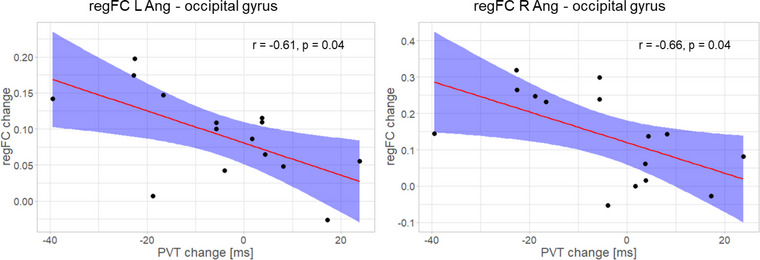
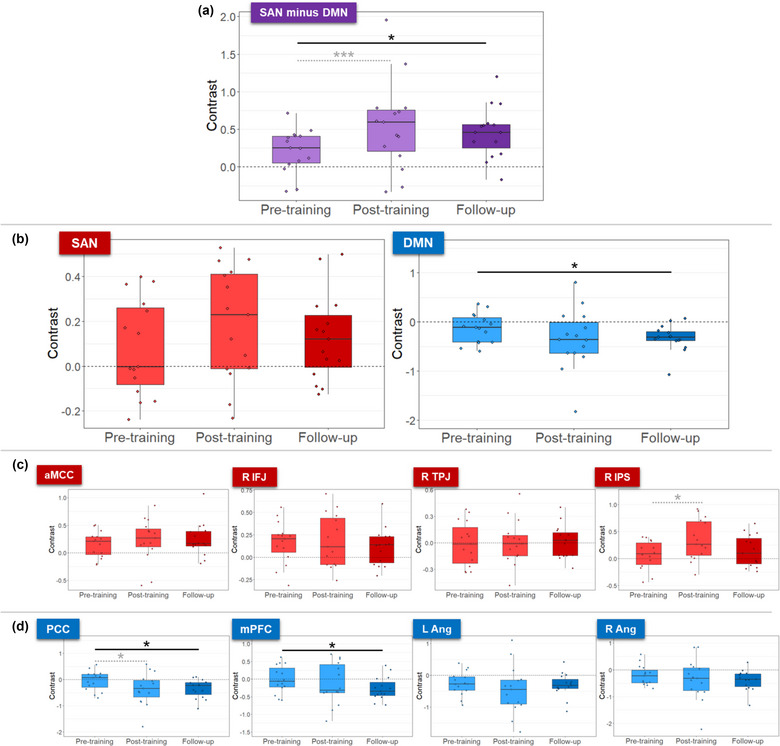
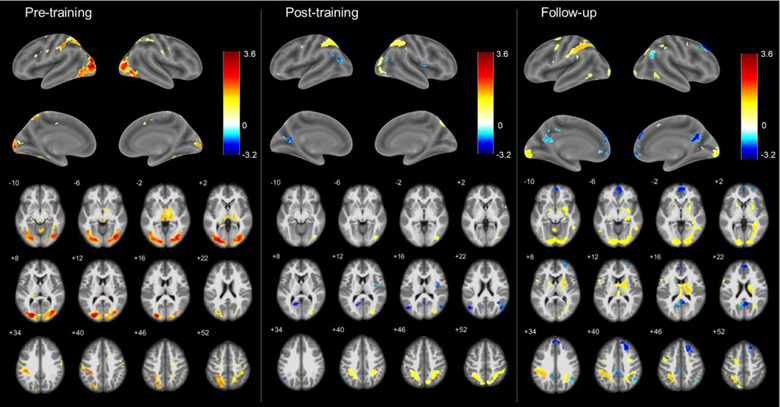
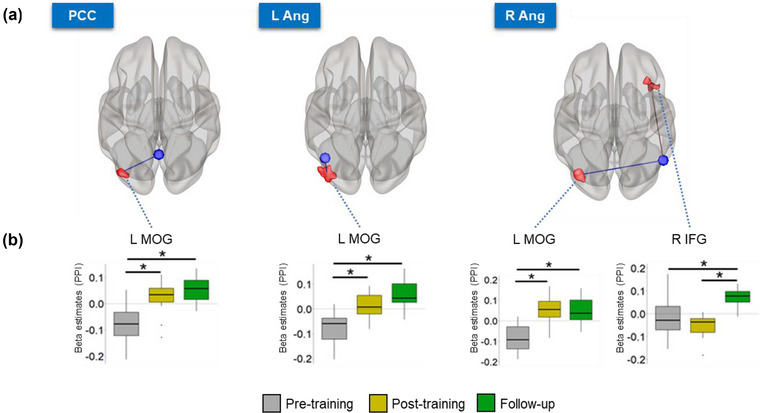
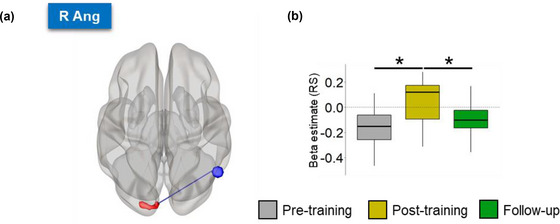
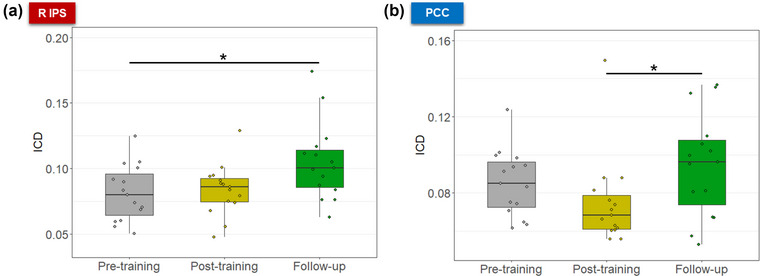
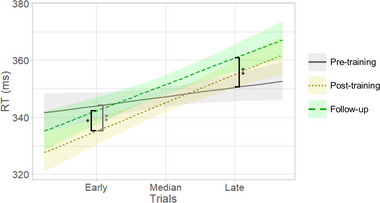
Neurally, we found that participants maintained their ability to control the differential activity during follow-up sessions. Further, exploratory analyses showed that the training increased the functional connectivity between the DMN and the occipital gyrus, which was maintained during follow-up transfer runs but not during follow-up resting-state runs. Behaviorally, we found that enhanced sustained attention right after training returned to baseline level during follow-up.
The discrepancy between lasting regulation-related brain changes but transient behavioral and resting-state effects raises the question of how neural changes induced by neurofeedback training translate to potential behavioral improvements. Since neurofeedback directly targets brain measures to indirectly improve behavior in the long term, a better understanding of the brain-behavior associations during and after neurofeedback training is needed to develop its full potential as a promising scientific and clinical tool.
基于功能磁共振成像的神经反馈可让人学习对自身大脑活动进行自主控制,旨在增强认知能力并改善临床症状。我们之前报告称,通过训练健康参与者上调持续注意力网络减去默认模式网络(DMN)的差异活动,可暂时改善持续注意力。然而,这种训练对大脑和行为的长期影响尚未得到研究。总体而言,尽管神经反馈训练的长期学习效果具有相关性,但仍未得到充分探索。
在此,我们通过评估神经反馈训练对参与持续注意力的功能网络的影响,并在训练前、训练后以及训练后2个月评估行为和大脑指标,对我们之前报告的结果进行补充。行为指标包括任务得分和问卷得分,大脑指标包括15名健康个体在无反馈的自我调节运行(即转移运行)期间以及静息状态运行期间的活动和连通性。
在神经层面,我们发现参与者在后续 sessions 中保持了控制差异活动的能力。此外,探索性分析表明,训练增加了DMN与枕叶之间的功能连通性,这种连通性在后续转移运行期间得以维持,但在后续静息状态运行期间未维持。在行为层面,我们发现训练后立即增强的持续注意力在随访期间恢复到了基线水平。
与调节相关的大脑变化持续存在,但行为和静息状态影响是短暂的,这种差异引发了一个问题,即神经反馈训练引起的神经变化如何转化为潜在的行为改善。由于神经反馈直接针对大脑指标以在长期内间接改善行为,因此需要更好地理解神经反馈训练期间及之后的大脑 - 行为关联,以充分发挥其作为一种有前景的科学和临床工具的潜力。