Department of Ecology and Evolutionary Biology, University of Tennessee, Knoxville, Tennessee, United States of America.
Institute for Interdisciplinary Data Sciences, University of Idaho, Moscow, Idaho, United States of America.
PLoS Negl Trop Dis. 2023 Aug 18;17(8):e0011018. doi: 10.1371/journal.pntd.0011018. eCollection 2023 Aug.
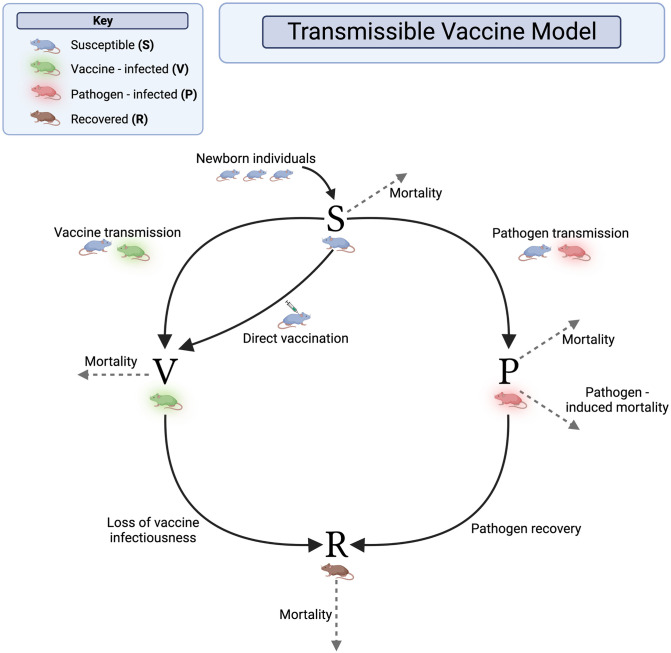
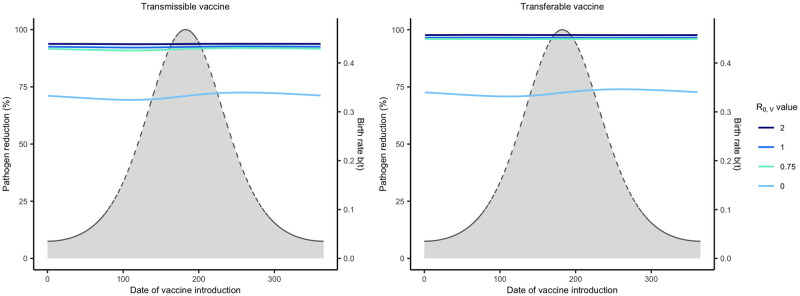
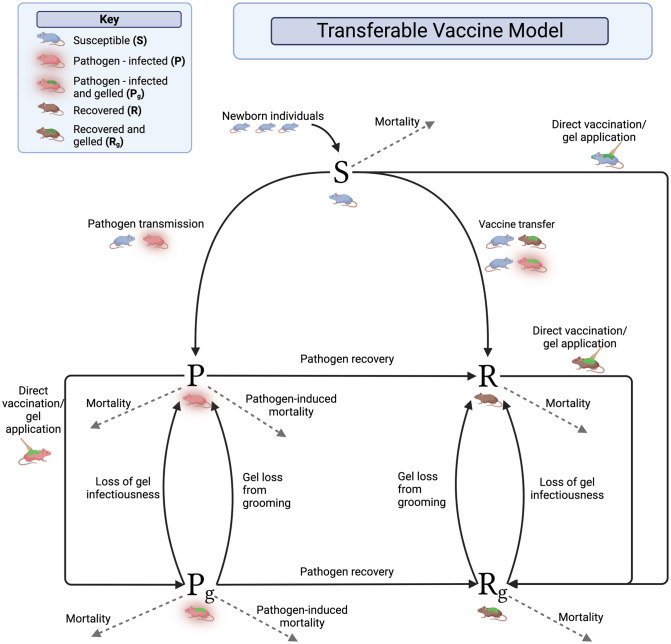
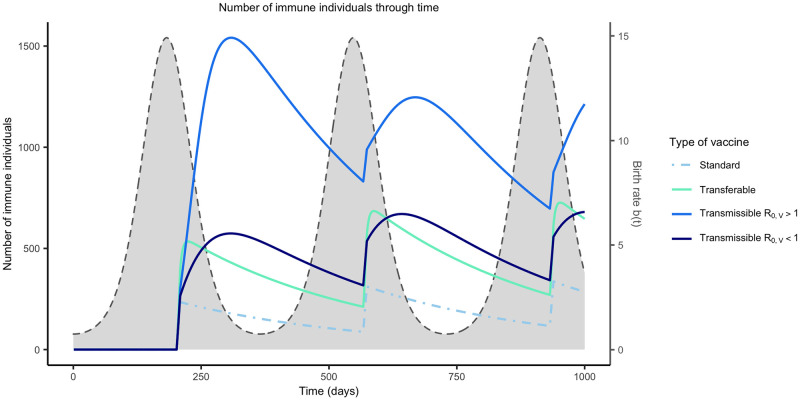
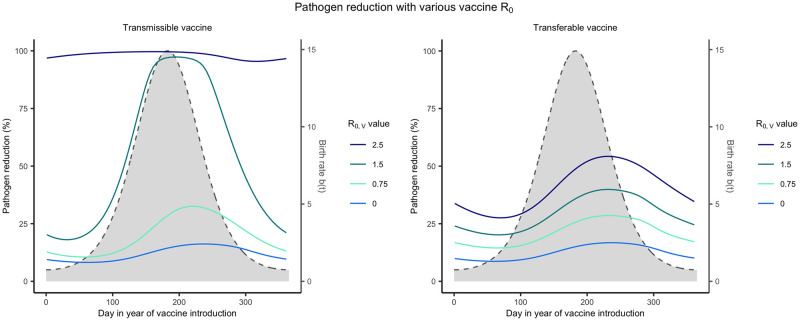
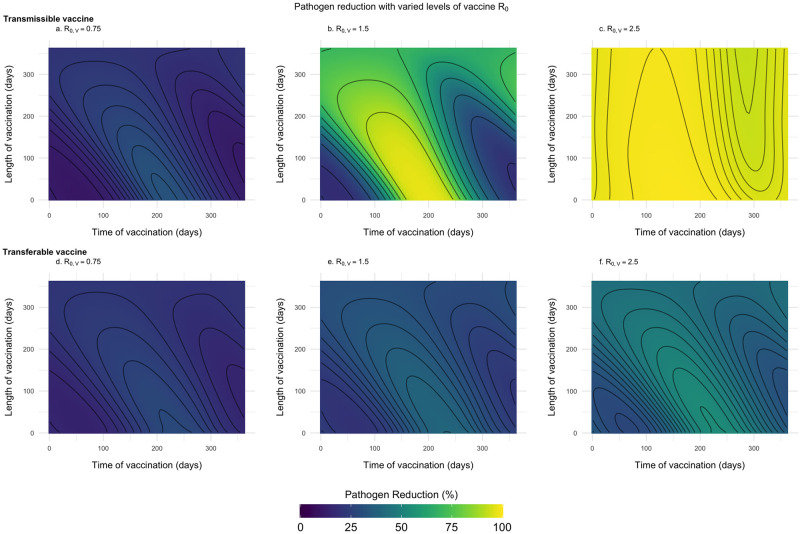
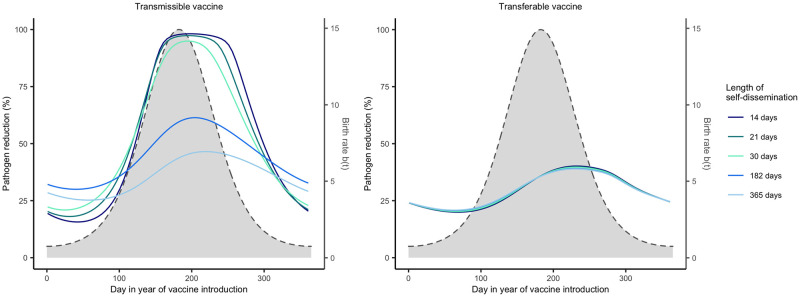
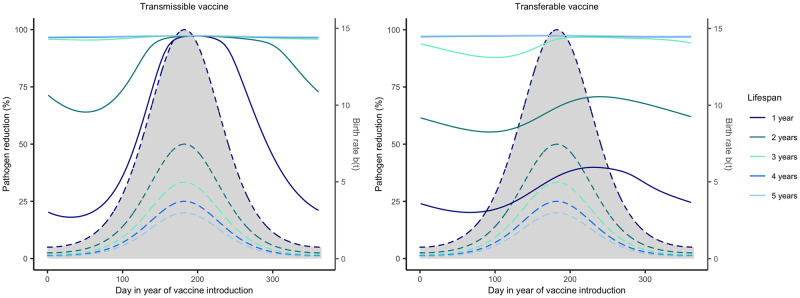
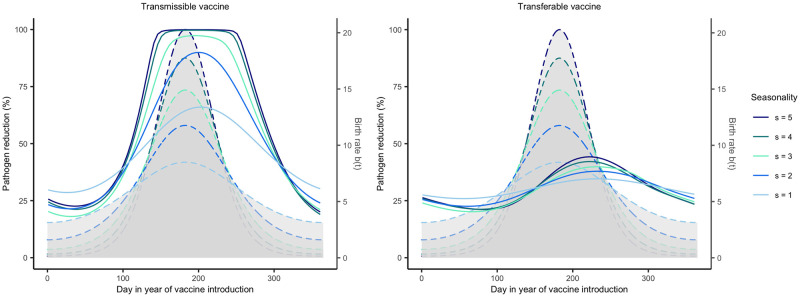
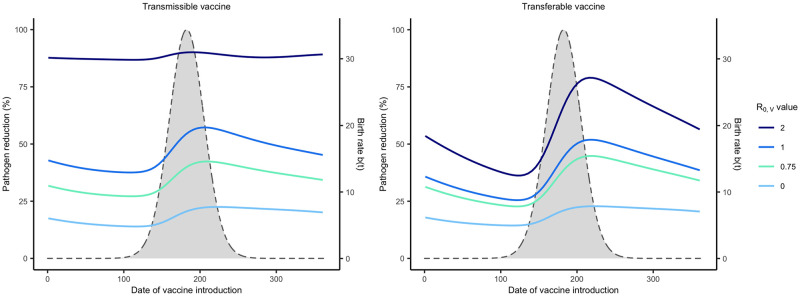
Zoonotic pathogens spread by wildlife continue to spill into human populations and threaten human lives. A potential way to reduce this threat is by vaccinating wildlife species that harbor pathogens that are infectious to humans. Unfortunately, even in cases where vaccines can be distributed en masse as edible baits, achieving levels of vaccine coverage sufficient for pathogen elimination is rare. Developing vaccines that self-disseminate may help solve this problem by magnifying the impact of limited direct vaccination. Although models exist that quantify how well these self-disseminating vaccines will work when introduced into temporally stable wildlife populations, how well they will perform when introduced into populations with pronounced seasonal population dynamics remains unknown. Here we develop and analyze mathematical models of fluctuating wildlife populations that allow us to study how reservoir ecology, vaccine design, and vaccine delivery interact to influence vaccine coverage and opportunities for pathogen elimination. Our results demonstrate that the timing of vaccine delivery can make or break the success of vaccination programs. As a general rule, the effectiveness of self-disseminating vaccines is optimized by introducing after the peak of seasonal reproduction when the number of susceptible animals is near its maximum.
野生动物传播的人畜共患病病原体继续溢出到人类群体中,威胁着人类的生命。减少这种威胁的一种潜在方法是为携带可传染给人类的病原体的野生动物物种接种疫苗。不幸的是,即使在可以大规模分发可食用诱饵作为疫苗的情况下,实现足以消除病原体的疫苗接种覆盖率也很少见。开发可自我传播的疫苗可能有助于通过放大有限的直接疫苗接种的影响来解决这个问题。尽管存在一些模型可以量化当这些自我传播疫苗引入到时间稳定的野生动物种群时的效果,但当引入到具有明显季节性种群动态的种群时,它们的表现如何仍然未知。在这里,我们开发和分析了波动野生动物种群的数学模型,使我们能够研究储层生态学、疫苗设计和疫苗接种如何相互作用以影响疫苗接种覆盖率和消除病原体的机会。我们的结果表明,疫苗接种的时机可以决定疫苗接种计划的成败。一般来说,自我传播疫苗的有效性通过在季节性繁殖高峰期后引入疫苗来优化,此时易感动物的数量接近最大值。