State Key Laboratory of Microbial Metabolism, Shanghai-Islamabad-Belgrade Joint Innovation Center on Antibacterial Resistances, School of Life Sciences and Biotechnology, Shanghai Jiao Tong University, Shanghai, 200240, China.
Joint International Research Laboratory of Metabolic and Developmental Sciences, Shanghai Jiao Tong University, Shanghai, 200240, China.
Commun Biol. 2023 Aug 18;6(1):860. doi: 10.1038/s42003-023-05227-w.
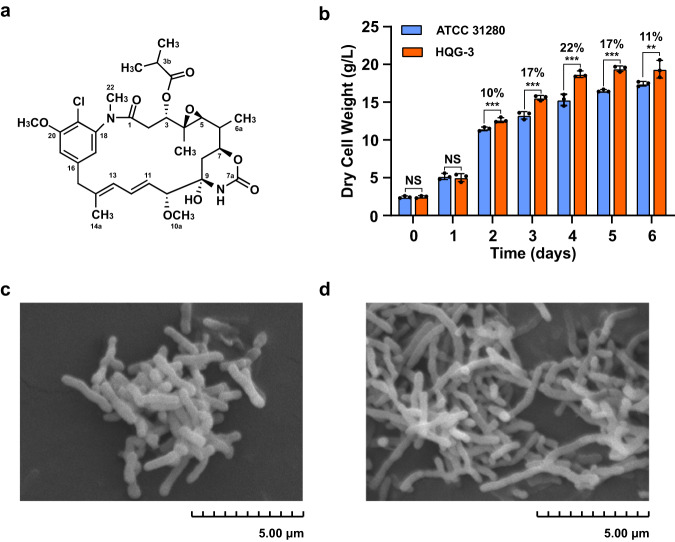
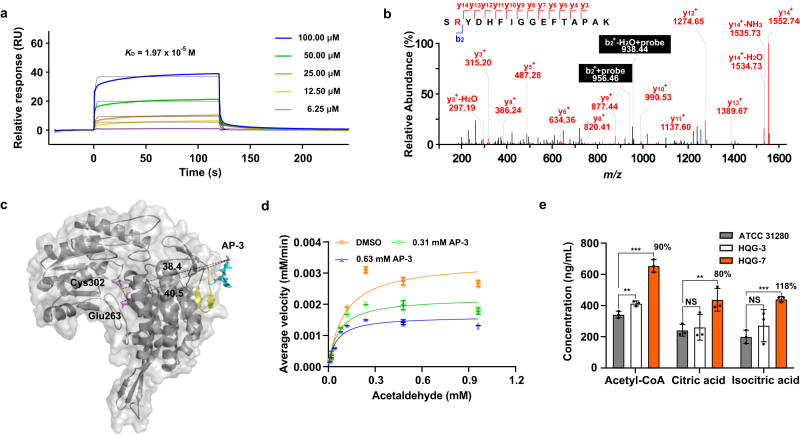
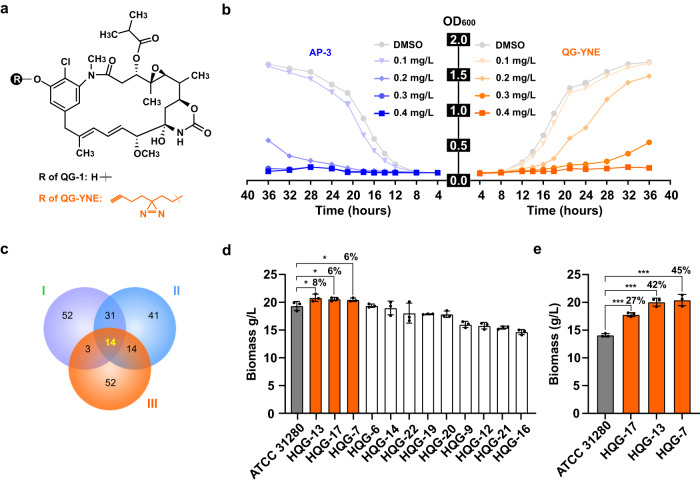
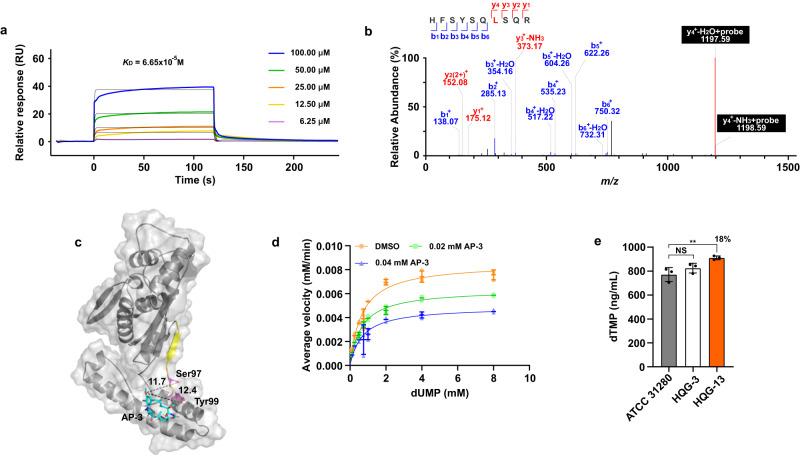
Microbial bioactive natural products mediate ecologically beneficial functions to the producing strains, and have been widely used in clinic and agriculture with clearly defined targets and underlying mechanisms. However, the physiological effects of their biosynthesis on the producing strains remain largely unknown. The antitumor ansamitocin P-3 (AP-3), produced by Actinosynnema pretiosum ATCC 31280, was found to repress the growth of the producing strain at high concentration and target the FtsZ protein involved in cell division. Previous work suggested the presence of additional cryptic targets of AP-3 in ATCC 31280. Herein we use chemoproteomic approach with an AP-3-derived photoaffinity probe to profile the proteome-wide interactions of AP-3. AP-3 exhibits specific bindings to the seemingly unrelated deoxythymidine diphosphate glucose-4,6-dehydratase, aldehyde dehydrogenase, and flavin-dependent thymidylate synthase, which are involved in cell wall assembly, central carbon metabolism and nucleotide biosynthesis, respectively. AP-3 functions as a non-competitive inhibitor of all three above target proteins, generating physiological stress on the producing strain through interfering diverse metabolic pathways. Overexpression of these target proteins increases strain biomass and markedly boosts AP-3 titers. This finding demonstrates that identification and engineering of cryptic targets of bioactive natural products can lead to in-depth understanding of microbial physiology and improved product titers.
微生物生物活性天然产物介导了对产生菌株具有生态益处的功能,并且由于具有明确的作用靶点和潜在的作用机制,已被广泛应用于临床和农业领域。然而,其生物合成对产生菌株的生理影响在很大程度上仍是未知的。放线菌属 Actinosynnema pretiosum ATCC 31280 产生的抗肿瘤 ansamitocin P-3(AP-3)在高浓度时被发现会抑制产生菌株的生长,并靶向参与细胞分裂的 FtsZ 蛋白。先前的研究表明,AP-3 在 ATCC 31280 中存在其他隐藏的靶点。在此,我们使用化学蛋白质组学方法和一种源自 AP-3 的光亲和探针来描绘 AP-3 的全蛋白质组相互作用图谱。AP-3 与看似不相关的脱氧胸苷二磷酸葡萄糖-4,6-脱水酶、醛脱氢酶和黄素依赖性胸苷酸合酶表现出特异性结合,这些酶分别参与细胞壁组装、中心碳代谢和核苷酸生物合成。AP-3 作为这三种靶蛋白的非竞争性抑制剂发挥作用,通过干扰多种代谢途径对产生菌株产生生理应激。这些靶蛋白的过表达增加了菌株的生物量,并显著提高了 AP-3 的产量。这一发现表明,生物活性天然产物的隐匿靶点的鉴定和工程化可以深入了解微生物生理学,并提高产物的产量。