Department of Global Health and Social Medicine, Harvard University, Cambridge, Massachusetts, USA
Department of Psychiatry, University of Oxford, Oxford, UK.
BMJ Ment Health. 2023 Aug;26(1). doi: 10.1136/bmjment-2023-300773.
Existing research on refugee mental health is heavily skewed towards refugees in high-income countries, even though most refugees (83%) are hosted in low-income and middle-income countries. This problem is further compounded by the unrepresentativeness of samples, small sample sizes and low response rates.
To present representative findings on the prevalence and correlates of depression among different refugee subgroups in East Africa.
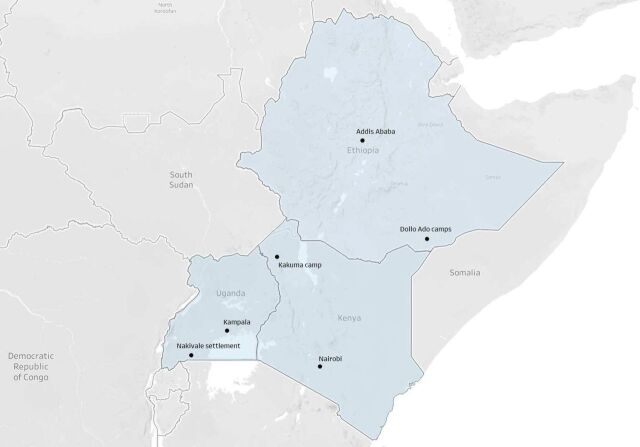
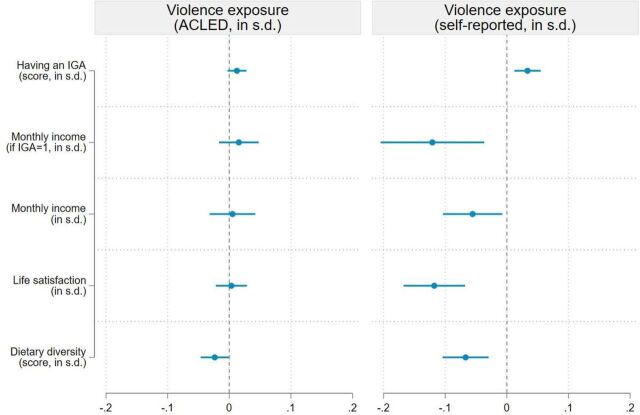
We conducted a multicountry representative survey of refugee and host populations in urban and camp contexts in Kenya, Uganda and Ethiopia (n=15 915). We compared the prevalence of depression between refugee and host populations and relied on regression analysis to explore the association between violence, depression and socioeconomic outcomes.
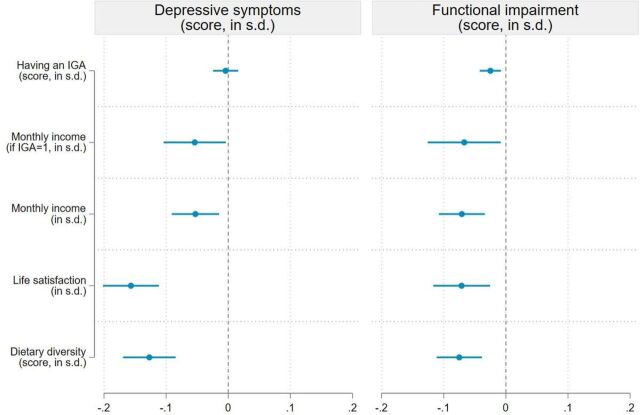
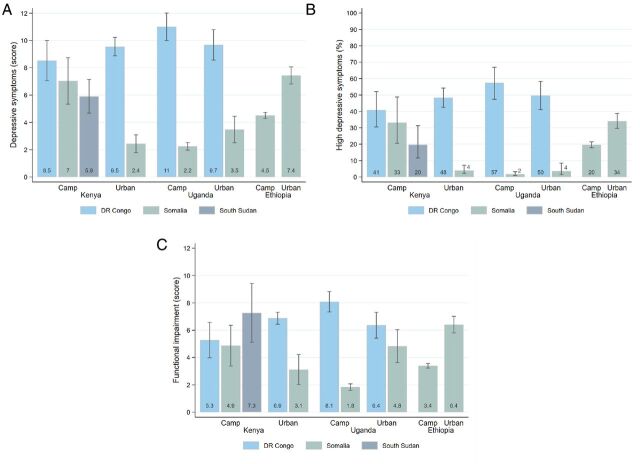
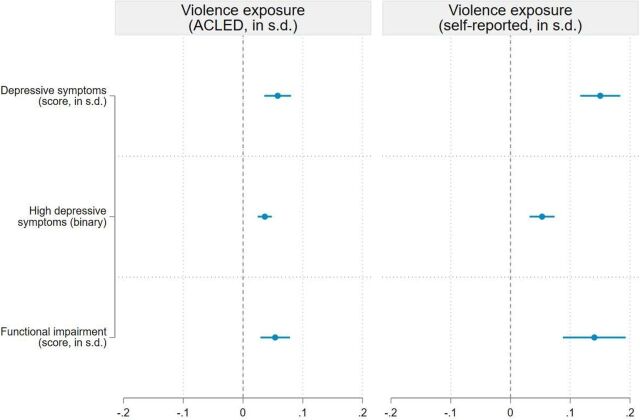
We found a high prevalence of elevated depressive symptoms (31%, 95% CI 28% to 35%) and functional impairment (62%, 95% CI 58% to 66%) among the refugee population, which was significantly higher than that found in the host population (10% for depressive symptoms, 95% CI 8% to 13% and 25% for functional impairment, 95% CI 22% to 28%) (p<0·001). Further, we observed a dose-response relationship between exposure to violence and mental illness. Lastly, high depressive symptoms and functional impairment were associated with worse socioeconomic outcomes.
Our results highlight that refugees in East-Africa-particularly those exposed to violence and extended exile periods-are disproportionately affected by depression, which may also hinder their socioeconomic integration.
Given the high prevalence of depression among refugees in East Africa, our results underline the need for scalable interventions that can promote refugees' well-being.
现有关于难民心理健康的研究严重偏向于高收入国家的难民,尽管大多数难民(83%)都在中低收入国家。由于样本代表性不足、样本量小和低应答率等问题,这一问题进一步加剧。
呈现东非不同难民群体中抑郁的流行率和相关因素的代表性发现。
我们对肯尼亚、乌干达和埃塞俄比亚城市和难民营环境中的难民和收容社区进行了多国代表性调查(n=15915)。我们比较了难民和收容社区之间抑郁的流行率,并依靠回归分析探讨了暴力、抑郁和社会经济结果之间的关联。
我们发现难民群体中出现了较高的抑郁症状(31%,95%CI 28%至 35%)和功能障碍(62%,95%CI 58%至 66%),显著高于收容社区(抑郁症状 10%,95%CI 8%至 13%和功能障碍 25%,95%CI 22%至 28%)(p<0·001)。此外,我们观察到暴露于暴力与精神疾病之间存在剂量反应关系。最后,高抑郁症状和功能障碍与较差的社会经济结果相关。
我们的研究结果强调,东非的难民——特别是那些遭受暴力和长期流亡的难民——受到抑郁的不成比例影响,这也可能阻碍他们的社会经济融合。
鉴于东非难民中抑郁的高流行率,我们的研究结果强调需要实施可扩展的干预措施,以促进难民的福祉。