Shibeshi Abdu Hailu, Kase Bizunesh Fantahun, Moloro Abdulkerim Hassen, Mehari Molla Getie, Seid Abubeker Alebachew
Department of Statistics, College of Natural and Computational Sciences, Samara University, Samara, Ethiopia.
Department of Public Health, College of Medicine and Health Sciences, Samara University, Samara, Ethiopia.
BMC Psychiatry. 2024 Dec 18;24(1):924. doi: 10.1186/s12888-024-06371-1.
Depression is a common and debilitating mental health issue among refugees in East Africa, who face numerous challenges. However, there is a lack of systematic reviews and meta-analyses that have explored the pooled prevalence and associated factors of depression among refugees in East Africa. This study aims to investigate the pooled prevalence of depression and its associated factors among refugees living in East Africa.
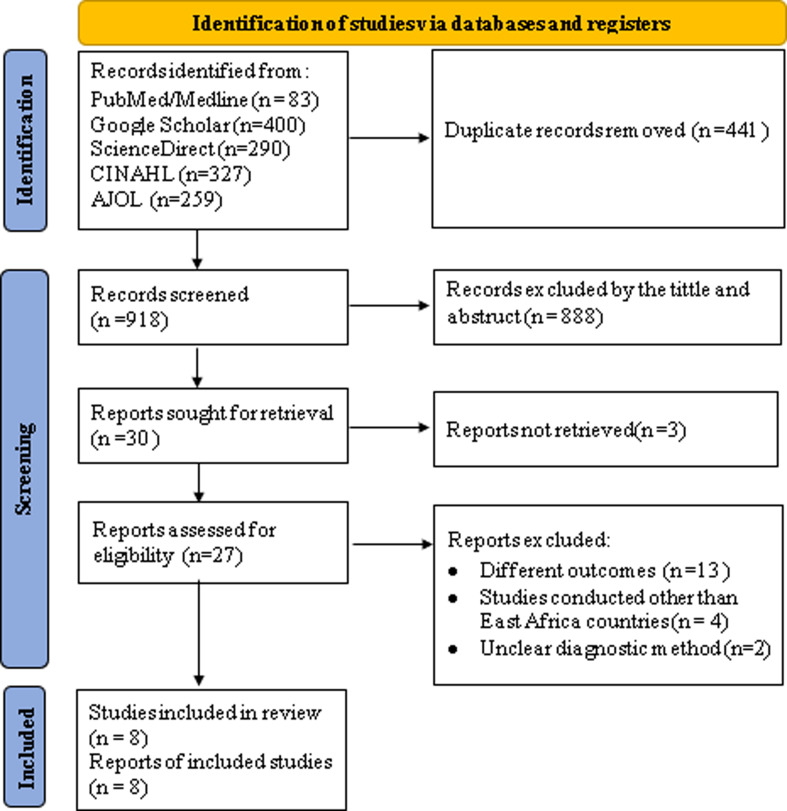
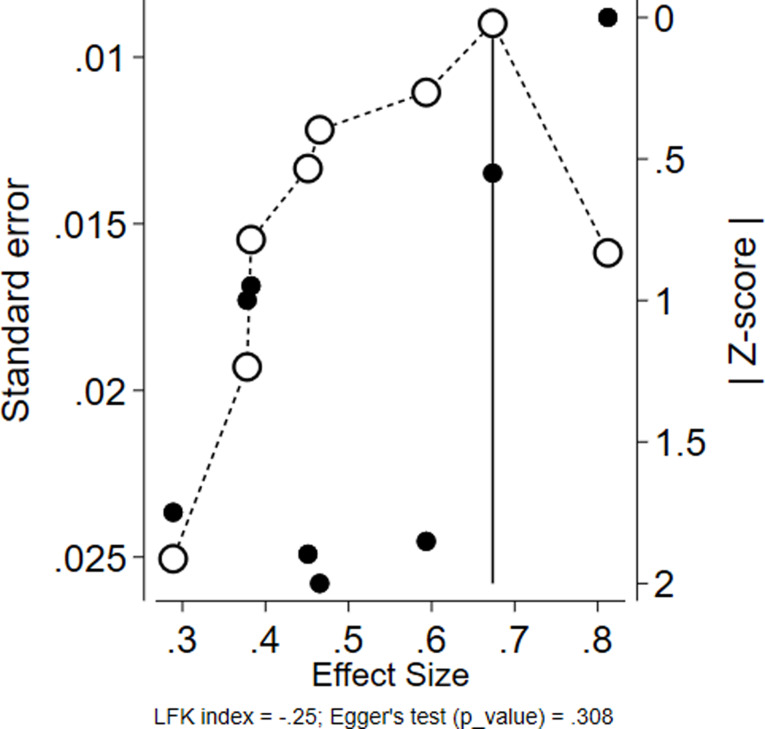
A systematic search was conducted across several databases, including PubMed/MEDLINE, CINAHL, ScienceDirect, African Journals of Online (AJOL), and Google Scholar. The quality of the included studies was assessed using a Joanna Briggs Institute (JBI) quality appraisal tool. Statistical analysis was carried out using STATA-17 software packages, and a meta-analysis was conducted using a random-effects model. Heterogeneity among the studies was assessed using the I statistic. Publication bias was evaluated using the DOI plot, Luis Furuya Kanamori (LFK) index, and Egger's test. For associated factors of depression, effect sizes (odds ratio) with 95% confidence intervals were analyzed.
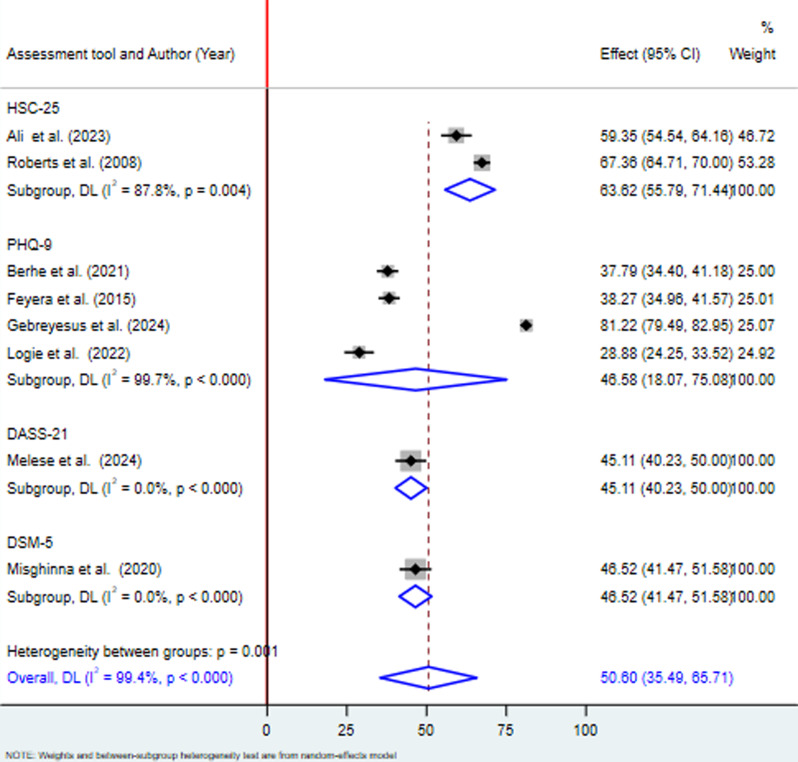
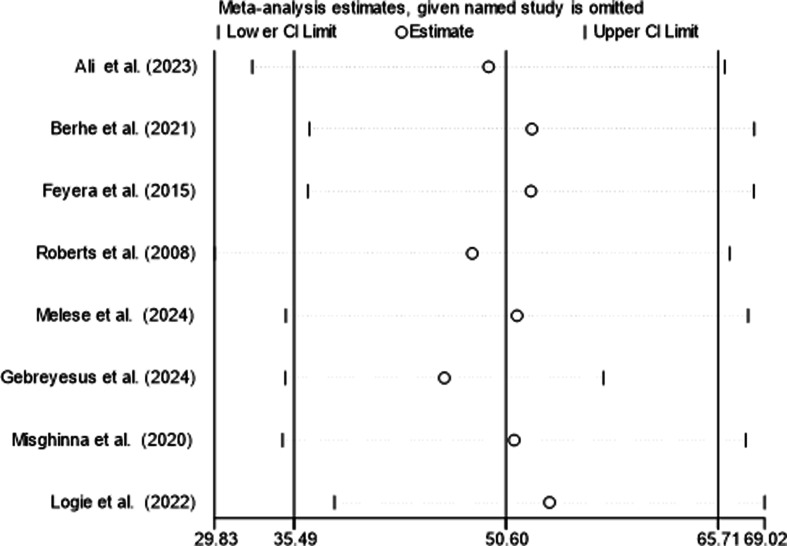
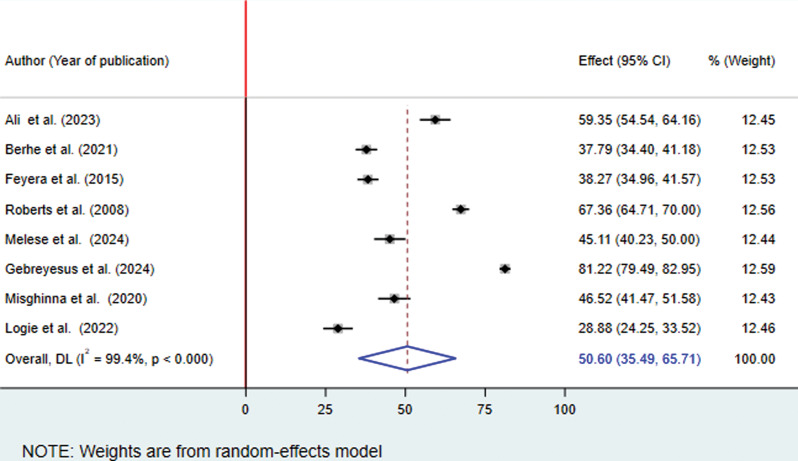
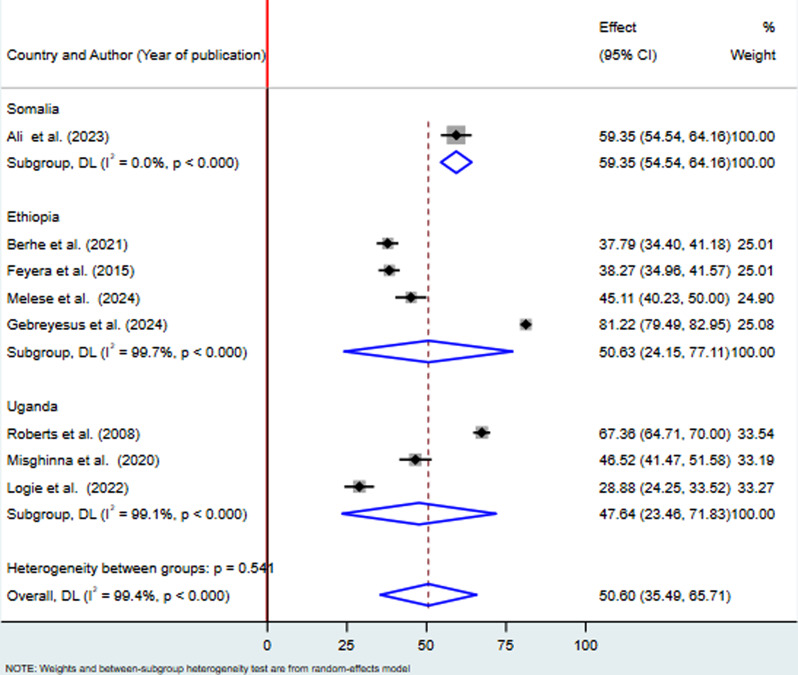
A total of eight studies involving 6,388 participants were included in this systematic review and meta-analysis, all of which were assessed to have a low risk of bias. The pooled prevalence of depression was 50.60%, with a 95% CI (35.49%, 65.71). Regarding factors associated with depression; being female [(OR = 2.01; 95% CI (1.06, 3.82)], having poor social support [OR 5.88; 95% CI (2.53, 13.67)], and experienced eight or more traumatic events [OR = 3.31;95% CI (1.74, 6.31) were positively associated factors with depression.
The pooled prevalence of depression among refugees in East Africa was found to be significantly high. Female participants, poor social support, and experienced eight or more traumatic events were factors affecting depression among refugees in East Africa. Therefore, policymakers and health personnel in East Africa should prioritize addressing the needs of female participants, individuals with poor social support, and those who have experienced eight or more traumatic events.
抑郁症是东非难民中常见且使人衰弱的心理健康问题,他们面临众多挑战。然而,缺乏系统评价和荟萃分析来探究东非难民中抑郁症的合并患病率及相关因素。本研究旨在调查居住在东非的难民中抑郁症的合并患病率及其相关因素。
在多个数据库中进行系统检索,包括PubMed/MEDLINE、CINAHL、ScienceDirect、非洲在线期刊(AJOL)和谷歌学术。使用乔安娜·布里格斯研究所(JBI)质量评估工具评估纳入研究的质量。使用STATA - 17软件包进行统计分析,并使用随机效应模型进行荟萃分析。使用I统计量评估研究之间的异质性。使用漏斗图、路易斯·古谷金盛(LFK)指数和埃格检验评估发表偏倚。对于抑郁症的相关因素,分析了效应大小(比值比)及95%置信区间。
本系统评价和荟萃分析共纳入八项研究,涉及6388名参与者,所有研究均被评估为低偏倚风险。抑郁症的合并患病率为50.60%,95%置信区间为(35.49%,65.71)。关于与抑郁症相关的因素;女性[(比值比 = 2.01;95%置信区间(1.06,3.82)]、社会支持差[比值比5.88;95%置信区间(2.53,13.67)]以及经历过八次或更多创伤事件[比值比 = 3.31;95%置信区间(1.74,6.31)]是与抑郁症呈正相关的因素。
发现东非难民中抑郁症的合并患病率显著较高。女性参与者、社会支持差以及经历过八次或更多创伤事件是影响东非难民抑郁症的因素。因此,东非的政策制定者和卫生人员应优先满足女性参与者、社会支持差的个体以及经历过八次或更多创伤事件者的需求。