Garcia Castro David R, Mazuk Joseph R, Heine Erin M, Simpson Daniel, Pinches R Seth, Lozzi Caroline, Hoffman Kathryn, Morrin Phillip, Mathis Dylan, Lebedev Maria V, Nissley Elyse, Han Kang Hoo, Farmer Tyler, Merry Diane E, Tong Qiang, Pennuto Maria, Montie Heather L
Department of Bio-Medical Sciences, Philadelphia College of Osteopathic Medicine, Philadelphia, PA 19131, USA.
Department of Biochemistry and Molecular Biology, Sidney Kimmel Medical College, Thomas Jefferson University, Philadelphia, PA 19107, USA.
iScience. 2023 Jul 22;26(8):107375. doi: 10.1016/j.isci.2023.107375. eCollection 2023 Aug 18.
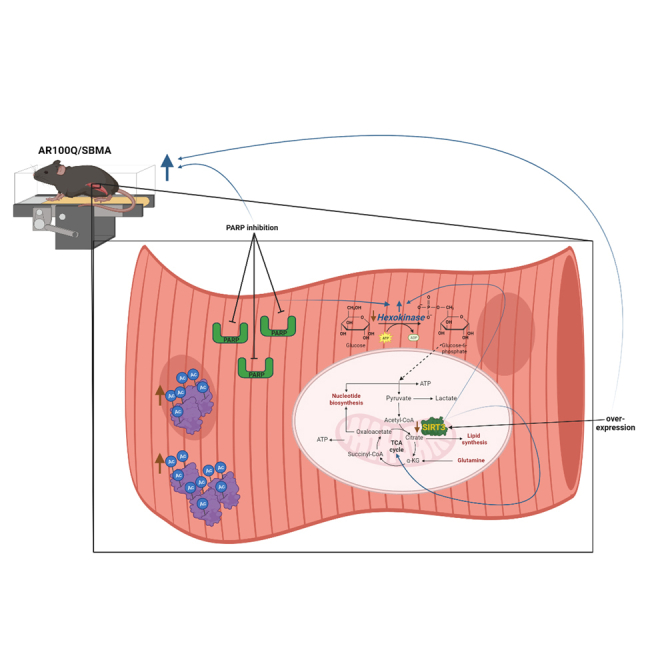
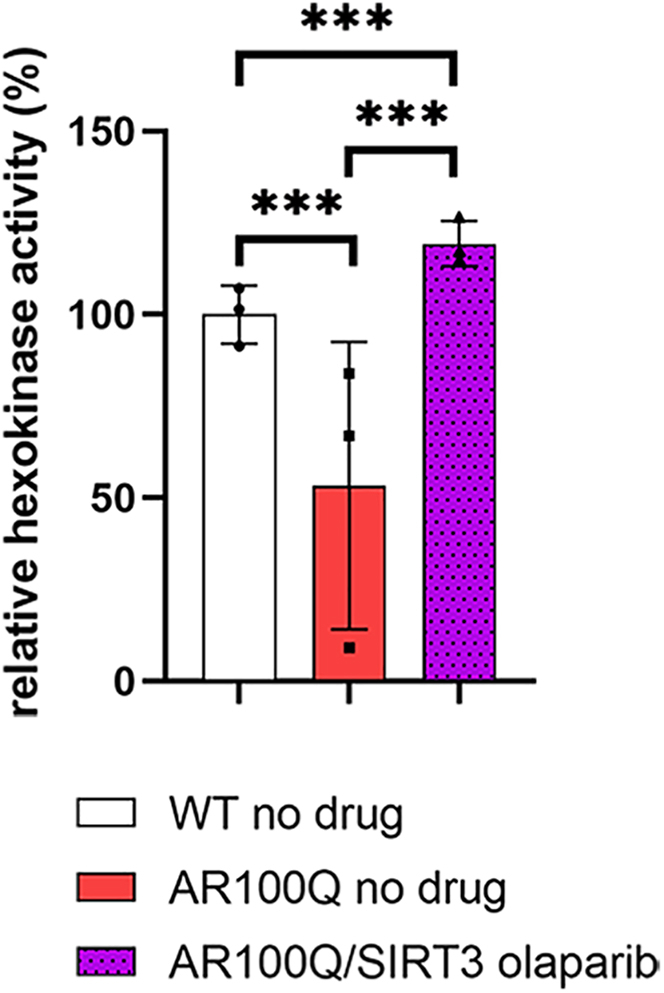
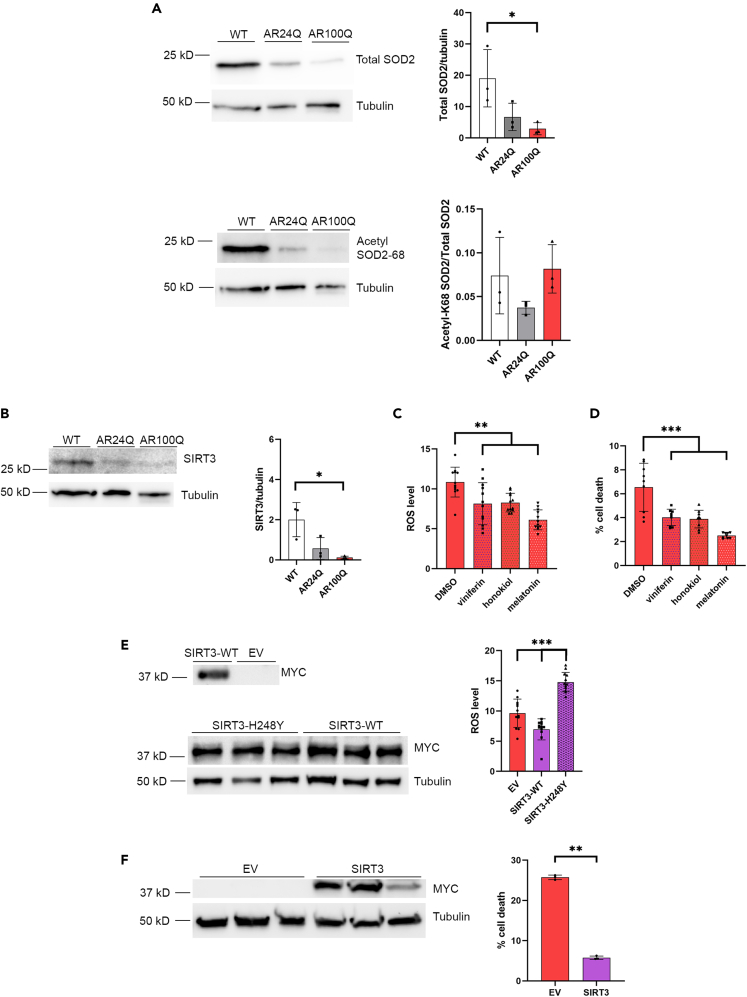
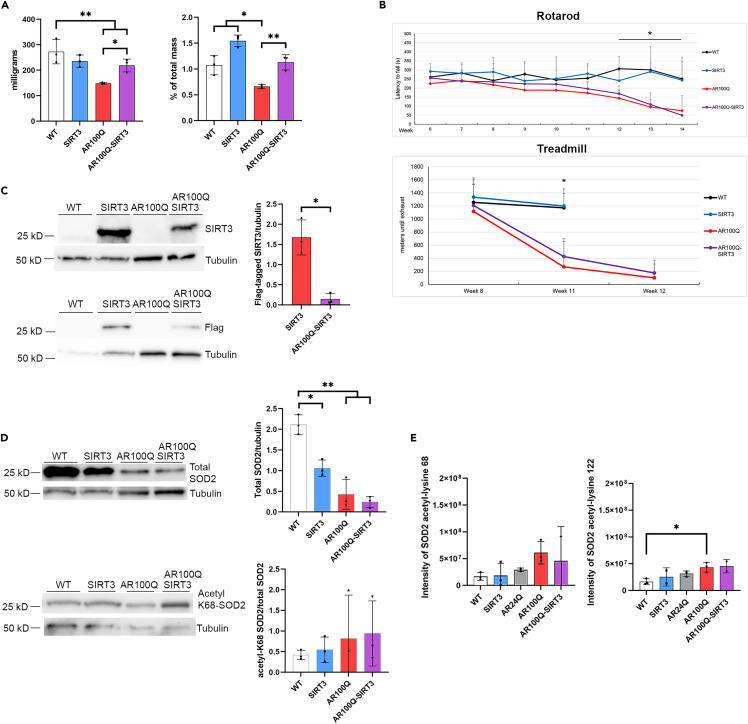
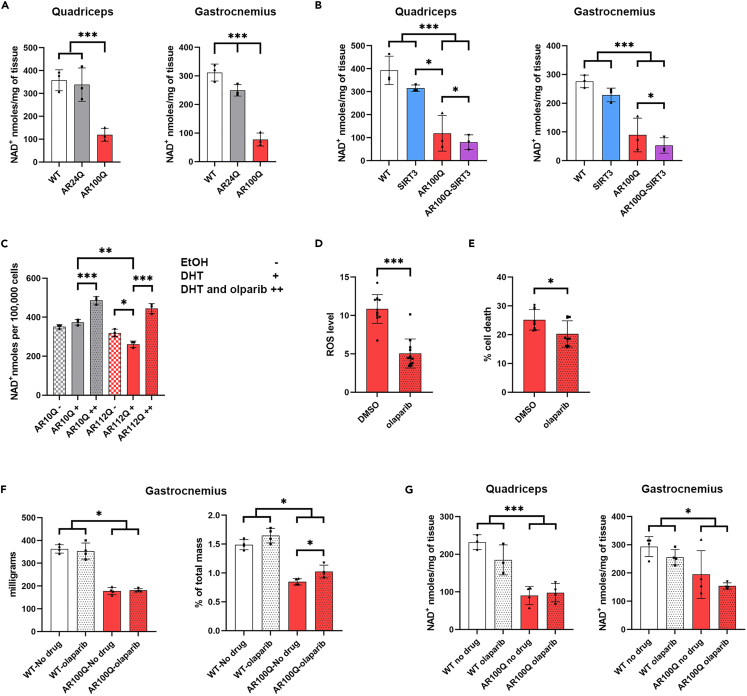
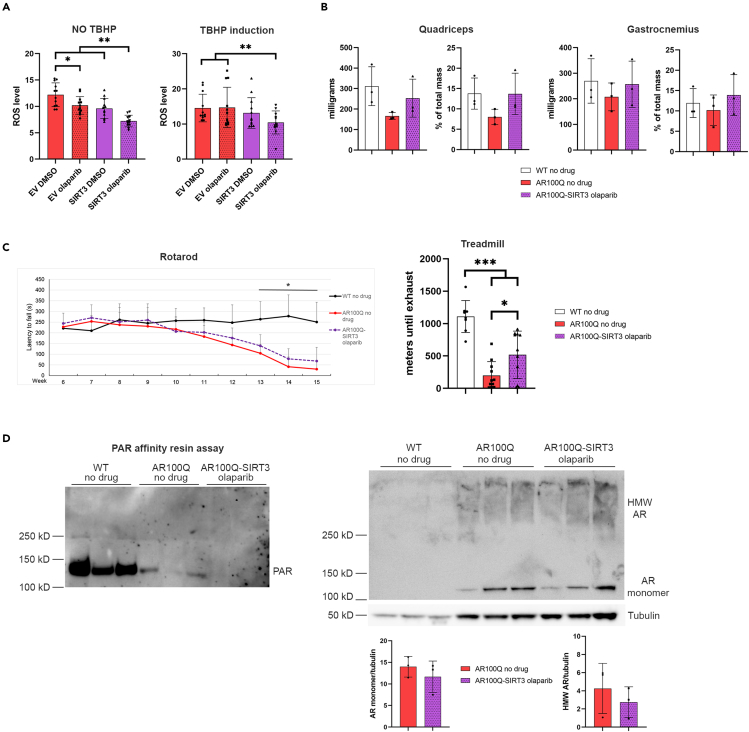
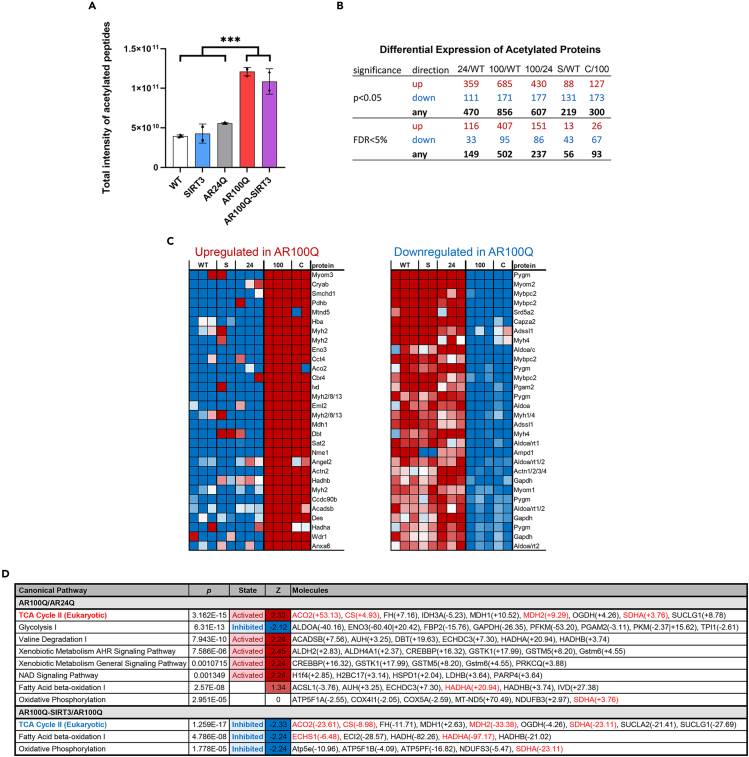
Spinal and bulbar muscular atrophy (SBMA) is a neuromuscular disease with substantial mitochondrial and metabolic dysfunctions. SBMA is caused by polyglutamine (polyQ) expansion in the androgen receptor (AR). Activating or increasing the NAD-dependent deacetylase, SIRT3, reduced oxidative stress and death of cells modeling SBMA. However, increasing diminished SIRT3 in AR100Q mice failed to reduce acetylation of the SIRT3 target/antioxidant, SOD2, and had no effect on increased total acetylated peptides in quadriceps. Yet, overexpressing SIRT3 resulted in a trend of motor recovery, and corrected TCA cycle activity by decreasing acetylation of SIRT3 target proteins. We sought to boost blunted SIRT3 activity by replenishing diminished NAD with PARP inhibition. Although NAD was not affected, overexpressing SIRT3 with PARP inhibition fully restored hexokinase activity, correcting the glycolytic pathway in AR100Q quadriceps, and rescued motor endurance of SBMA mice. These data demonstrate that targeting metabolic anomalies can restore motor function downstream of polyQ-expanded AR.
脊髓延髓肌肉萎缩症(SBMA)是一种存在大量线粒体和代谢功能障碍的神经肌肉疾病。SBMA由雄激素受体(AR)中的聚谷氨酰胺(polyQ)扩增引起。激活或增加NAD依赖性脱乙酰酶SIRT3可降低模拟SBMA的细胞的氧化应激和细胞死亡。然而,在AR100Q小鼠中增加减少的SIRT3未能降低SIRT3靶标/抗氧化剂超氧化物歧化酶2(SOD2)的乙酰化水平,并且对股四头肌中总乙酰化肽的增加没有影响。然而,过表达SIRT3导致运动恢复的趋势,并通过降低SIRT3靶蛋白的乙酰化水平来纠正三羧酸循环活性。我们试图通过抑制PARP补充减少的NAD来增强钝化的SIRT3活性。尽管NAD没有受到影响,但通过抑制PARP过表达SIRT3可完全恢复己糖激酶活性,纠正AR100Q股四头肌中的糖酵解途径,并挽救SBMA小鼠的运动耐力。这些数据表明,针对代谢异常可以恢复polyQ扩增的AR下游的运动功能。