Lady Davis Institute for Medical Research, Jewish General Hospital Montreal, QC, Canada ; Department of Medicine, McGill University Montreal, QC, Canada ; Department of Human Genetics, McGill University Montreal, QC, Canada.
Front Neurol. 2013 May 15;4:53. doi: 10.3389/fneur.2013.00053. eCollection 2013.
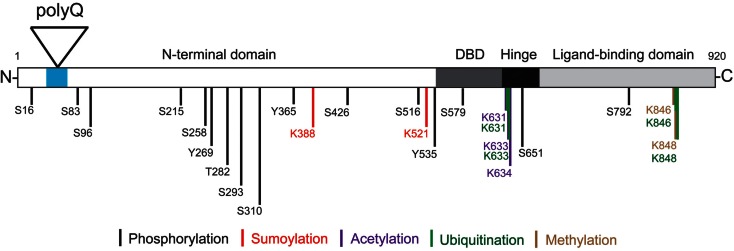
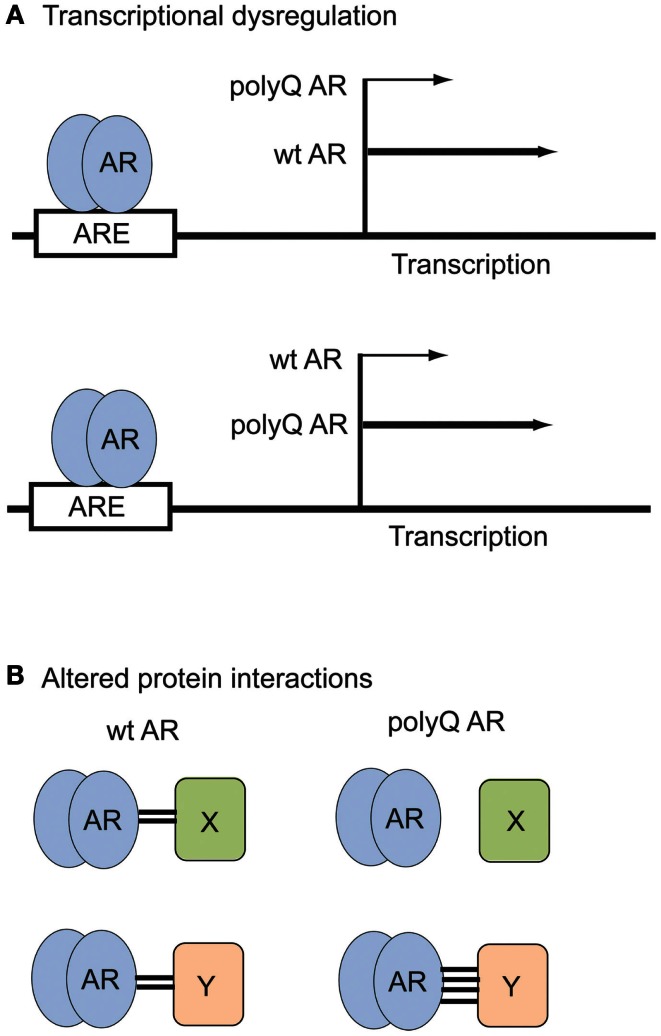
Spinal and bulbar muscular atrophy (SBMA, Kennedy's disease), a late-onset neuromuscular disorder, is caused by expansion of the polymorphic polyglutamine tract in the androgen receptor (AR). The AR is a ligand-activated transcription factor, but plays roles in other cellular pathways. In SBMA, selective motor neuron degeneration occurs in the brainstem and spinal cord, thus the causes of neuronal dysfunction have been studied. However, pathogenic pathways in muscles may also be involved. Cultured cells, fly and mouse models are used to study the molecular mechanisms leading to SBMA. Both the structure of the polyglutamine-expanded AR (polyQ AR) and its interactions with other proteins are altered relative to the normal AR. The ligand-dependent translocation of the polyQ AR to the nucleus appears to be critical, as are interdomain interactions. The polyQ AR, or fragments thereof, can form nuclear inclusions, but their pathogenic or protective nature is unclear. Other data suggests soluble polyQ AR oligomers can be harmful. Post-translational modifications such as phosphorylation, acetylation, and ubiquitination influence AR function and modulate the deleterious effects of the polyQ AR. Transcriptional dysregulation is highly likely to be a factor in SBMA; deregulation of non-genomic AR signaling may also be involved. Studies on polyQ AR-protein degradation suggest inhibition of the ubiquitin proteasome system and changes to autophagic pathways may be relevant. Mitochondrial function and axonal transport may also be affected by the polyQ AR. Androgens, acting through the AR, can be neurotrophic and are important in muscle development; hence both loss of normal AR functions and gain of novel harmful functions by the polyQ AR can contribute to neurodegeneration and muscular atrophy. Thus investigations into polyQ AR function have shown that multiple complex mechanisms lead to the initiation and progression of SBMA.
脊髓延髓肌肉萎缩症(SBMA,肯尼迪病)是一种迟发性神经肌肉疾病,由雄激素受体(AR)中多态性聚谷氨酰胺重复序列的扩展引起。AR 是一种配体激活的转录因子,但在其他细胞途径中也发挥作用。在 SBMA 中,选择性运动神经元在脑干和脊髓中退化,因此研究了神经元功能障碍的原因。然而,肌肉中的致病途径也可能涉及。培养细胞、果蝇和小鼠模型用于研究导致 SBMA 的分子机制。与正常 AR 相比,聚谷氨酰胺扩展的 AR(polyQ AR)的结构及其与其他蛋白质的相互作用都发生了改变。polyQ AR 的配体依赖性核易位似乎至关重要,还有域间相互作用。polyQ AR 或其片段可以形成核内包涵体,但它们的致病或保护性质尚不清楚。其他数据表明,可溶性 polyQ AR 寡聚物可能有害。翻译后修饰,如磷酸化、乙酰化和泛素化,影响 AR 功能并调节 polyQ AR 的有害影响。转录失调极有可能是 SBMA 的一个因素;非基因组 AR 信号的失调也可能涉及。关于 polyQ AR-蛋白降解的研究表明,泛素蛋白酶体系统的抑制以及自噬途径的改变可能相关。线粒体功能和轴突运输也可能受到 polyQ AR 的影响。雄激素通过 AR 发挥作用,可以具有神经保护作用,并且在肌肉发育中很重要;因此,polyQ AR 丧失正常 AR 功能和获得新的有害功能都可能导致神经退行性变和肌肉萎缩。因此,对 polyQ AR 功能的研究表明,多种复杂机制导致 SBMA 的发生和进展。