Zhao Tianyang, Sun Siqi, Gao Yueyue, Rong Yuting, Wang Hanwenchen, Qi Sihua, Li Yan
Department of Anesthesiology, The Fourth Affiliated Hospital of Harbin Medical University, Harbin, China.
The Fourth Affiliated Hospital of Harbin Medical University, Harbin, China.
Heliyon. 2023 Aug 3;9(8):e18622. doi: 10.1016/j.heliyon.2023.e18622. eCollection 2023 Aug.
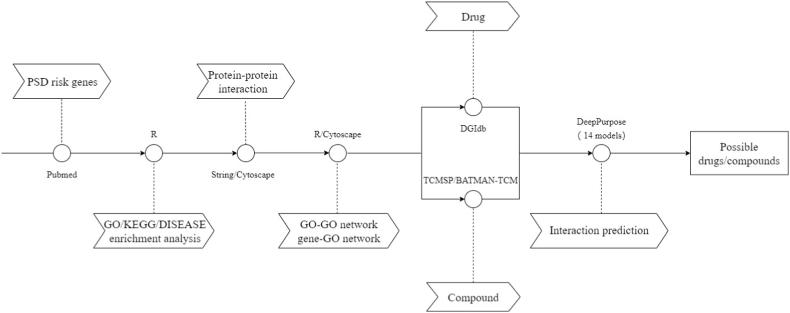
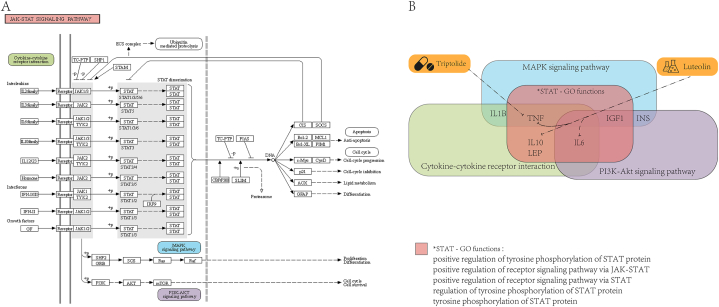
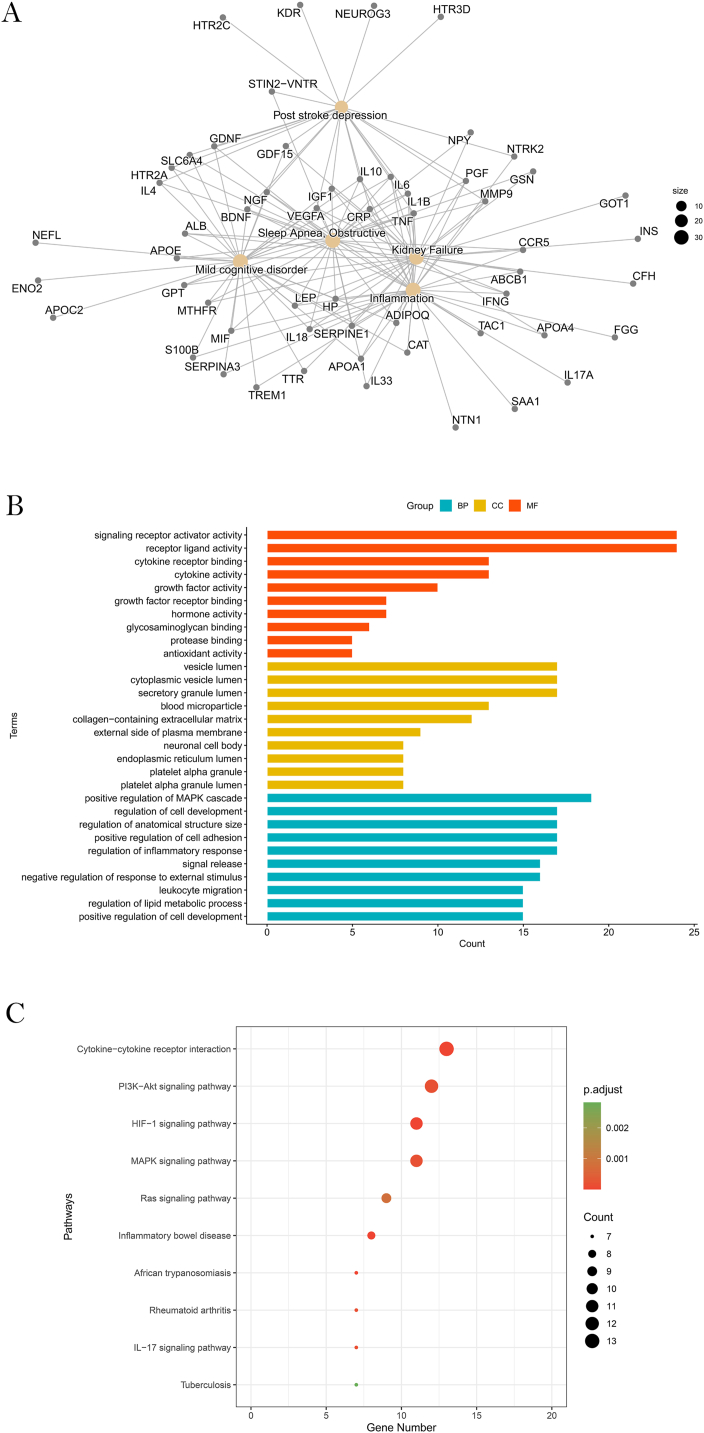
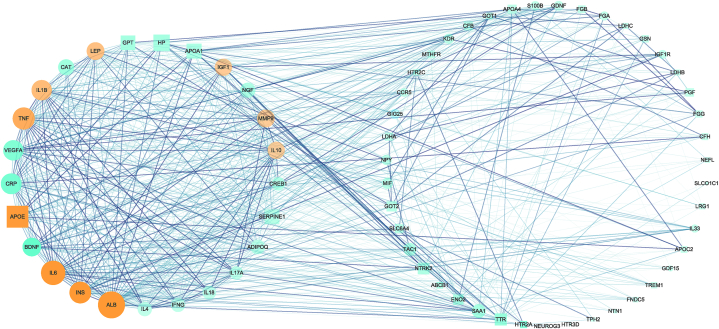
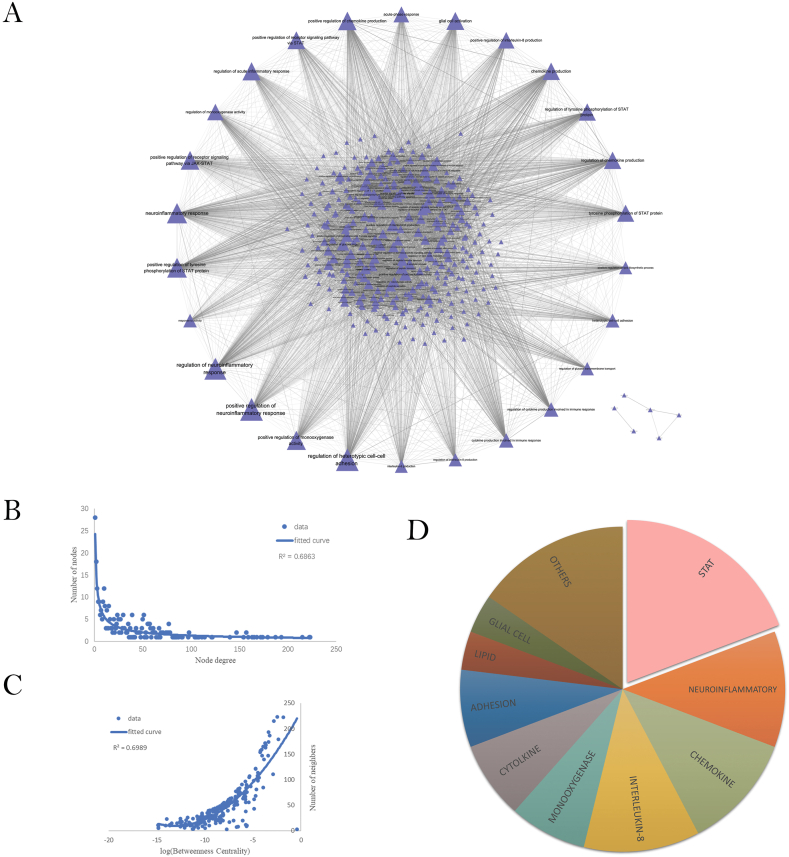
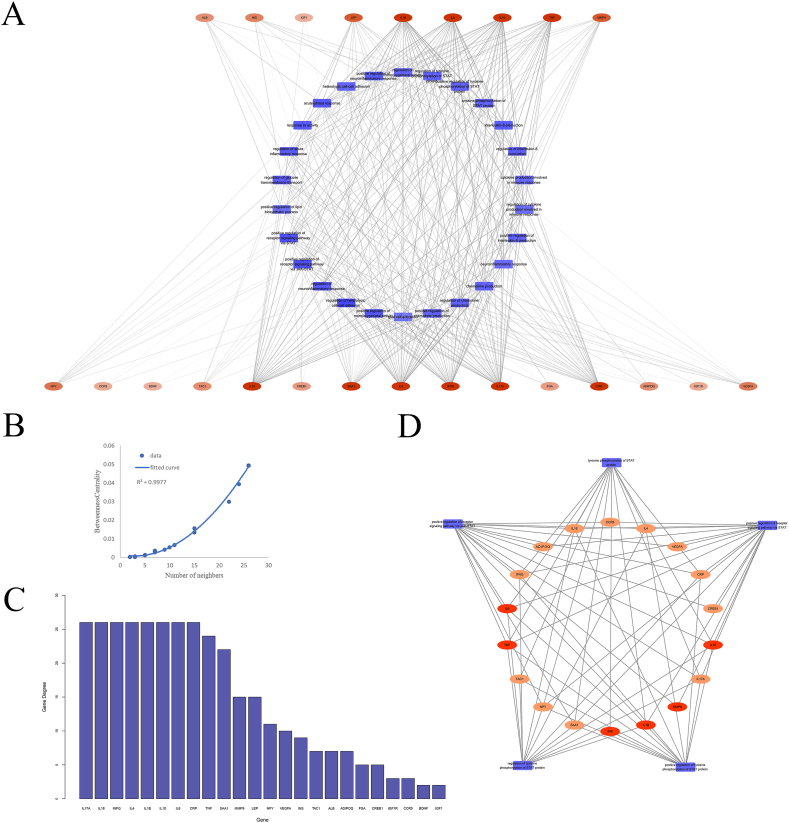
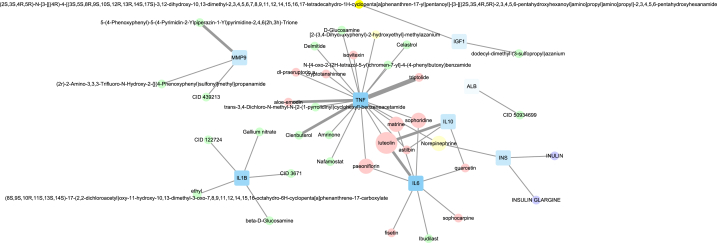
Post stroke depression (PSD) is a common neuropsychiatric complication following stroke closely associated with the immune system. The development of medications for PSD remains to be a considerable challenge due to the unclear mechanism of PSD. Multiple researches agree that the functions of gene ontology (GO) are efficient for the investigation of disease mechanisms, and DeepPurpose (DP) is extremely valuable for the mining of new drugs. However, GO terms and DP have not yet been applied to explore the pathogenesis and drug treatment of PSD. This study aimed to interpret the mechanism of PSD and discover important drug candidates targeting risk proteins, based on immune-related risk GO functions and informatics algorithms. According to the risk genes of PSD, we identified 335 immune-related risk GO functions and 37 compounds. Based on the construction of the GO function network, we found that STAT protein may be a pivot protein in underlying the mechanism of PSD. Additionally, we also established networks of Protein-Protein Interaction as well as Gene-GO function to facilitate the evaluation of key genes. Based on DP, a total of 37 candidate compounds targeting 7 key proteins were identified with a potential for the therapy of PSD. Furthermore, we noted that the mechanisms by which luteolin and triptolide acting on STAT-related GO function might involve three crucial pathways, including specifically hsa04010 (MAPK signaling pathway), hsa04151 (PI3K-Akt signaling pathway) and hsa04060 (Cytokine-cytokine receptor interaction). Thus, this study provided fresh and powerful information for the mechanism and therapeutic strategies of PSD.
中风后抑郁(PSD)是中风后常见的神经精神并发症,与免疫系统密切相关。由于PSD的发病机制尚不清楚,开发治疗PSD的药物仍然是一项巨大的挑战。多项研究一致认为,基因本体(GO)功能对于研究疾病机制很有效,而深度目的(DP)对于新药挖掘极具价值。然而,GO术语和DP尚未应用于探索PSD的发病机制和药物治疗。本研究旨在基于免疫相关风险GO功能和信息学算法,阐释PSD的机制并发现针对风险蛋白的重要候选药物。根据PSD的风险基因,我们确定了335个免疫相关风险GO功能和37种化合物。基于GO功能网络的构建,我们发现信号转导和转录激活因子(STAT)蛋白可能是PSD机制的关键蛋白。此外,我们还建立了蛋白质-蛋白质相互作用网络以及基因-GO功能网络,以促进对关键基因的评估。基于DP,共鉴定出37种针对7种关键蛋白的候选化合物,具有治疗PSD的潜力。此外,我们注意到木犀草素和雷公藤内酯醇作用于与STAT相关的GO功能的机制可能涉及三个关键途径,具体包括hsa04010(丝裂原活化蛋白激酶信号通路)、hsa04151(磷脂酰肌醇-3激酶-蛋白激酶B信号通路)和hsa04060(细胞因子-细胞因子受体相互作用)。因此,本研究为PSD的机制和治疗策略提供了新的有力信息。