Faculty of Architecture and Urban Planning, Shahid Beheshti University, Tehran, Iran.
Front Public Health. 2023 Jul 31;11:1218091. doi: 10.3389/fpubh.2023.1218091. eCollection 2023.
Aging is an inevitable process that leads to changes in various dimensions of older adult life, including physical, psychological, and social aspects. Unfortunately, older adults are more susceptible to health problems caused by adverse experiences such as the Corona outbreak.
The current study examines the lived experience of older adults in facing the conditions of the Corona epidemic to see how green spaces at various scales can influence the physical and mental health of this group.
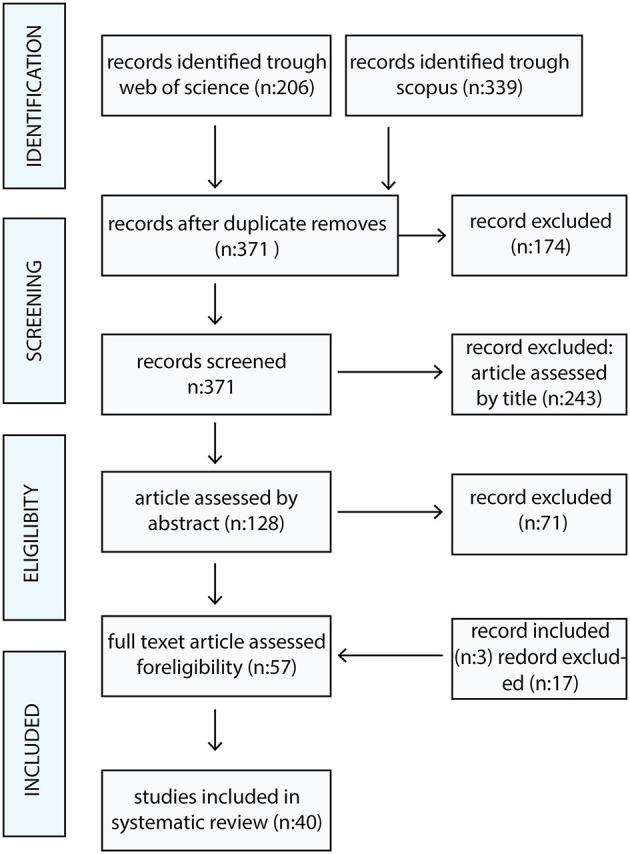
Relevant articles published, from 2019 to February 17, 2023, were searched using in the Scopus and Web of Science databases. Eligible studies published in English and all studies passed a quality evaluation.
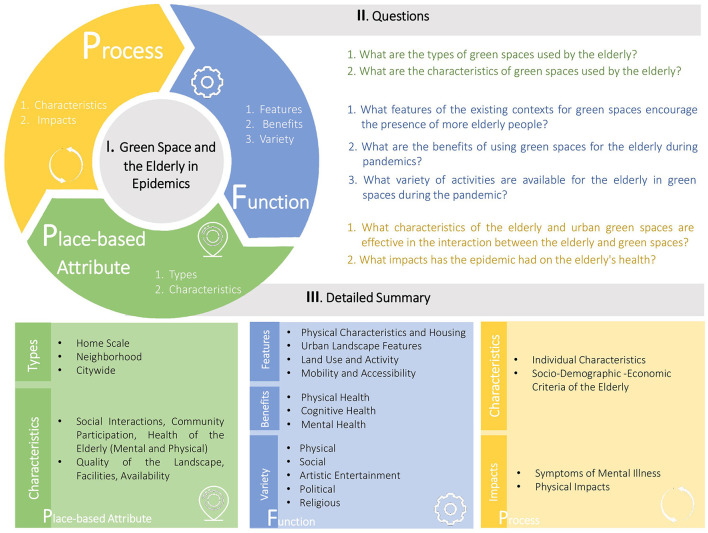
In the final search, 40 articles were selected and analyzed. The majority of studies conducted during the pandemic categorized the impact of green spaces on the health of older adults into three main categories: Place-based attribute, Process, and Function.
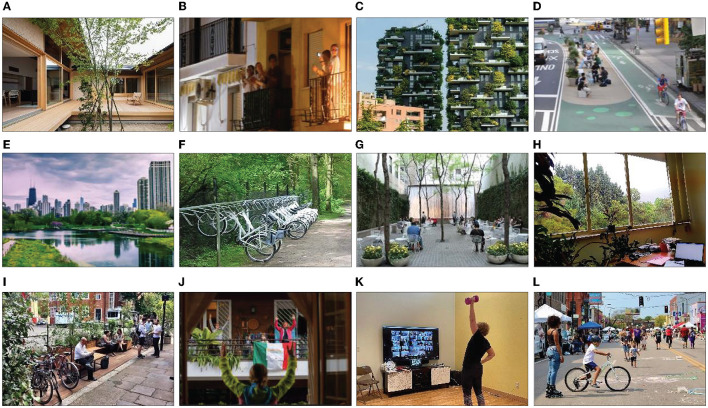
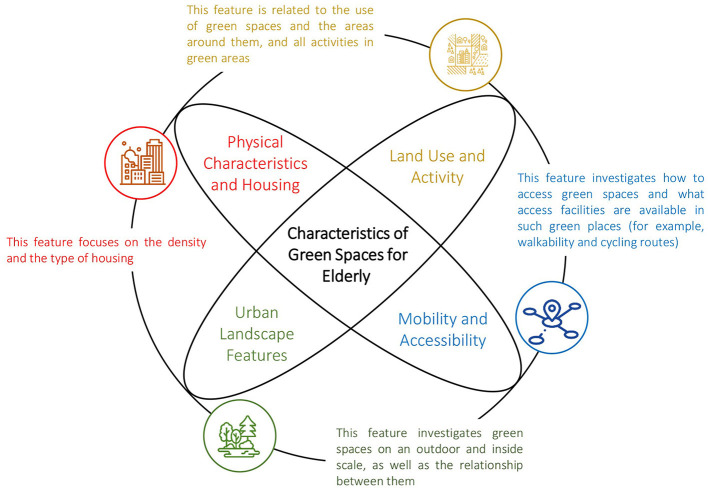
The findings of this study demonstrated that people were using private green spaces (gardens, balconies, etc.), small local green public spaces, sitting and gathering spaces in the neighborhood, nearby open spaces, and urban green-blue spaces throughout the epidemic era. They visited green spaces outside the city and urban areas, including urban gardens, agricultural areas, forestlands, and pastures. In this research, we investigated the characteristics of these spaces and classified them into four physical categories: urban landscape, land use, activity, movement, and accessibility. The results showed that exposure to nature or green space improved physical and mental health and increased attention and decision-making quality in older people. We have proposed design implications recommendations for crises to improve safety, security, and social capital by increasing the safe access of older adults to diverse and high-quality green spaces on different scales, which will ultimately enhance the physical and mental health of people in different age groups.
衰老是一个不可避免的过程,会导致老年人生活的各个方面发生变化,包括身体、心理和社会方面。不幸的是,老年人更容易受到因科罗娜爆发等不利经历而导致的健康问题的影响。
本研究考察了老年人在面对科罗娜疫情时的生活体验,以了解不同规模的绿色空间如何影响这一群体的身心健康。
使用 Scopus 和 Web of Science 数据库搜索 2019 年至 2023 年 2 月 17 日期间发表的相关文章。合格的研究以英文发表,所有研究都通过了质量评估。
在最终搜索中,选择并分析了 40 篇文章。大多数在疫情期间进行的研究将绿色空间对老年人健康的影响分为三类:基于场所的属性、过程和功能。
本研究的结果表明,人们在疫情期间一直在使用私人绿色空间(花园、阳台等)、小的当地公共绿色空间、邻里的坐息和聚集空间、附近的开放空间和城市绿色蓝色空间。他们还会去城市和郊区以外的绿色空间,包括城市花园、农业区、林地和牧场。在这项研究中,我们调查了这些空间的特征,并将它们分为四类物理类别:城市景观、土地利用、活动、运动和可达性。结果表明,接触自然或绿色空间可以改善身心健康,并提高老年人的注意力和决策质量。我们提出了危机设计影响建议,通过增加老年人对不同规模的多样化和高质量绿色空间的安全进入,提高安全性、安全性和社会资本,从而最终改善不同年龄段人群的身心健康。