Zhai Jundie, Wang You, Tang Boyu, Zheng Sisi, He Shunfu, Zhao Wenxin, Chen Hanxi, Lin Jun, Li Feng, Bao Yuzi, Lancuo Zhuoma, Sharshov Kirill, Liu Chuanfa, Wang Wen
State Key Laboratory of Plateau Ecology and Agriculture, Qinghai University, Xining, Qinghai, China.
College of Eco-Environmental Engineering, Qinghai University, Xining, Qinghai, China.
Front Microbiol. 2023 Aug 2;14:1120838. doi: 10.3389/fmicb.2023.1120838. eCollection 2023.
Himalayan vultures () are widely distributed on the Qinghai-Tibetan Plateau and play a crucial role in maintaining the ecological balance by feeding on decayed corpses of wild and domestic animals. Large-scale culture and metagenomics studies have broadened our understanding of viral diversity in animals' gastrointestinal tracts. However, despite the importance of gut viral communities in regulating bacterial diversity and performing symbiotic functions, no gut viral study has been conducted on Himalayan vultures. Furthermore, the impact of captivity on the gut virome of these vultures remains unknown.
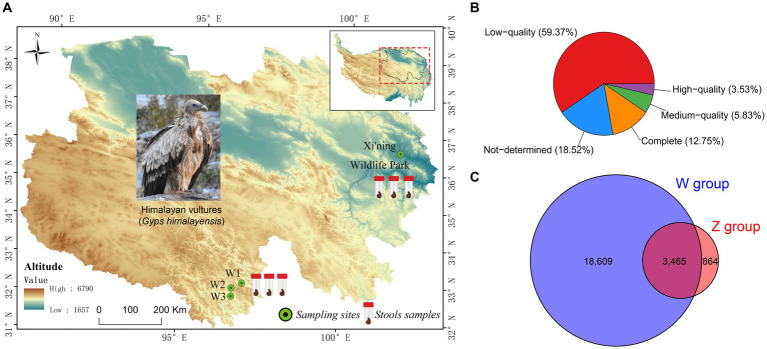
In this study, metagenomic sequencing methods targeting DNA of virus-like particles enriched from feces were used to characterize the gut DNA viromes of wild and captive Himalayan vultures.
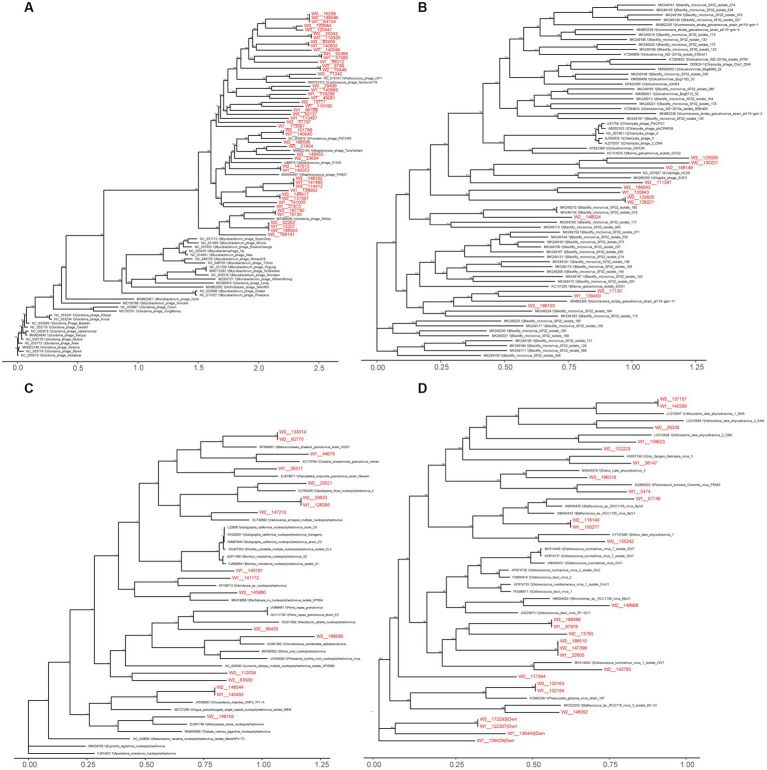
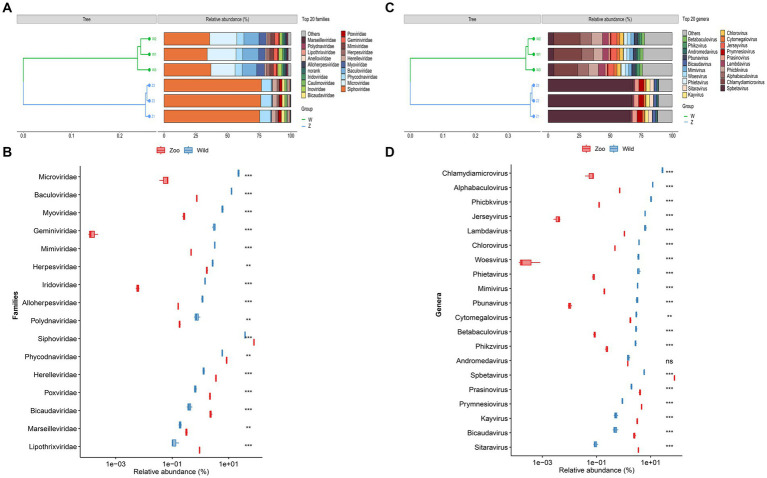
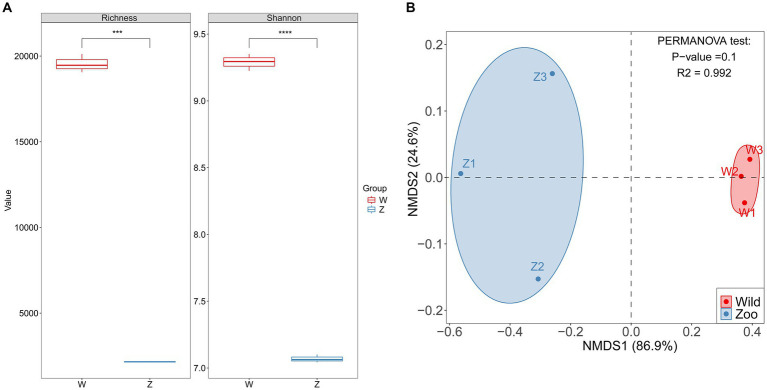
In total, 22,938 unique viral operational taxonomic units (vOTUs) were identified and assigned to 140 viral genera in 41 viral families. These families included viruses associated with bacteria, animals, plants, insects, and archaea. Phage communities, including , , , , and , dominated the gut virome of Himalayan vultures. Wild vultures exhibited higher viral richness and diversity compared with those in captivity. The functional capacity of the gut virome was characterized by identifying 93 KEGG pathways, which were significantly enriched in metabolism and genetic information processing. Abundant auxiliary metabolic genes, such as carbohydrate-active enzyme, and antibiotic resistance genes, were also found in the vultures' gut virome.
Our findings reveal the complex and diverse viral community present in the gut virome of Himalayan vultures, which varies between wild, and captive states. The DNA virome dataset establishes a baseline for the vultures' gut virome and will serve as a reference for future virus isolation and cultivation. Understanding the impact of captivity on the gut virome contributes to our knowledge of vultures' response to captivity and aids in optimizing their rehabilitation and implementing protective measures.
喜马拉雅兀鹫广泛分布于青藏高原,通过取食野生动物和家畜的腐尸在维持生态平衡方面发挥着关键作用。大规模培养和宏基因组学研究拓宽了我们对动物胃肠道病毒多样性的认识。然而,尽管肠道病毒群落对于调节细菌多样性和发挥共生功能至关重要,但尚未对喜马拉雅兀鹫开展过肠道病毒研究。此外,圈养对这些兀鹫肠道病毒组的影响仍不清楚。
在本研究中,采用针对从粪便中富集的病毒样颗粒DNA的宏基因组测序方法,对野生和圈养喜马拉雅兀鹫的肠道DNA病毒组进行表征。
共鉴定出22,938个独特的病毒操作分类单元(vOTU),并将其归入41个病毒科的140个病毒属。这些科包括与细菌、动物、植物、昆虫和古菌相关的病毒。噬菌体群落,包括肌尾噬菌体属、长尾噬菌体属、短尾噬菌体属、被膜噬菌体属和葡萄球菌噬菌体属,在喜马拉雅兀鹫的肠道病毒组中占主导地位。与圈养的兀鹫相比,野生兀鹫表现出更高的病毒丰富度和多样性。通过鉴定93条KEGG通路对肠道病毒组的功能能力进行了表征,这些通路在代谢和遗传信息处理方面显著富集。在兀鹫的肠道病毒组中还发现了丰富的辅助代谢基因,如碳水化合物活性酶,以及抗生素抗性基因。
我们的研究结果揭示了喜马拉雅兀鹫肠道病毒组中存在的复杂多样的病毒群落,其在野生和圈养状态之间有所不同。DNA病毒组数据集为兀鹫的肠道病毒组建立了基线,并将作为未来病毒分离和培养的参考。了解圈养对肠道病毒组的影响有助于我们了解兀鹫对圈养的反应,并有助于优化其康复过程和实施保护措施。