Eichie Francisca O, Taiwo Godstime, Idowu Modoluwamu, Sidney Taylor, Treon Emily, Ologunagba Deborah, Leal Yarahy, Ogunade Ibukun M
Division of Animal Science and Nutritional Science, West Virginia University, Morgantown, WV, United States.
Front Vet Sci. 2023 Aug 4;10:1239651. doi: 10.3389/fvets.2023.1239651. eCollection 2023.
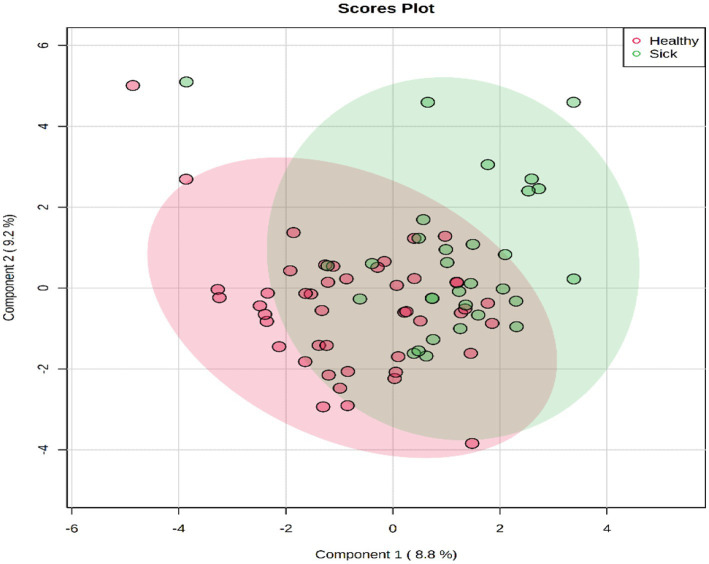
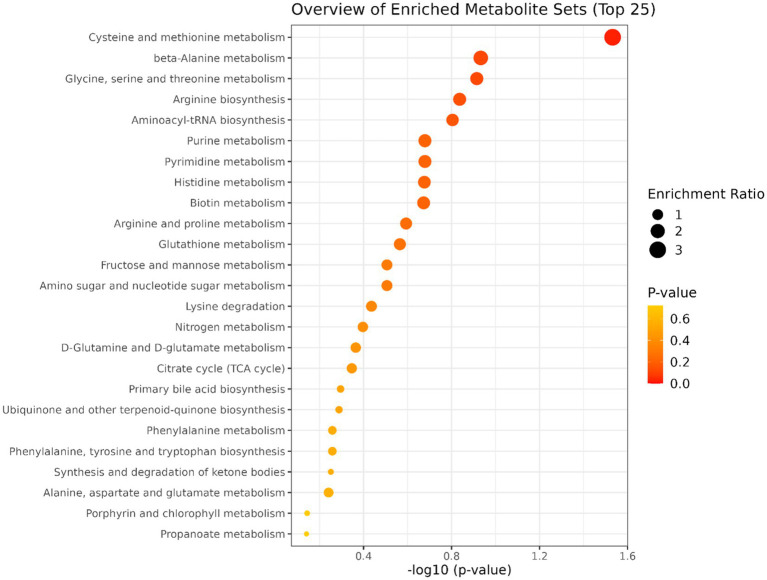
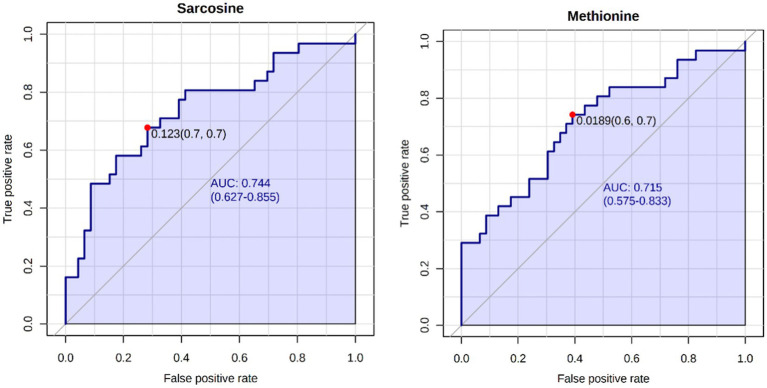
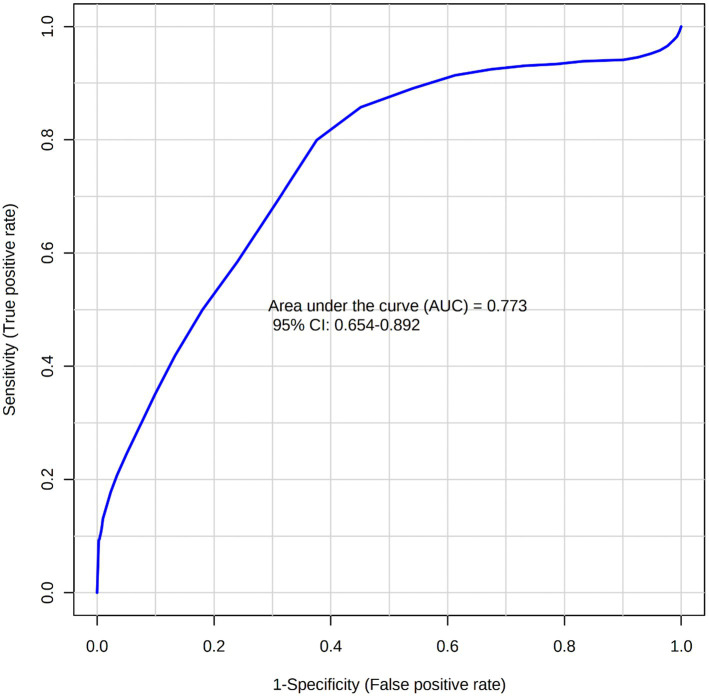
The study aimed to investigate the impact of Bovine Respiratory Disease (BRD) on the metabolism of beef steers during a 35-d receiving period using plasma metabolomics. In this study, 77 newly weaned crossbred (Angus × Hereford) beef steers (BW = 206 ± 12 kg and age = 180 ± 17 days) were categorized into two groups: Healthy and Sick groups. The Sick group comprised beef steers diagnosed with BRD at any time during the 35-day period ( = 31), while the Healthy group did not show any signs of BRD ( = 46). Blood samples were collected from the coccygeal vessels on day 35, and plasma samples were subjected to targeted metabolomics analysis using Nuclear Magnetic Resonance spectroscopy. Data and statistical analyses, including biomarker and pathway enrichment analyses, were performed using Metaboanalyst 5.0. Results of the growth performance showed that sick steers had lower ( ≤ 0.05) ADG (1.44 vs. 1.64 kg/d) and higher ( = 0.01) feed:gain ratio (3.57 vs. 3.13) compared to healthy steers. A total of 50 metabolites were quantified. The partial least squares discriminant scores plot showed a slight separation between the two groups of steers, indicating some metabolic differences. Furthermore, the plasma concentrations of four metabolites (sarcosine, methionine, dimethyl sulfone, and L-histidine) were greater ( ≤ 0.05) in healthy steers compared to sick steers. Among these metabolites, sarcosine and methionine qualified as candidate biomarkers associated with BRD infection based on an area under the curve >0.70. Additionally, quantitative enrichment analysis revealed that cysteine and methionine metabolism was enriched in healthy steers compared to sick steers. This suggests that these metabolic pathways may play a role in the response to BRD infection. The findings of this study highlight the altered plasma metabolome in steers with BRD during the receiving period. Understanding these metabolic changes can contribute to the development of effective management strategies and nutritional interventions to mitigate the negative impact of BRD on beef cattle health and immune function.
本研究旨在利用血浆代谢组学方法,调查在35天的接收期内,牛呼吸道疾病(BRD)对肉牛代谢的影响。在本研究中,77头新断奶的杂交(安格斯×赫里福德)肉牛(体重=206±12千克,年龄=180±17天)被分为两组:健康组和患病组。患病组包括在35天期间任何时间被诊断患有BRD的肉牛(n=31),而健康组未表现出任何BRD迹象(n=46)。在第35天从尾静脉采集血样,并使用核磁共振波谱对血浆样本进行靶向代谢组学分析。使用Metaboanalyst 5.0进行数据和统计分析,包括生物标志物和通路富集分析。生长性能结果表明,与健康肉牛相比,患病肉牛的平均日增重较低(P≤0.05)(1.44对1.64千克/天),饲料转化率较高(P=0.01)(3.57对3.13)。共定量了50种代谢物。偏最小二乘判别得分图显示两组肉牛之间有轻微分离,表明存在一些代谢差异。此外,与患病肉牛相比,健康肉牛的四种代谢物(肌氨酸、蛋氨酸、二甲基砜和L-组氨酸)的血浆浓度更高(P≤0.05)。在这些代谢物中,基于曲线下面积>0.70,肌氨酸和蛋氨酸被鉴定为与BRD感染相关的候选生物标志物。此外,定量富集分析显示,与患病肉牛相比,健康肉牛中半胱氨酸和蛋氨酸代谢途径富集。这表明这些代谢途径可能在对BRD感染的反应中发挥作用。本研究结果突出了接收期患有BRD的肉牛血浆代谢组的改变。了解这些代谢变化有助于制定有效的管理策略和营养干预措施,以减轻BRD对肉牛健康和免疫功能的负面影响。