Department of Physical Therapy and Health Rehabilitation, College of Applied Medical Sciences, Majmaah University, Al-Majmaah 11952, Saudi Arabia.
Department of Physiotherapy, Buddha Paramedical College, GIDA, Gorakhpur, UP 273209, India.
Pain Res Manag. 2023 Aug 14;2023:1799005. doi: 10.1155/2023/1799005. eCollection 2023.
This study aimed to compare the efficacy of manual therapy and pressure biofeedback-guided DCFM strength training on pain intensity and functional limitations in individuals with CGH. . A double-blinded, two-arm parallel group randomized comparative design.
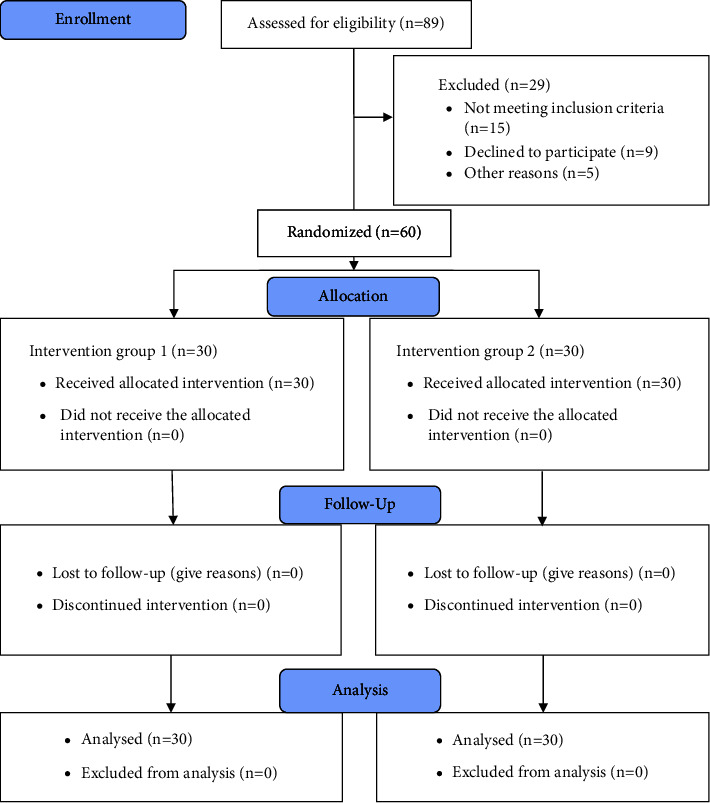
After applying the eligibility criteria, sixty out of eighty-nine CGH patients were recruited from King Saud University Medical Center in Riyadh and randomly allocated to intervention groups using simple random sampling. Group 1 underwent pressure biofeedback-guided DCFM strength training and conventional treatment, while Group 2 received manual therapy and conventional treatment for three consecutive weeks. The main outcome measures were scores on the visual analog scale (VAS) and the headache disability index (HDI). One assessor and two physical therapists were blinded to group allocation.
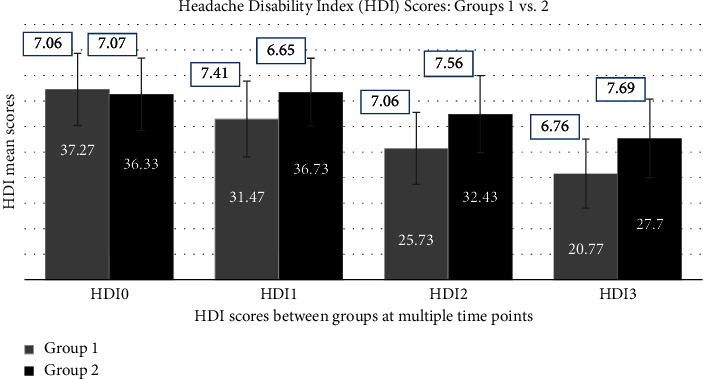
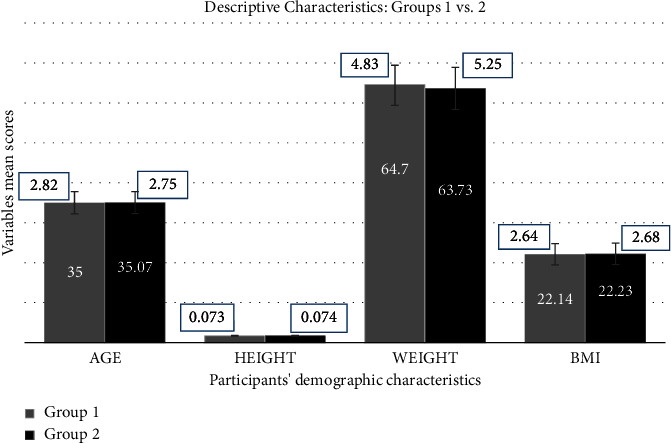
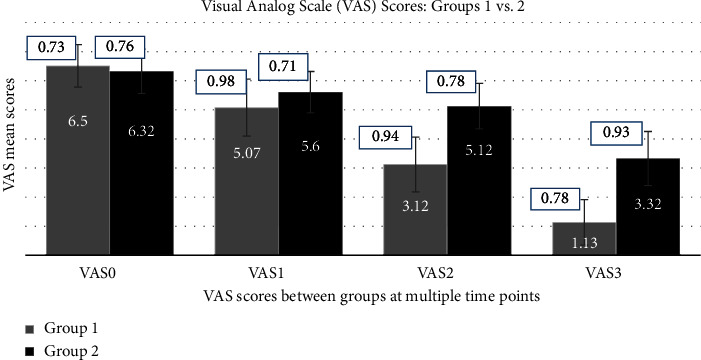
Sixty out of eighty participants aged 29-40 years were randomized into intervention groups ( = 30/group; age (mean ± standard deviation): group 1 = 35.0 ± 2.82; group 2 = 34.87 ± 2.60), and their data were analyzed. A significant improvement (95% CI, < 0.05) was observed within each group when comparing the VAS and HDI scores between baseline and postintervention. In contrast, between-group comparisons for the outcome score of VAS and HDI revealed nonsignificant differences in the first, second, and third weeks after intervention, except for the VAS score, which showed a significant difference in weeks 2 and 3 after intervention. Cohen's -value indicated that the intervention effect size for reducing pain was larger in group 1 than in group 2 at weeks 2 and 3.
Compared with manual therapy, pressure biofeedback-guided DCFM strength training showed a greater reduction in pain intensity (assessed using the VAS) at weeks two and three. However, both treatments were equally effective in lowering headache-related functional limitations in patients with CGH. This trial is registered with ClinicalTrial.gov PRS (Identifier ID: NCT05692232).
本研究旨在比较手动疗法和压力生物反馈指导下的 DCFM 力量训练对 CGH 患者疼痛强度和功能障碍的疗效。采用双盲、双臂平行组随机对照设计。
在应用入选标准后,从利雅得的沙特国王大学医学中心招募了 89 名 CGH 患者中的 60 名,并使用简单随机抽样法将他们随机分配到干预组。第 1 组接受压力生物反馈指导下的 DCFM 力量训练和常规治疗,第 2 组接受手动疗法和常规治疗,连续 3 周。主要结局指标是视觉模拟评分(VAS)和头痛残疾指数(HDI)评分。一名评估者和两名物理治疗师对分组情况不知情。
在 80 名参与者中,年龄为 29-40 岁的 60 名被随机分配到干预组(每组 30 名;年龄(均值±标准差):第 1 组=35.0±2.82;第 2 组=34.87±2.60),并对其数据进行了分析。与基线相比,每个组在 VAS 和 HDI 评分之间,在干预后均观察到显著改善(95%CI, < 0.05)。相比之下,在 VAS 和 HDI 结局评分的组间比较中,干预后第 1、2 和 3 周的差异无统计学意义,除了 VAS 评分,在干预后第 2 和第 3 周有显著差异。Cohen's -值表明,在干预后第 2 和第 3 周,与第 2 组相比,第 1 组在减轻疼痛方面的干预效果更大。
与手动疗法相比,压力生物反馈指导下的 DCFM 力量训练在第 2 和第 3 周时显示出更大的疼痛强度降低(用 VAS 评估)。然而,两种治疗方法在降低 CGH 患者头痛相关功能障碍方面同样有效。本试验在 ClinicalTrials.gov PRS 注册(标识符 ID:NCT05692232)。