Borrelli Kristyn N, Wingfield Kelly K, Yao Emily J, Zamorano Catalina A, Sena Katherine D, Beierle Jacob A, Roos Michelle A, Zhang Huiping, Wachman Elisha M, Bryant Camron D
Laboratory of Addiction Genetics, Department of Pharmacology, Physiology & Biophysics, Boston University Chobanian and Avedisian School of Medicine, 72 E. Concord St., L-606B, Boston, MA 02118.
Graduate Program for Neuroscience, Boston University, 610 Commonwealth Av, Boston, MA 02215.
bioRxiv. 2023 Aug 7:2023.08.04.552033. doi: 10.1101/2023.08.04.552033.
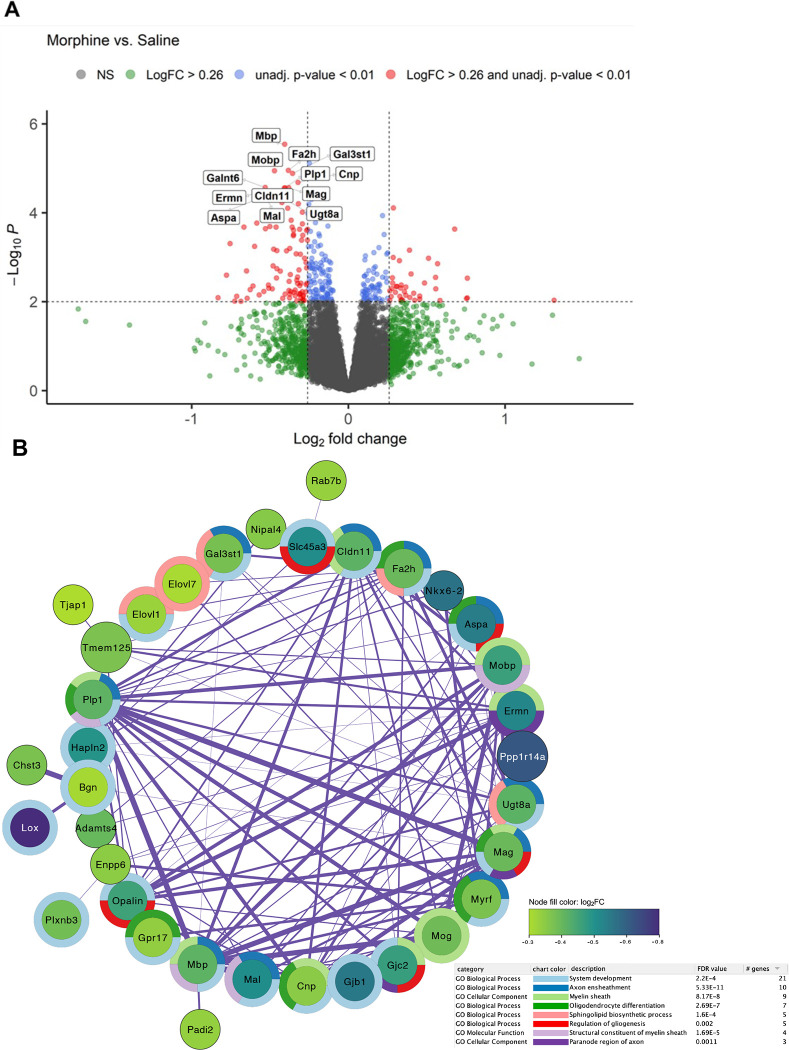
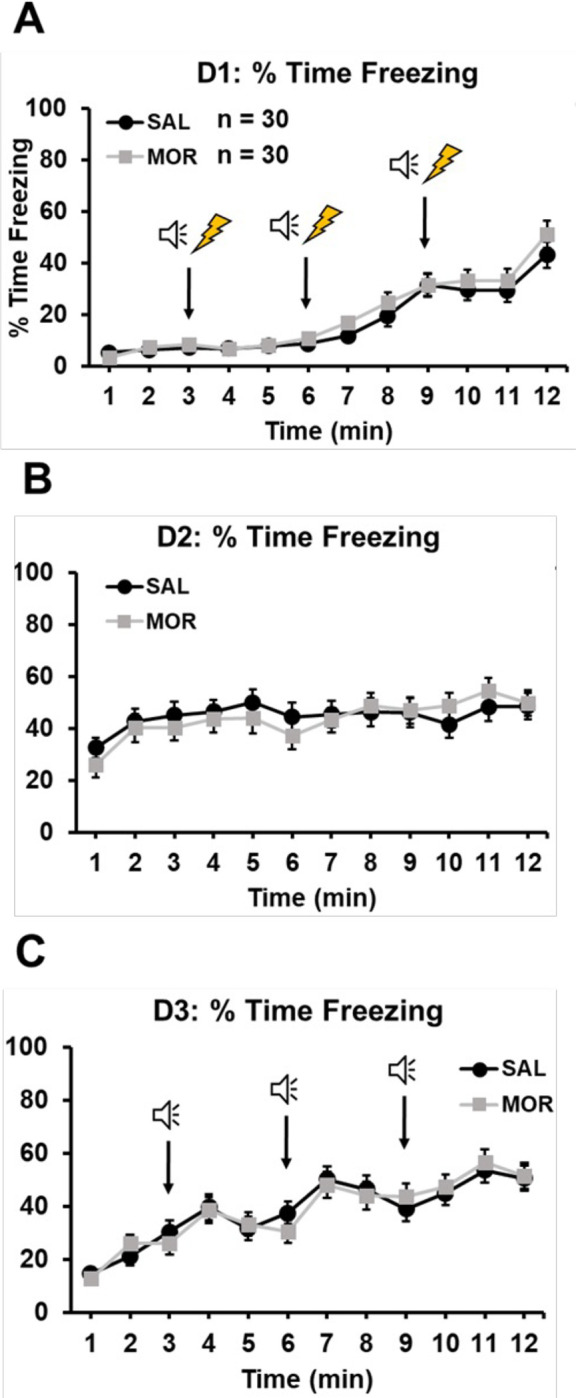
Prenatal opioid exposure is a major health concern in the United States, with the incidence of neonatal opioid withdrawal syndrome (NOWS) escalating in recent years. NOWS occurs upon cessation of opioid exposure and is characterized by increased irritability, disrupted sleep patterns, high-pitched crying, and dysregulated feeding. The main pharmacological strategy for alleviating symptoms is treatment with replacement opioids. The neural mechanisms mediating NOWS and the long-term neurobehavioral effects are poorly understood. We used a third trimester-approximate model in which neonatal outbred pups (Carworth Farms White; CFW) were administered once-daily morphine (15 mg/kg, s.c.) from postnatal day (P) day 1 through P14 and were then assessed for behavioral and transcriptomic adaptations within the nucleus accumbens (NAc) on P15. We also investigated the long-term effects of perinatal morphine exposure on adult learning and reward sensitivity. We observed significant weight deficits, spontaneous thermal hyperalgesia, and altered ultrasonic vocalization (USV) profiles following repeated morphine and during spontaneous withdrawal. Transcriptome analysis of NAc from opioid-withdrawn P15 neonates via bulk mRNA sequencing identified an enrichment profile consistent with downregulation of myelin-associated transcripts. Despite the neonatal behavioral and molecular effects, there were no significant long-term effects of perinatal morphine exposure on adult spatial memory function in the Barnes Maze, emotional learning in fear conditioning, or in baseline or methamphetamine-potentiated reward sensitivity as measured via intracranial self-stimulation. Thus, the once daily third trimester-approximate exposure regimen, while inducing NOWS model traits and significant transcriptomic effects in neonates, had no significant long-term effects on adult behaviors.
We replicated some NOWS model traits via 1x-daily morphine (P1-P14).We found a downregulation of myelination genes in nucleus accumbens on P15.There were no effects on learning/memory or reward sensitivity in adults.
在美国,产前阿片类药物暴露是一个主要的健康问题,近年来新生儿阿片类药物戒断综合征(NOWS)的发病率不断上升。NOWS在阿片类药物暴露停止后出现,其特征为易怒增加、睡眠模式紊乱、高音调哭闹和喂养失调。缓解症状的主要药理学策略是使用替代阿片类药物进行治疗。介导NOWS的神经机制以及长期神经行为影响尚不清楚。我们使用了一种孕晚期近似模型,其中新生的远交系幼崽(Carworth Farms White;CFW)从出生后第(P)1天到P14每天皮下注射一次吗啡(15 mg/kg),然后在P15对伏隔核(NAc)内的行为和转录组适应性进行评估。我们还研究了围产期吗啡暴露对成年学习和奖赏敏感性的长期影响。我们观察到在重复注射吗啡后及自然戒断期间,体重显著不足、自发热痛觉过敏以及超声发声(USV)模式改变。通过大量mRNA测序对阿片类药物戒断的P15新生儿的NAc进行转录组分析,发现了与髓鞘相关转录本下调一致的富集谱。尽管有新生儿行为和分子效应,但围产期吗啡暴露对巴恩斯迷宫中的成年空间记忆功能、恐惧条件反射中的情绪学习或通过颅内自我刺激测量的基线或甲基苯丙胺增强的奖赏敏感性均无显著长期影响。
我们通过每日一次吗啡(P1 - P14)复制了一些NOWS模型特征。我们发现P15时伏隔核中髓鞘形成基因下调。对成年后的学习/记忆或奖赏敏感性没有影响。