
草药配方揭秘:使用新型方法(NAMs)对植物化学物质的药代动力学和毒理学特征进行计算分析。
Herbal concoction Unveiled: A computational analysis of phytochemicals' pharmacokinetic and toxicological profiles using novel approach methodologies (NAMs).
作者信息
Rai Mansi, Singh Ajay Vikram, Paudel Namuna, Kanase Anurag, Falletta Ermelinda, Kerkar Pranali, Heyda Jan, Barghash Reham F, Pratap Singh Shubham, Soos Miroslav
机构信息
Department of Microbiology, Central University of Rajasthan NH-8, Bandar Sindri, Dist-Ajmer-305817, Rajasthan, India.
Department of Chemical and Product Safety, German Federal Institute of Risk Assessment (BfR), Maxdohrnstrasse 8-10, 10589 Berlin, Germany.
出版信息
Curr Res Toxicol. 2023 Aug 12;5:100118. doi: 10.1016/j.crtox.2023.100118. eCollection 2023.
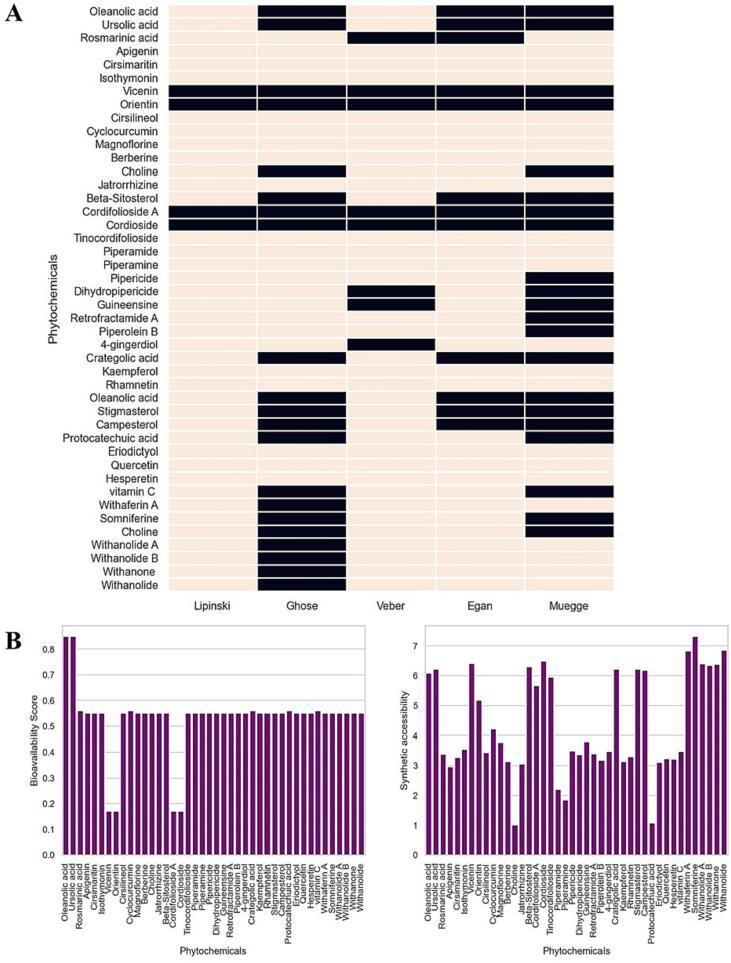
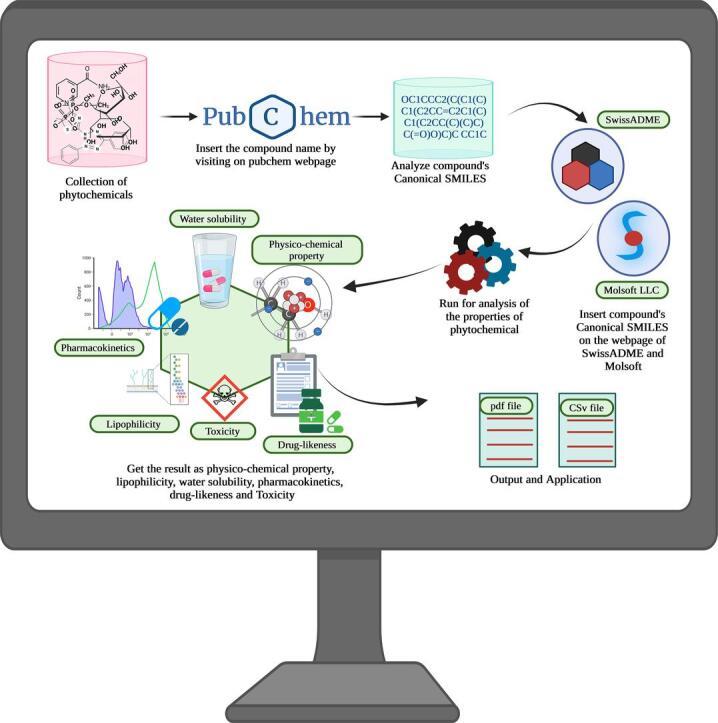
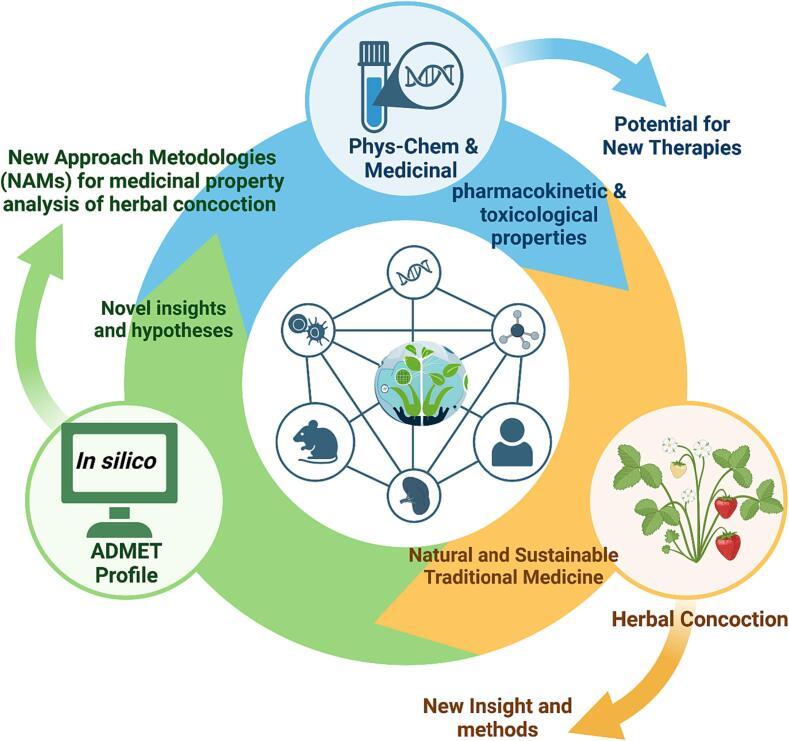
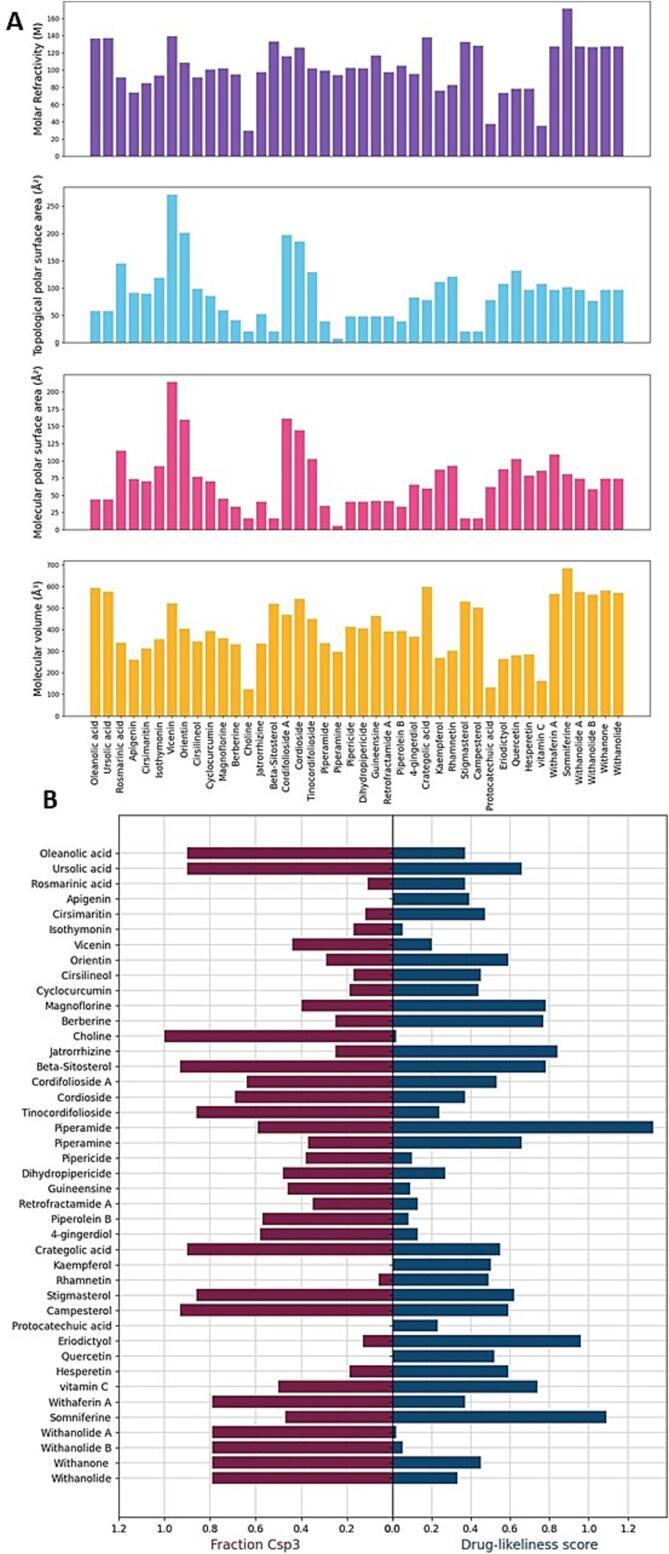
Herbal medications have an extensive history of use in treating various diseases, attributed to their perceived efficacy and safety. Traditional medicine practitioners and contemporary healthcare providers have shown particular interest in herbal syrups, especially for respiratory illnesses associated with the SARS-CoV-2 virus. However, the current understanding of the pharmacokinetic and toxicological properties of phytochemicals in these herbal mixtures is limited. This study presents a comprehensive computational analysis utilizing novel approach methodologies (NAMs) to investigate the pharmacokinetic and toxicological profiles of phytochemicals in herbal syrup, leveraging in-silico techniques and prediction tools such as PubChem, SwissADME, and Molsoft's database. Although molecular dynamics, docking, and broader system-wide analyses were not considered, future studies hold potential for further investigation in these areas. By combining drug-likeness with molecular simulation, researchers identify diverse phytochemicals suitable for complex medication development examining their pharmacokinetic-toxicological profiles in phytopharmaceutical syrup. The study focuses on herbal solutions for respiratory infections, with the goal of adding to the pool of all-natural treatments for such ailments. This research has the potential to revolutionize environmental and alternative medicine by leveraging in-silico models and innovative analytical techniques to identify novel phytochemicals with enhanced therapeutic benefits and explore network-based and systems biology approaches for a deeper understanding of their interactions with biological systems. Overall, our study offers valuable insights into the computational analysis of the pharmacokinetic and toxicological profiles of herbal concoction. This paves the way for advancements in environmental and alternative medicine. However, we acknowledge the need for future studies to address the aforementioned topics that were not adequately covered in this research.
草药在治疗各种疾病方面有着悠久的使用历史,这归因于人们认为它们具有疗效和安全性。传统医学从业者和当代医疗保健提供者对草药糖浆表现出特别的兴趣,尤其是用于治疗与SARS-CoV-2病毒相关的呼吸道疾病。然而,目前对这些草药混合物中植物化学物质的药代动力学和毒理学特性的了解有限。本研究采用新颖的方法(NAMs)进行全面的计算分析,以研究草药糖浆中植物化学物质的药代动力学和毒理学概况,利用诸如PubChem、SwissADME和Molsoft数据库等计算机技术和预测工具。尽管未考虑分子动力学、对接和更广泛的全系统分析,但未来的研究在这些领域有进一步研究的潜力。通过将药物相似性与分子模拟相结合,研究人员识别出适合复杂药物开发的多种植物化学物质,并研究它们在植物药糖浆中的药代动力学-毒理学概况。该研究聚焦于呼吸道感染的草药溶液,目标是增加此类疾病的全天然治疗方法。这项研究有可能通过利用计算机模型和创新分析技术来识别具有增强治疗益处的新型植物化学物质,并探索基于网络和系统生物学的方法来更深入地了解它们与生物系统的相互作用,从而彻底改变环境医学和替代医学。总体而言,我们的研究为草药制剂的药代动力学和毒理学概况的计算分析提供了有价值的见解。这为环境医学和替代医学的进步铺平了道路。然而,我们承认需要未来的研究来解决本研究中未充分涵盖的上述主题。
 Zotero 插件