Department of Biochemistry and Biophysics, Faculty of Science, Stockholm University, Svante Arrhenius väg 16C, Stockholm, 104 05, Sweden.
Science for Life Laboratory (SciLifeLab), Tomtebodavägen 23, 171 65, Solna, Sweden.
BMC Biotechnol. 2023 Aug 23;23(1):31. doi: 10.1186/s12896-023-00804-7.
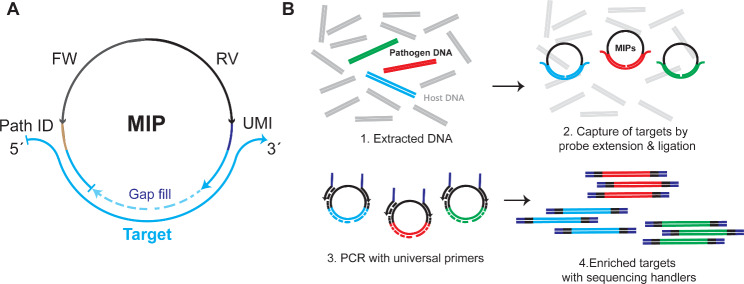
Global efforts to characterize diseases of poverty are hampered by lack of affordable and comprehensive detection platforms, resulting in suboptimal allocation of health care resources and inefficient disease control. Next generation sequencing (NGS) can provide accurate data and high throughput. However, shotgun and metagenome-based NGS approaches are limited by low concentrations of microbial DNA in clinical samples, requirements for tailored sample and library preparations plus extensive bioinformatics analysis. Here, we adapted molecular inversion probes (MIPs) as a cost-effective target enrichment approach to characterize microbial infections from blood samples using short-read sequencing. We designed a probe panel targeting 2 bacterial genera, 21 bacterial and 6 fungi species and 7 antimicrobial resistance markers (AMRs).
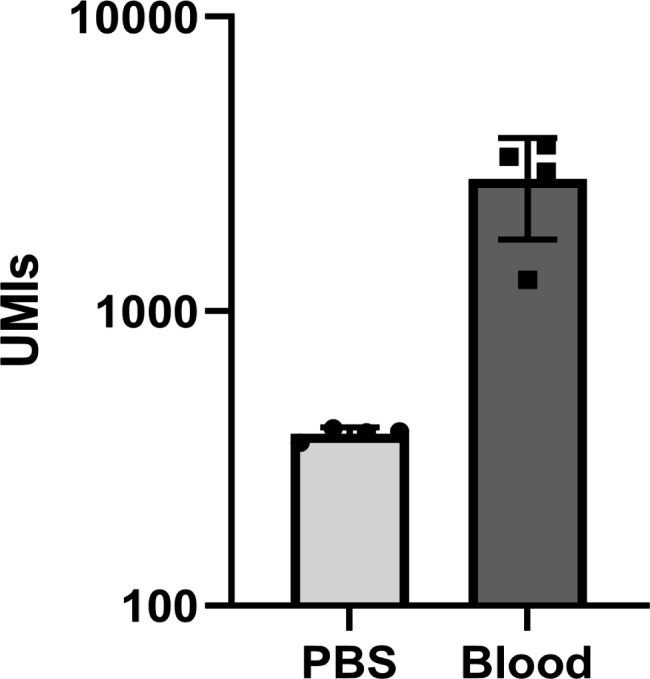
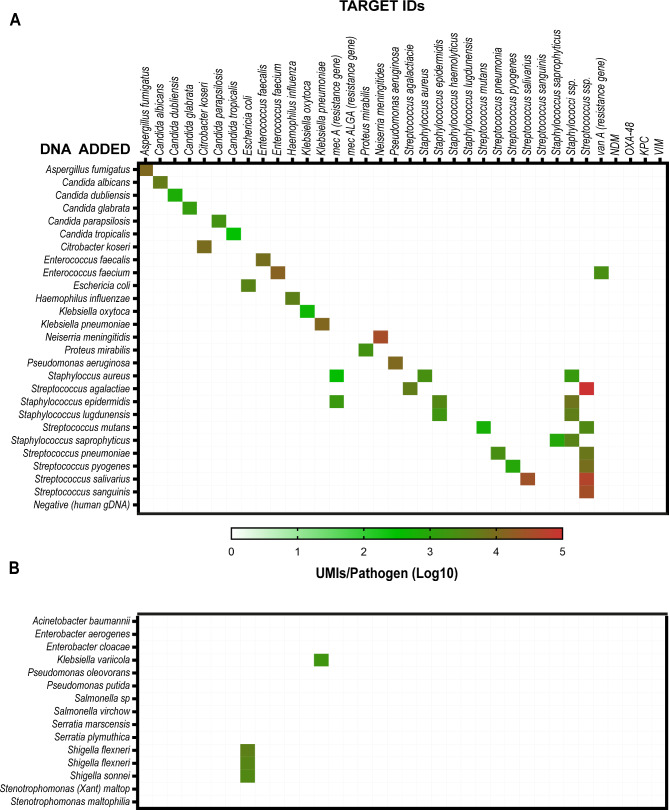
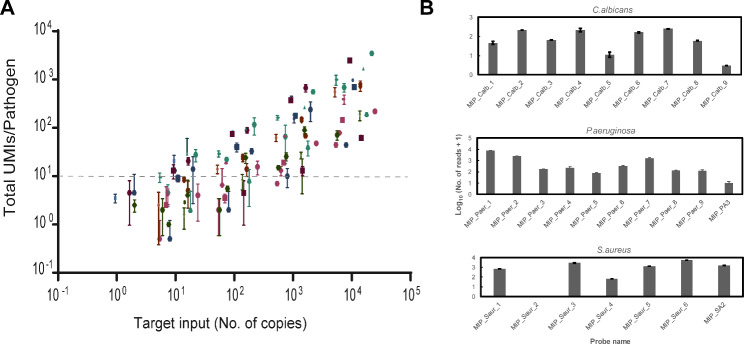
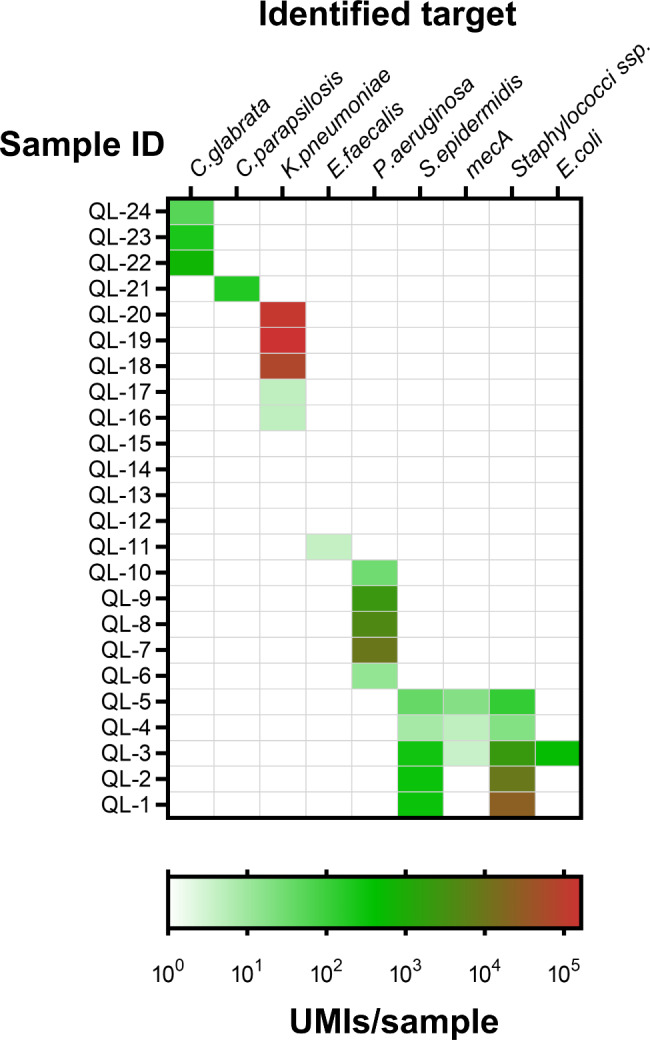
Our approach proved to be highly specific to detect down to 1 in a 1000 pathogen DNA targets contained in host DNA. Additionally, we were able to accurately survey pathogens and AMRs in 20 out of 24 samples previously profiled with routine blood culture for sepsis.
Overall, our targeted assay identifies microbial pathogens and AMRs with high specificity at high throughput, without the need for extensive sample preparation or bioinformatics analysis, simplifying its application for characterization and surveillance of infectious diseases in medium- to low- resource settings.
全球努力描述贫困疾病,但缺乏负担得起且全面的检测平台,这导致医疗保健资源分配不佳和疾病控制效率低下。下一代测序(NGS)可以提供准确的数据和高通量。然而,基于鸟枪法和宏基因组的 NGS 方法受到临床样本中微生物 DNA 浓度低、需要定制的样品和文库制备以及广泛的生物信息学分析的限制。在这里,我们采用分子反转探针(MIP)作为一种具有成本效益的靶向富集方法,使用短读测序从血液样本中表征微生物感染。我们设计了一个针对 2 个细菌属、21 个细菌和 6 个真菌种以及 7 个抗菌药物耐药性标志物(AMR)的探针面板。
我们的方法被证明具有很高的特异性,可以检测到包含在宿主 DNA 中的 1000 个病原体 DNA 靶标中的 1 个。此外,我们能够准确地检测到 24 个先前用常规血液培养进行脓毒症分析的样本中的 20 个病原体和 AMR。
总的来说,我们的靶向检测方法在高通量下具有高特异性,可以识别微生物病原体和 AMR,而无需进行广泛的样品制备或生物信息学分析,从而简化了其在中低收入环境中传染病的特征描述和监测中的应用。