Department of Rheumatology, The First Affiliated Hospital of Zhengzhou University, Zhengzhou, China.
Arthritis Res Ther. 2023 Aug 23;25(1):155. doi: 10.1186/s13075-023-03139-y.
Pulmonary arterial hypertension (PAH) is a severe complication of systemic lupus erythematosus (SLE). This study aims to explore the clinical characteristics and prognosis in SLE-PAH based on consensus clustering and risk prediction model.
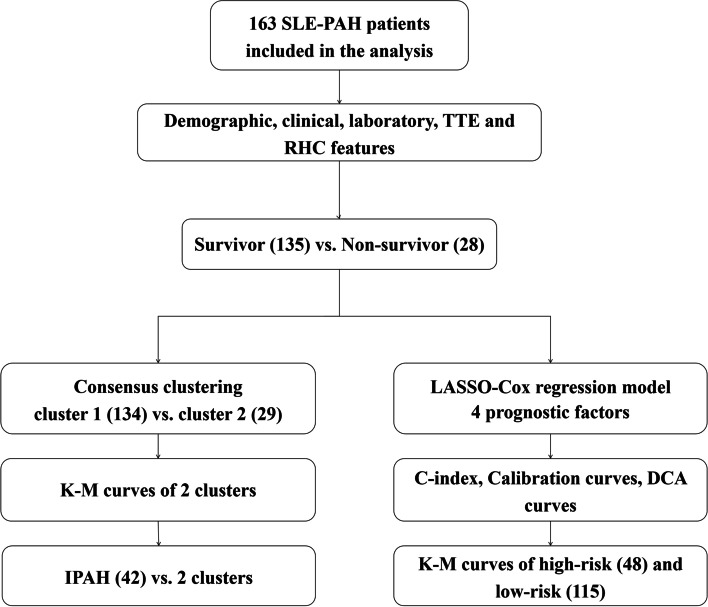
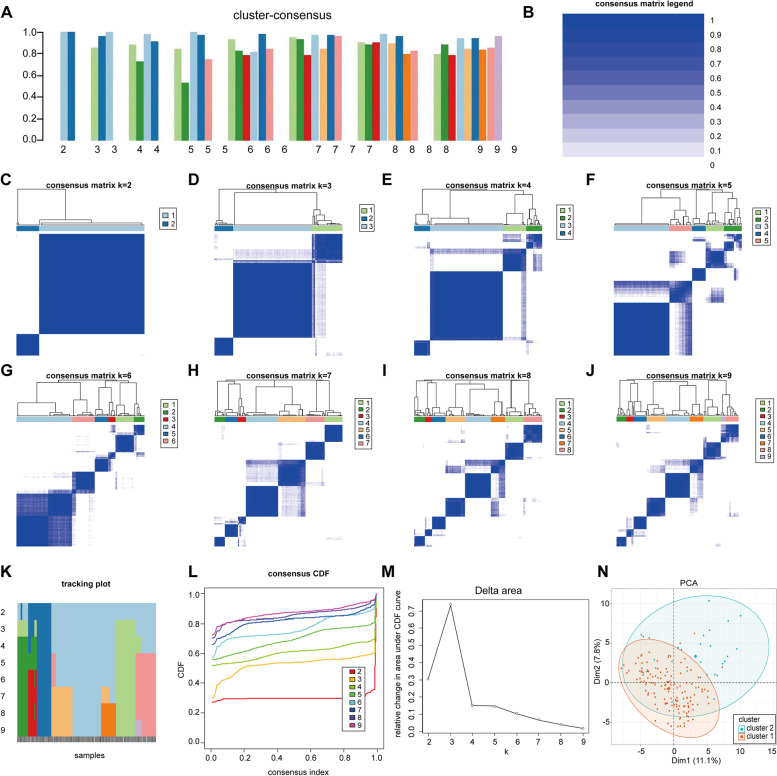
A total of 205 PAH (including 163 SLE-PAH and 42 idiopathic PAH) patients were enrolled retrospectively based on medical records at the First Affiliated Hospital of Zhengzhou University from July 2014 to June 2021. Unsupervised consensus clustering was used to identify SLE-PAH subtypes that best represent the data pattern. The Kaplan-Meier survival was analyzed in different subtypes. Besides, the least absolute shrinkage and selection operator combined with Cox proportional hazards regression model were performed to construct the SLE-PAH risk prediction model.
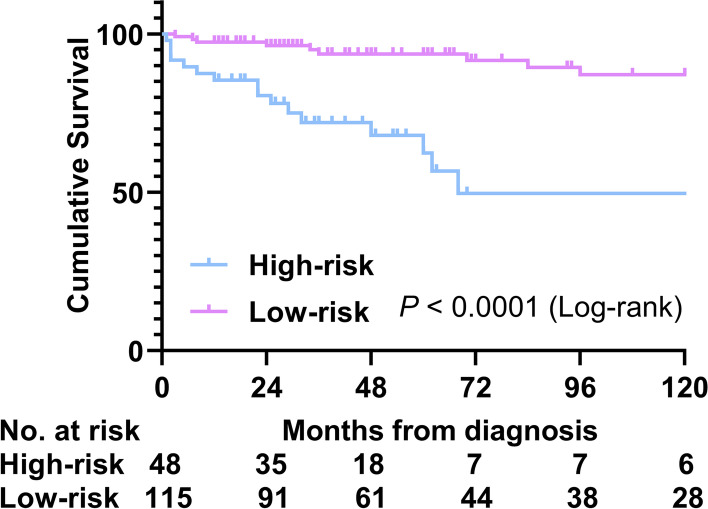
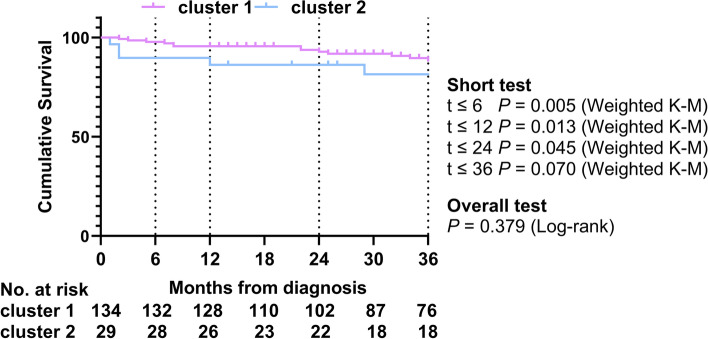
Clustering analysis defined two subtypes, cluster 1 (n = 134) and cluster 2 (n = 29). Compared with cluster 1, SLE-PAH patients in cluster 2 had less favorable levels of poor cardiac, kidney, and coagulation function markers, with higher SLE disease activity, less frequency of PAH medications, and lower survival rate within 2 years (86.2% vs. 92.8%) (P < 0.05). The risk prediction model was also constructed, including older age at diagnosis (≥ 38 years), anti-dsDNA antibody, neuropsychiatric lupus, and platelet distribution width (PDW).
Consensus clustering identified two distinct SLE-PAH subtypes which were associated with survival outcomes. Four prognostic factors for death were discovered to construct the SLE-PAH risk prediction model.
肺动脉高压(PAH)是系统性红斑狼疮(SLE)的严重并发症。本研究旨在通过共识聚类和风险预测模型探讨SLE-PAH 的临床特征和预后。
回顾性分析 2014 年 7 月至 2021 年 6 月郑州大学第一附属医院收治的 205 例 PAH(包括 163 例 SLE-PAH 和 42 例特发性 PAH)患者的病历资料。采用无监督共识聚类方法识别最能代表数据模式的 SLE-PAH 亚型。对不同亚型进行 Kaplan-Meier 生存分析。此外,采用最小绝对收缩和选择算子结合 Cox 比例风险回归模型构建 SLE-PAH 风险预测模型。
聚类分析定义了两个亚型,簇 1(n=134)和簇 2(n=29)。与簇 1 相比,簇 2 的 SLE-PAH 患者心、肾、凝血功能标志物水平更差,SLE 疾病活动度更高,PAH 药物使用频率更低,2 年内生存率更低(86.2%对 92.8%)(P<0.05)。还构建了风险预测模型,包括诊断时年龄较大(≥38 岁)、抗 dsDNA 抗体、神经精神狼疮和血小板分布宽度(PDW)。
共识聚类确定了两种不同的 SLE-PAH 亚型,与生存结局相关。发现四个死亡的预后因素来构建 SLE-PAH 风险预测模型。