Research Center of Biomedical Research, Graduate School of Science and Technology, Kyoto Institute of Technology, Kyoto, Japan.
Genes Cells. 2023 Oct;28(10):709-726. doi: 10.1111/gtc.13060. Epub 2023 Aug 24.
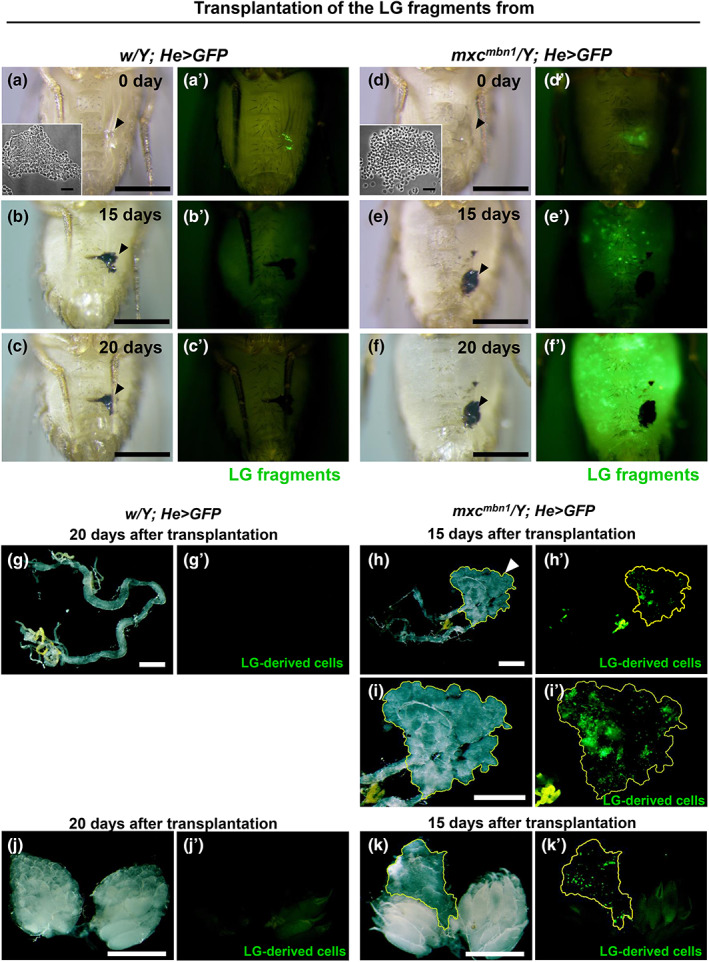
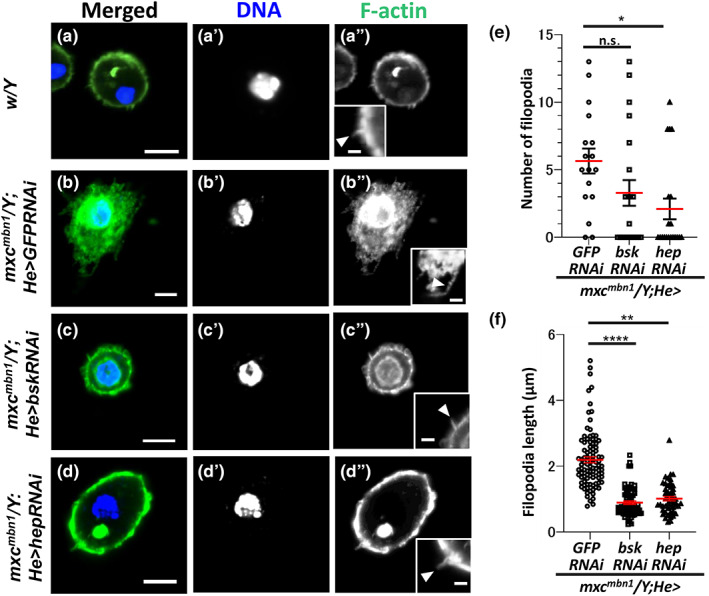
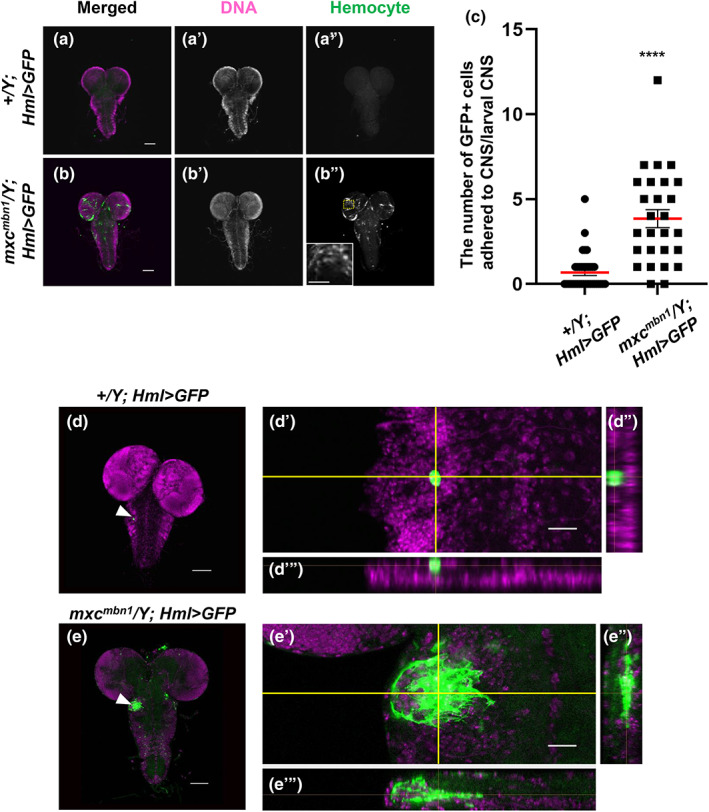
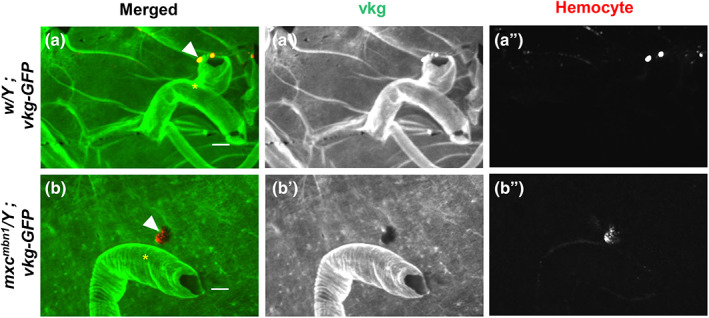
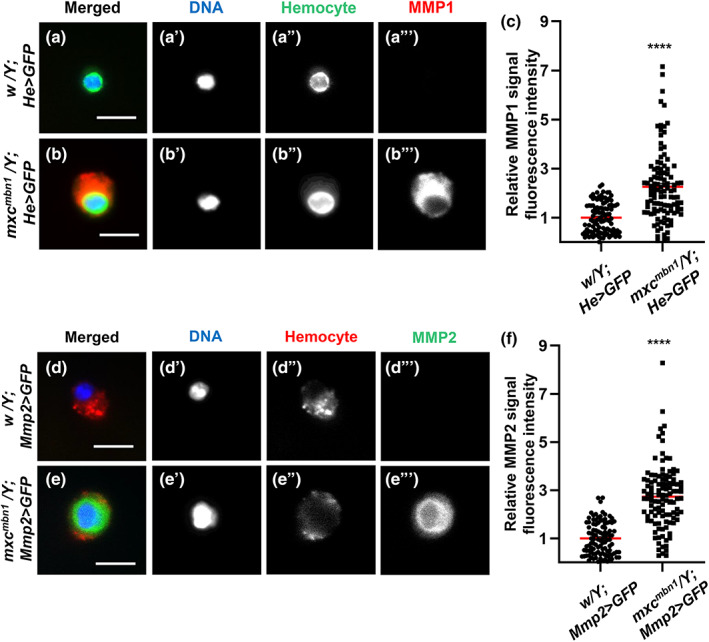
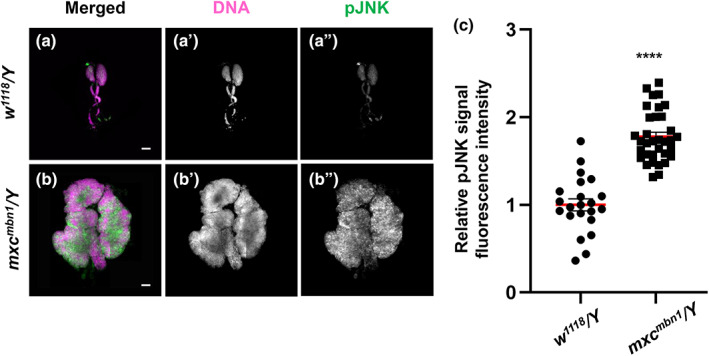
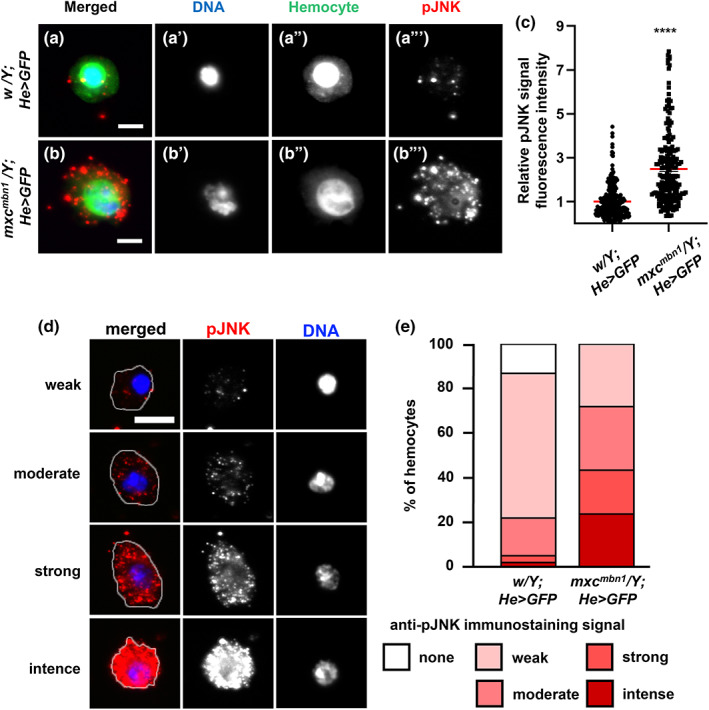
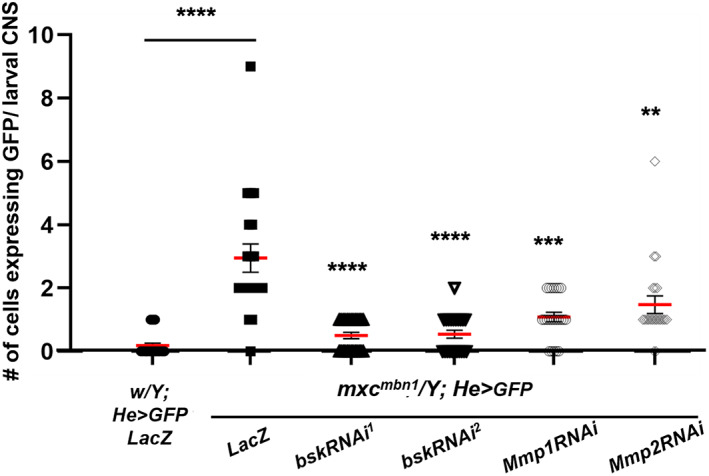
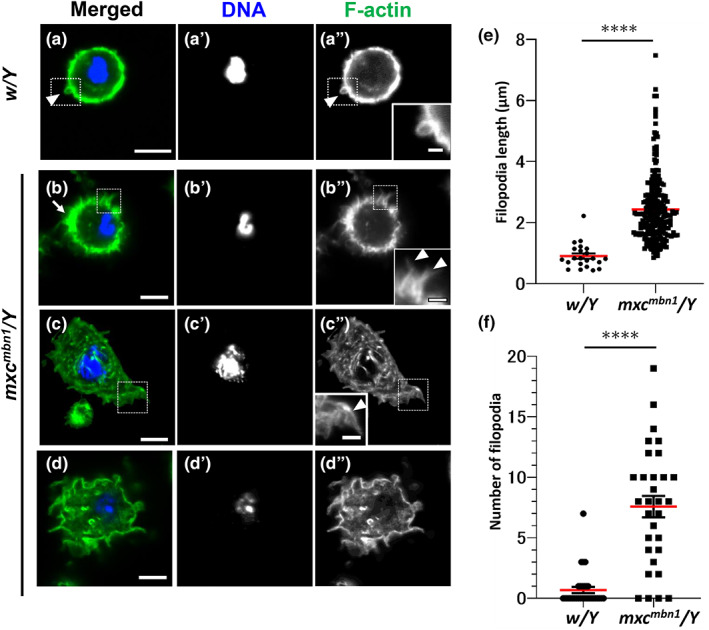
Drosophila mxc mutant exhibits severe hyperplasia in larval hematopoietic tissue called the lymph glands (LGs). However, the malignant nature of these cells remains unknown. We aimed to identify if mxc LG cells behave as malignant tumor cells and uncover the mechanism(s) underlying the malignancy of the mutant hemocytes. When mutant LG cells were allografted into normal adult abdomens, they continued to proliferate; however, normal LG cells did not proliferate. Mutant circulating hemocytes also attached to the larval central nervous system (CNS), where the basement membrane was disrupted. The mutant hemocytes displayed higher expression of matrix metalloproteinase (MMP) 1 and MMP2 and higher activation of the c-Jun N-terminal kinase (JNK) pathway than normal hemocytes. Depletion of MMPs or JNK mRNAs in LGs resulted in reduced numbers of hemocytes attached to the CNS, suggesting that the invasive phenotype involved elevated expression of MMPs via hyperactivation of the JNK pathway. Moreover, hemocytes with elongated filopodia and extra lamellipodia were frequently observed in the mutant hemolymph, which also depended on JNK signaling. Thus, the MMP upregulation and overextension of actin-based cell protrusions were also involved in hemocyte invasion in mxc larvae. These findings contribute to the understanding of molecular mechanisms underlying mammalian leukemic invasion.
果蝇 mxc 突变体在称为淋巴腺(LGs)的幼虫造血组织中表现出严重的增生。然而,这些细胞的恶性性质尚不清楚。我们旨在确定 mxc LG 细胞是否表现为恶性肿瘤细胞,并揭示突变血细胞恶性的机制。当突变的 LG 细胞被同种异体移植到正常成年腹部时,它们继续增殖;然而,正常的 LG 细胞不会增殖。突变的循环血细胞也附着在幼虫中枢神经系统(CNS)上,那里的基底膜被破坏。与正常血细胞相比,突变血细胞表现出更高水平的基质金属蛋白酶(MMP)1 和 MMP2 的表达,以及更高的 c-Jun N 末端激酶(JNK)途径的激活。在 LG 中耗尽 MMPs 或 JNK mRNAs 导致附着在 CNS 的血细胞数量减少,这表明通过 JNK 途径的过度激活,侵袭表型涉及 MMPs 的高表达。此外,在突变的血淋巴中经常观察到具有细长的丝状伪足和额外的片状伪足的血细胞,这也依赖于 JNK 信号。因此,MMP 的上调和肌动蛋白为基础的细胞突起的过度延伸也参与了 mxc 幼虫中血细胞的侵袭。这些发现有助于理解哺乳动物白血病侵袭的分子机制。