Department of Insect Biomedical Research, Centre for Advanced Insect Research Promotion, Kyoto Institute of Technology, Kyoto 606-0962, Japan.
Medical Institute of Bioregulation, Kyushu University, Kyushu 812-0054, Japan.
Dis Model Mech. 2019 Jun 18;12(6):dmm037721. doi: 10.1242/dmm.037721.
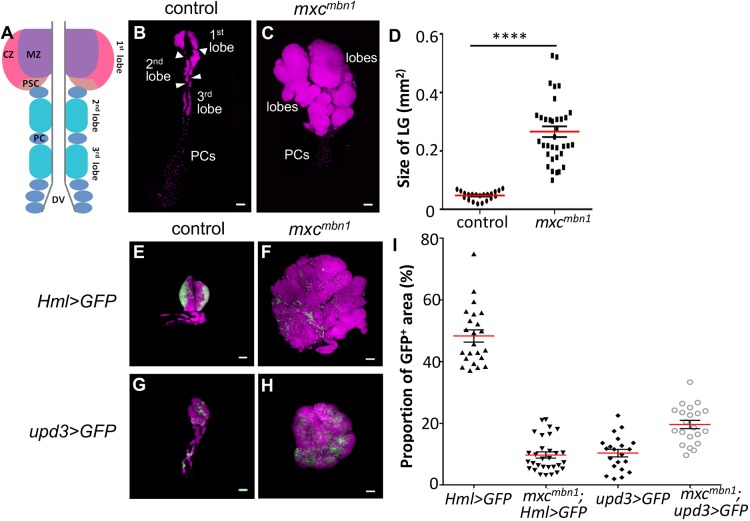
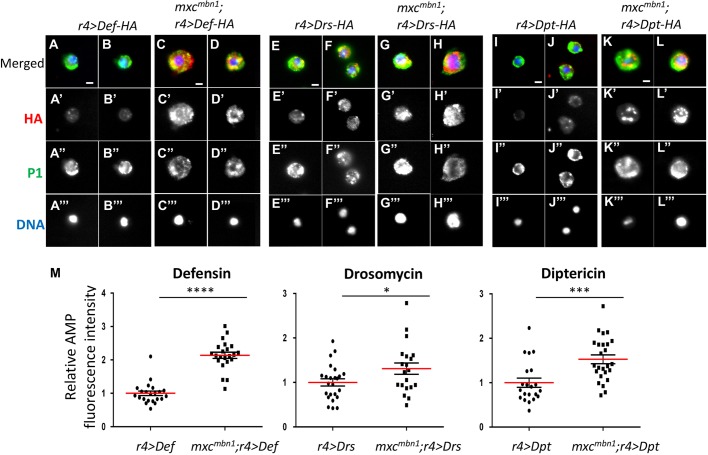
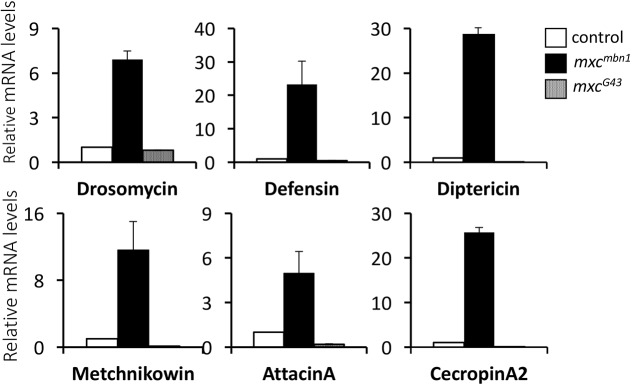
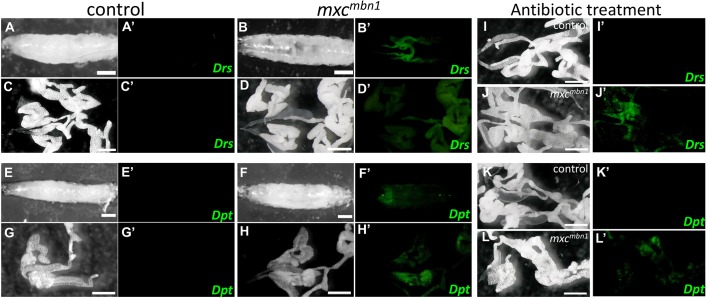
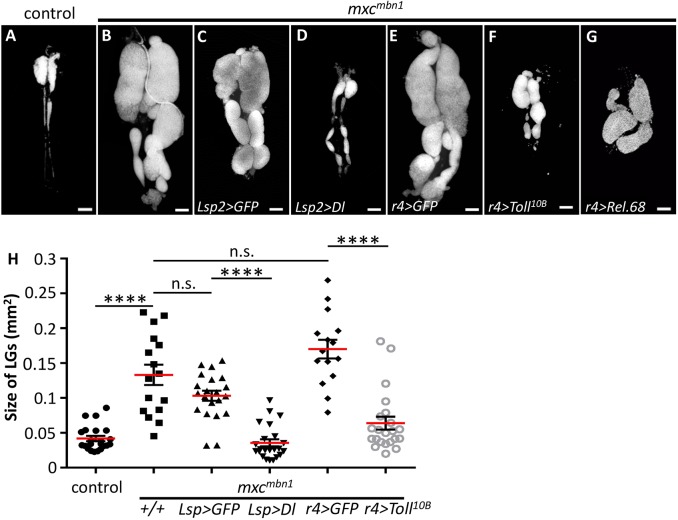
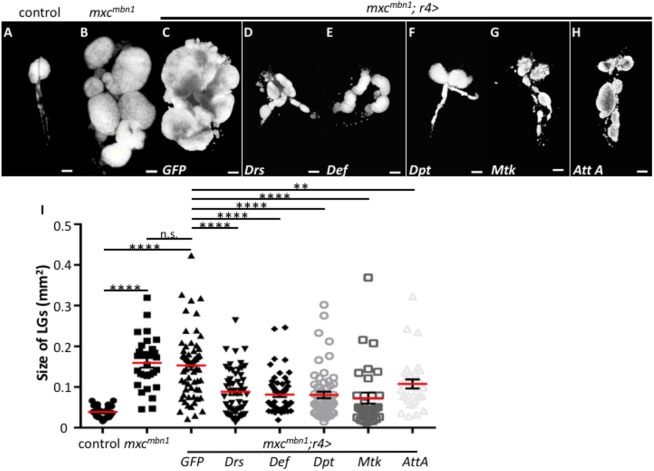
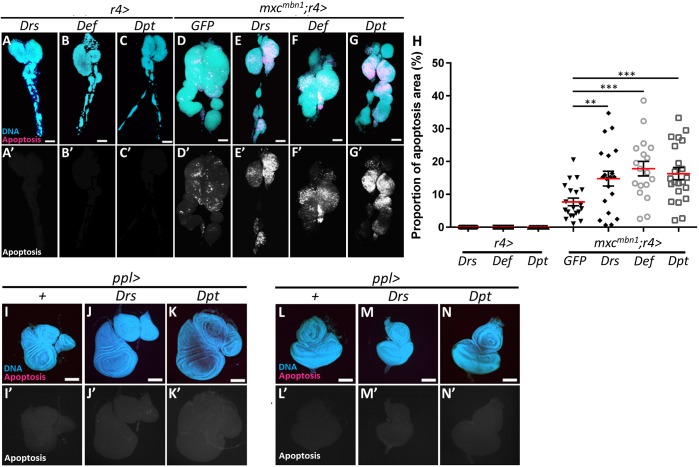
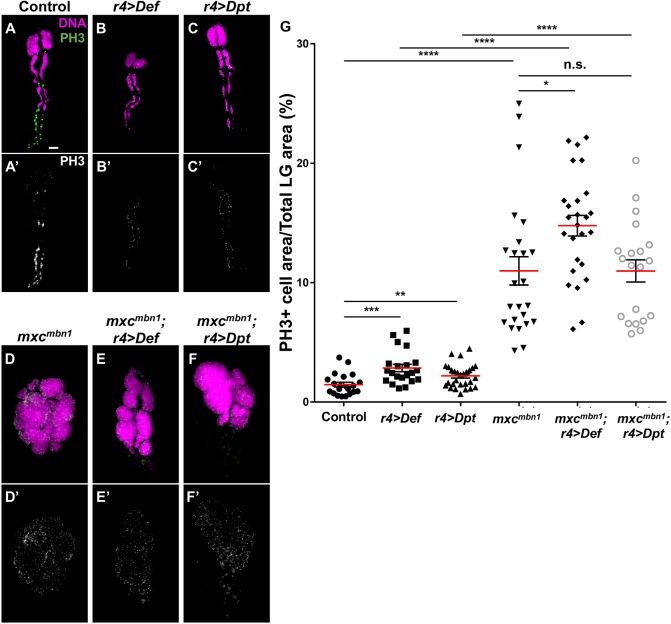
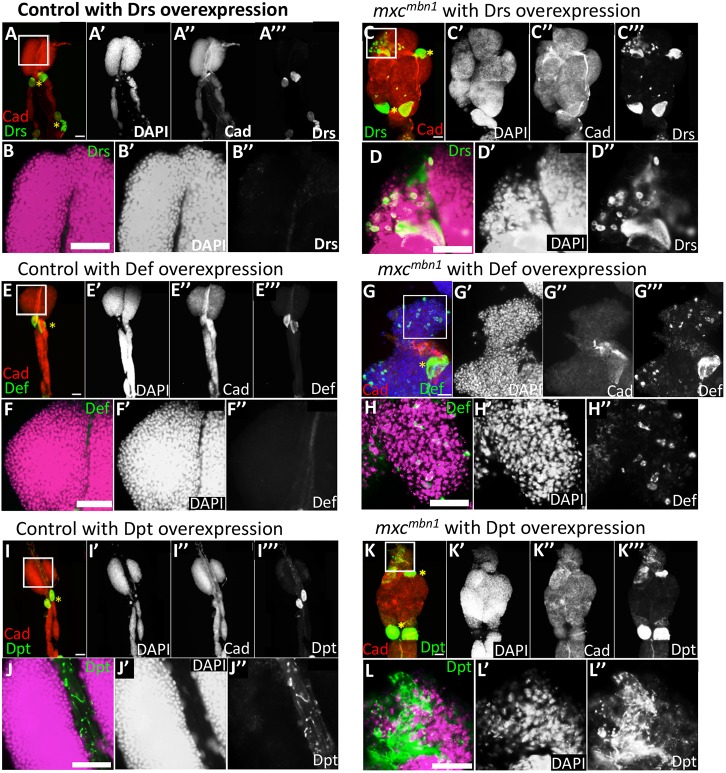
The innate immune response is the first line of defence against microbial infections. In , two major pathways of the innate immune system (the Toll- and Imd-mediated pathways) induce the synthesis of antimicrobial peptides (AMPs) within the fat body. Recently, it has been reported that certain cationic AMPs exhibit selective cytotoxicity against human cancer cells; however, little is known about their anti-tumour effects. mutants exhibit malignant hyperplasia in a larval haematopoietic organ called the lymph gland (LG). Here, using RNA-seq analysis, we found many immunoresponsive genes, including those encoding AMPs, to be upregulated in these mutants. Downregulation of these pathways by either a or mutation enhanced the tumour phenotype of the mutants. Conversely, ectopic expression of each of five different AMPs in the fat body significantly suppressed the LG hyperplasia phenotype in the mutants. Thus, we propose that the innate immune system can suppress the progression of haematopoietic tumours by inducing AMP gene expression. Overexpression of any one of the five AMPs studied resulted in enhanced apoptosis in mutant LGs, whereas no apoptotic signals were detected in controls. We observed that two AMPs, Drosomycin and Defensin, were taken up by circulating haemocyte-like cells, which were associated with the LG regions and showed reduced cell-to-cell adhesion in the mutants. By contrast, the AMP Diptericin was directly localised at the tumour site without intermediating haemocytes. These results suggest that AMPs have a specific cytotoxic effect that enhances apoptosis exclusively in the tumour cells.
先天免疫系统是抵御微生物感染的第一道防线。在[文献]中,先天免疫系统的两条主要途径(Toll 和 Imd 介导的途径)在脂肪体中诱导抗菌肽(AMPs)的合成。最近,据报道某些阳离子 AMP 对人类癌细胞具有选择性细胞毒性;然而,其抗肿瘤作用知之甚少。[突变体]在一种称为淋巴腺(LG)的幼虫造血器官中表现出恶性增生。在这里,我们通过 RNA-seq 分析发现,这些突变体中许多免疫反应基因,包括编码 AMP 的基因,上调。这两条途径的下调,无论是通过[突变]还是[突变],都增强了[突变体]的肿瘤表型。相反,在脂肪体中异位表达五种不同 AMP 中的每一种,都能显著抑制突变体中 LG 的增生表型。因此,我们提出[先天免疫系统]可以通过诱导 AMP 基因表达来抑制造血肿瘤的进展。研究的五种 AMP 中的任何一种的过表达都会导致突变体 LG 中的细胞凋亡增加,而对照中未检测到凋亡信号。我们观察到两种 AMP,Drosomycin 和 Defensin,被循环血球样细胞摄取,这些细胞与 LG 区域相关,并在突变体中表现出细胞间粘附减少。相比之下,AMP Diptericin 直接定位于肿瘤部位,而不通过中介血球。这些结果表明,AMP 具有特异性细胞毒性作用,仅在肿瘤细胞中增强细胞凋亡。