School of Accounting and Finance, Anhui Xinhua University, Anhui, China.
Taiwan Research Institute, Xiamen University, Xiamen, China.
PLoS One. 2023 Aug 24;18(8):e0285695. doi: 10.1371/journal.pone.0285695. eCollection 2023.
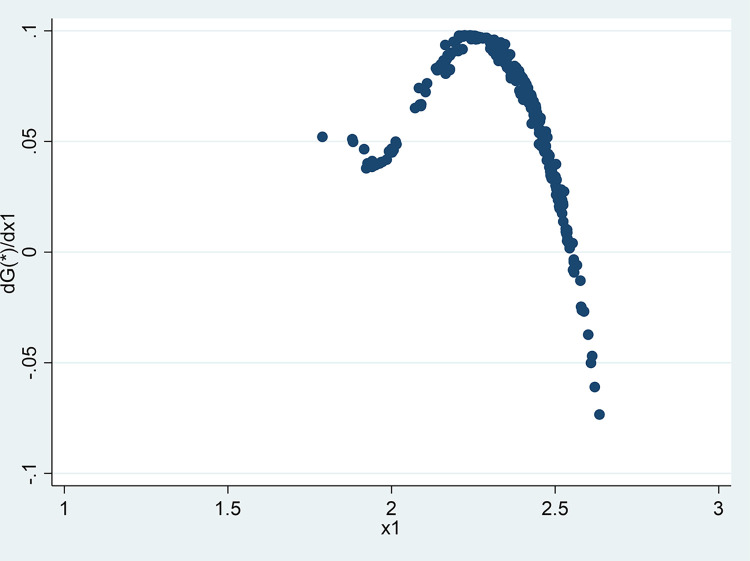
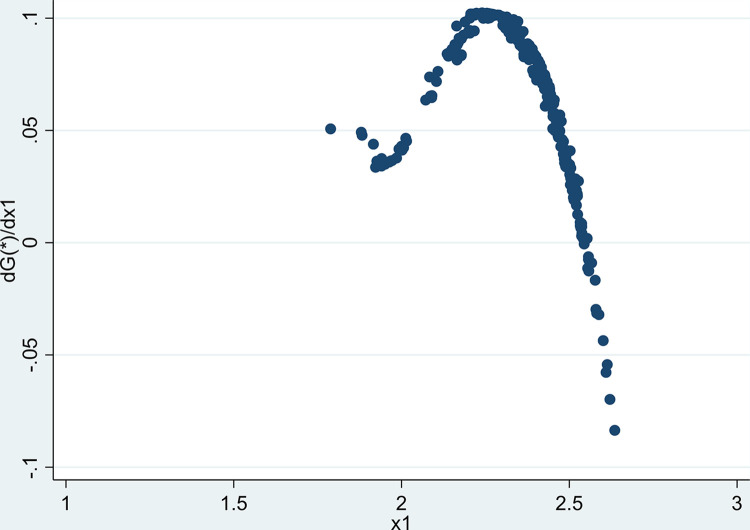
Against the backdrop of the COVID-19 pandemic and China's pursuit of the "double circulation" strategy, scholars are increasingly focusing on ensuring high-quality economic development in China. In this regard, digital inclusive finance and consumer consumption are of utmost significance. This study employs panel data from 30 provinces and cities spanning 2011 to 2020 to explore the impact of digitized inclusive finance on consumer consumption and high-quality economic development through a spatial econometric model. Our findings indicate that integrating digital finance with consumer consumption and economic development fosters high-quality economic growth. Furthermore, our semi-parametric spatial lag model suggests a nonlinear relationship between digital inclusive finance and high-quality economic growth, shaped like an inverted "U". Additionally, we examine the mediating effect of consumer consumption on the relationship between digital inclusive finance and high-quality economic development. Our results reveal a substitution effect between digital inclusive financing and consumer consumption in promoting high-quality economic development. Therefore, it is essential to promote the development of digital inclusive finance, harness its positive spillover effects between regions, and encourage an increase in consumer consumption to optimize the consumption structure, upgrade and adjust the industrial structure, and spur growth in emerging industries.
在中国新冠疫情背景下,中国追求“双循环”战略,学者们越来越关注中国的高质量经济发展。在这方面,数字包容性金融和消费者消费至关重要。本研究利用 2011 年至 2020 年 30 个省、市的面板数据,通过空间计量模型探讨数字化包容性金融对消费者消费和高质量经济发展的影响。我们的研究结果表明,将数字金融与消费者消费和经济发展相结合,促进了高质量的经济增长。此外,我们的半参数空间滞后模型表明,数字包容性金融与高质量经济增长之间存在非线性关系,形状像一个倒“U”。此外,我们还检验了消费者消费在数字包容性金融与高质量经济发展之间关系中的中介效应。我们的结果揭示了数字包容性融资和消费者消费在促进高质量经济发展方面的替代效应。因此,有必要促进数字包容性金融的发展,利用其在地区间的积极溢出效应,并鼓励消费者增加消费,优化消费结构,升级和调整产业结构,促进新兴产业增长。