Department of Medical Sciences, Division of Internal Medicine and Chronobiology Laboratory, Fondazione IRCCS "Casa Sollievo Della Sofferenza", San Giovanni Rotondo, FG, 71013, Italy.
Hematopathology Unit, Fondazione IRCCS "Casa Sollievo Della Sofferenza", San Giovanni Rotondo, FG, 71013, Italy.
J Exp Clin Cancer Res. 2023 Aug 24;42(1):218. doi: 10.1186/s13046-023-02799-7.
T-cell acute lymphoblastic leukemia (T-ALL) is an aggressive hematological malignancy, characterized by restricted cellular subsets with asymmetrically enriched leukemia initiating cell (LIC) activity. Nonetheless, it is still unclear which signaling programs promote LIC maintenance and progression.
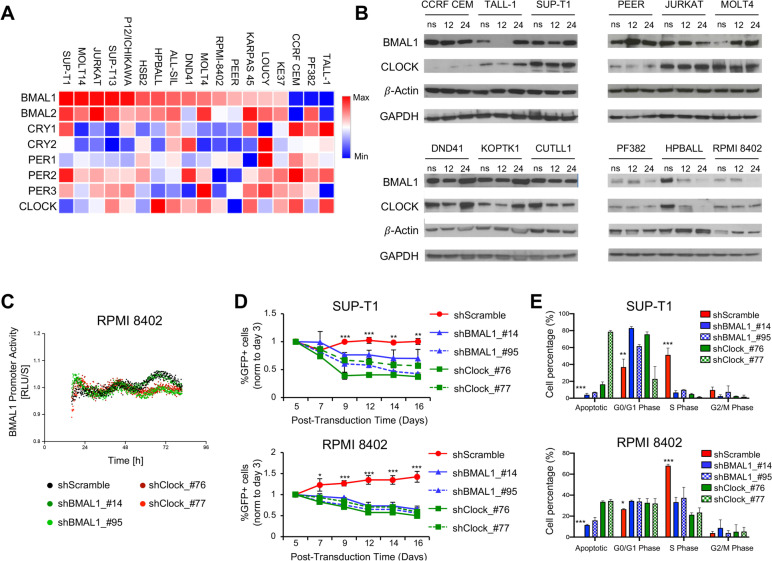
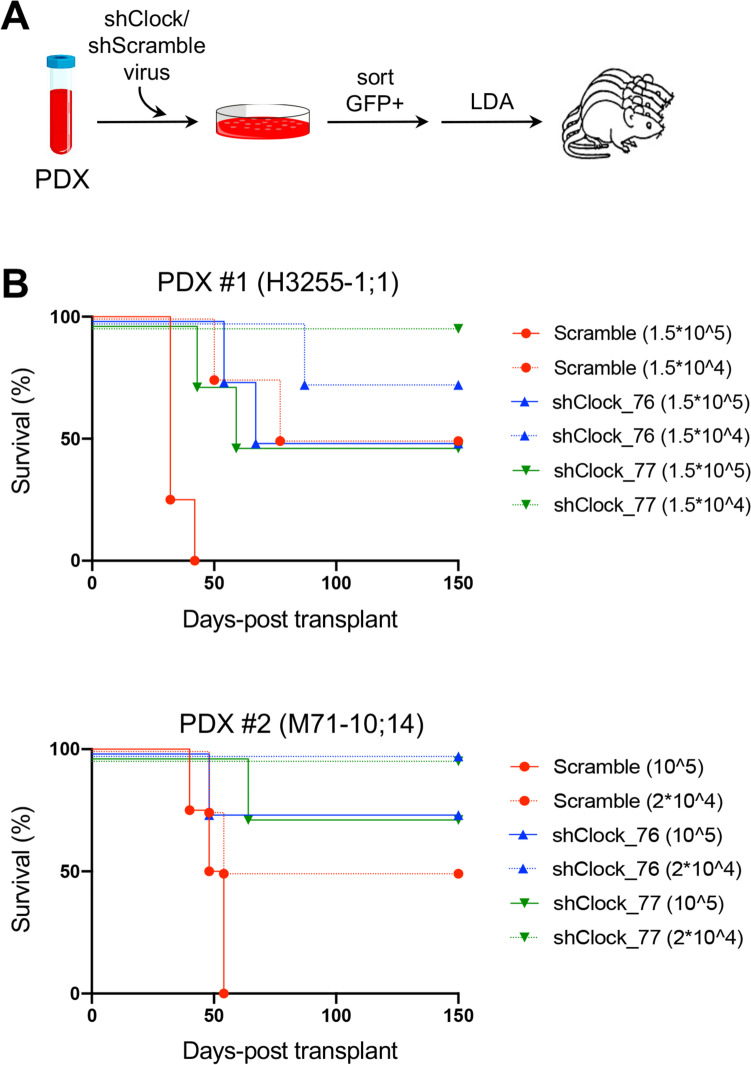
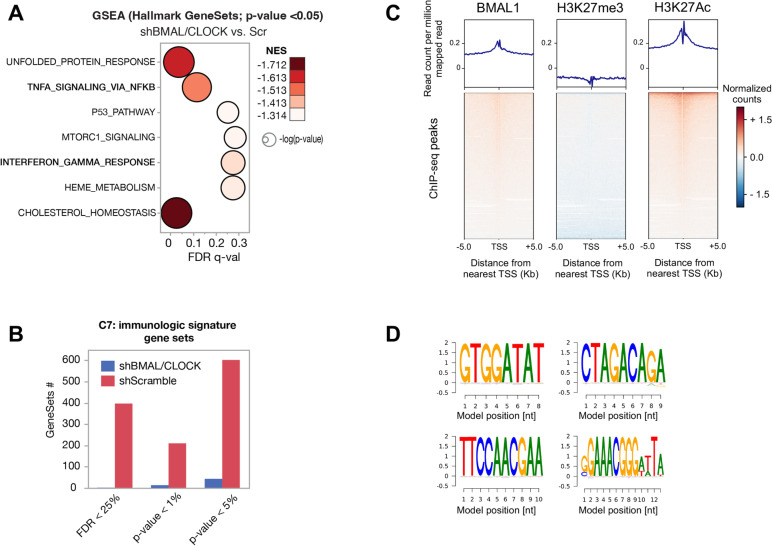
Here, we evaluated the role of the biological clock in the regulation of the molecular mechanisms and signaling pathways impacting the cellular dynamics in T-ALL through an integrated experimental approach including gene expression profiling of shRNA-modified T-ALL cell lines and Chromatin Immunoprecipitation Sequencing (ChIP-Seq) of leukemic cells. Patient-derived xenograft (PDXs) cell subsets were also genetically manipulated in order to assess the LIC activity modulated by the loss of biological clock in human T-ALL.
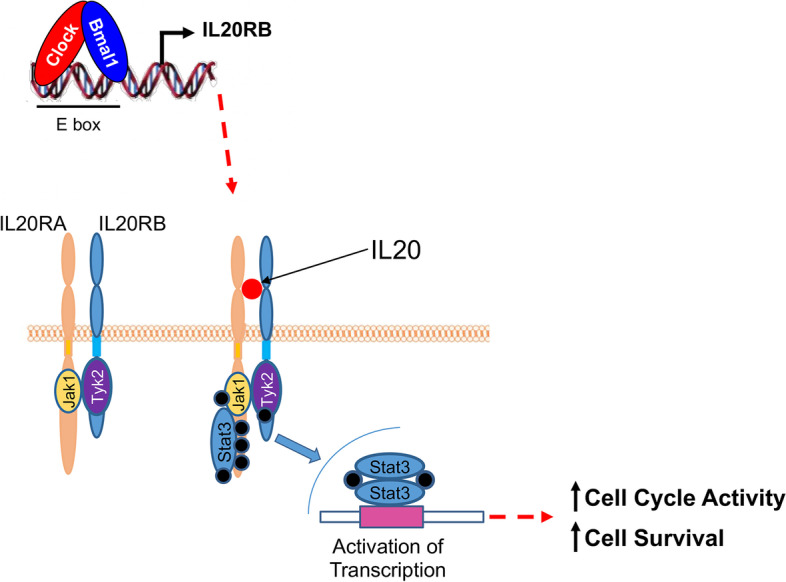
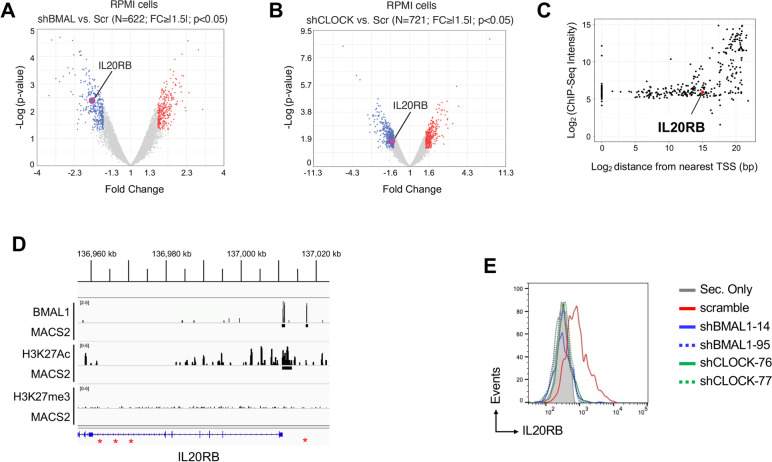
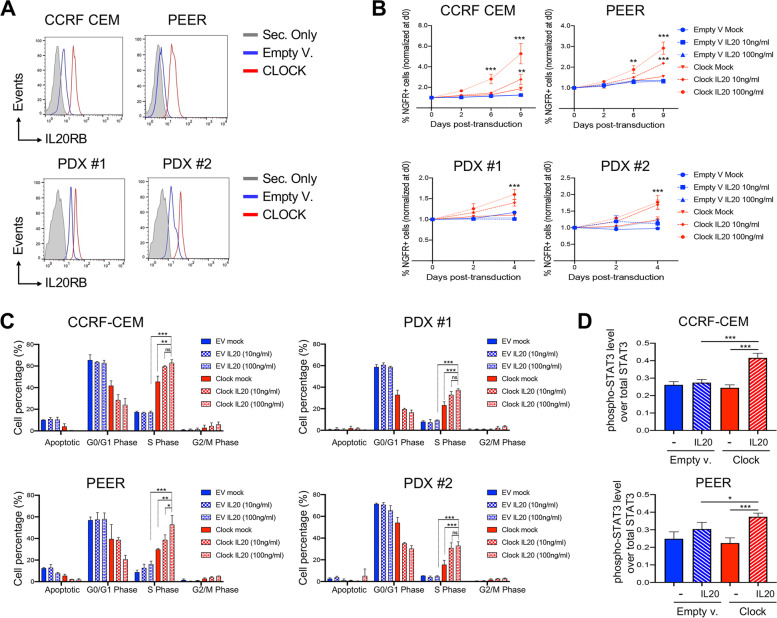
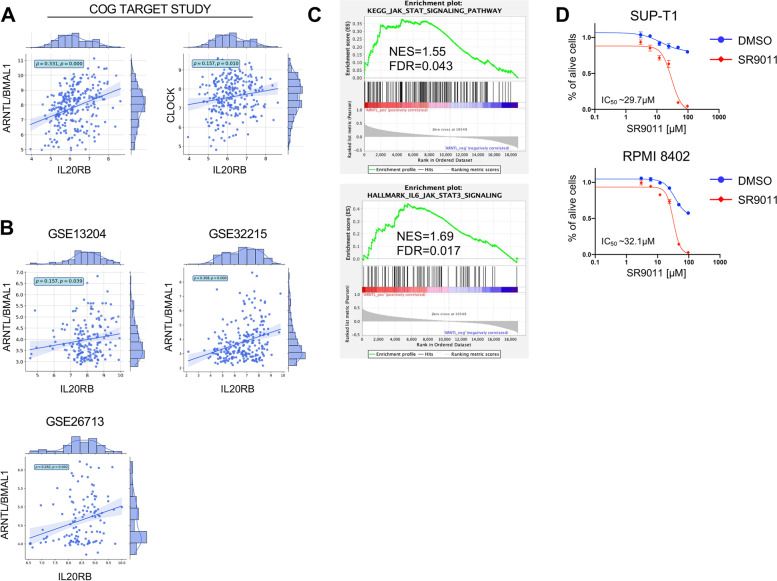
We report that the disruption of the circadian clock circuitry obtained through shRNA-mediated knockdown of CLOCK and BMAL1 genes negatively impacted the growth in vitro as well as the activity in vivo of LIC derived from PDXs after transplantation into immunodeficient recipient mice. Additionally, gene expression data integrated with ChIP-Seq profiles of leukemic cells revealed that the circadian clock directly promotes the expression of genes, such as IL20RB, crucially involved in JAK/STAT signaling, making the T-ALL cells more responsive to Interleukin 20 (IL20).
Taken together, our data support the concept that the biological clock drives the expression of IL20R prompting JAK/STAT signaling and promoting LIC activity in T-ALL and suggest that the selective targeting of circadian components could be therapeutically relevant for the treatment of T-ALL patients.
T 细胞急性淋巴细胞白血病(T-ALL)是一种侵袭性血液系统恶性肿瘤,其特征是具有不对称富集白血病起始细胞(LIC)活性的受限细胞亚群。尽管如此,哪些信号通路促进 LIC 的维持和进展仍不清楚。
在这里,我们通过包括对经 shRNA 修饰的 T-ALL 细胞系进行基因表达谱分析和对白血病细胞进行染色质免疫沉淀测序(ChIP-Seq)的综合实验方法,评估了生物钟在调节影响 T-ALL 细胞动力学的分子机制和信号通路中的作用。还对患者来源的异种移植(PDX)细胞亚群进行了基因操作,以评估生物钟缺失对人 T-ALL 中 LIC 活性的调节作用。
我们报告说,通过 shRNA 介导的时钟基因 CLOCK 和 BMAL1 的敲低破坏了生物钟的昼夜节律电路,这不仅对 PDX 来源的 LIC 在体外的生长,而且对其在移植到免疫缺陷受体小鼠后的体内活性都产生了负面影响。此外,将白血病细胞的 ChIP-Seq 图谱与基因表达数据进行整合,揭示了生物钟直接促进了基因的表达,如 IL20RB,这对于 JAK/STAT 信号通路至关重要,使 T-ALL 细胞对白细胞介素 20(IL20)更敏感。
总之,我们的数据支持这样一种概念,即生物钟驱动 IL20R 的表达,从而促进 T-ALL 中的 JAK/STAT 信号通路和 LIC 活性,并表明靶向生物钟成分可能对 T-ALL 患者的治疗具有治疗意义。