Azami-Conesa Iris, Pérez-Moreno Paula, Matas Méndez Pablo, Sansano-Maestre Jose, González Fernando, Mateo Barrientos Marta, Gómez-Muñoz María Teresa
Department of Animal Health, Faculty of Veterinary Sciences, Complutense University of Madrid, 28040 Madrid, Spain.
Department of Health Sciences, Faculty of Biomedical and Health Sciences, Universidad Europea de Madrid, Villaviciosa de Odón, 28670 Madrid, Spain.
Pathogens. 2023 Aug 16;12(8):1048. doi: 10.3390/pathogens12081048.
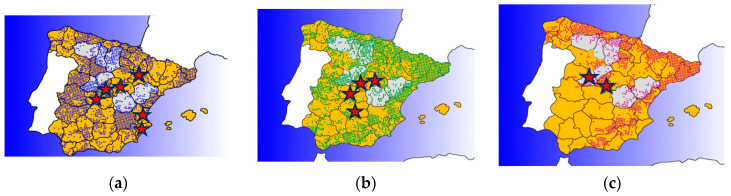
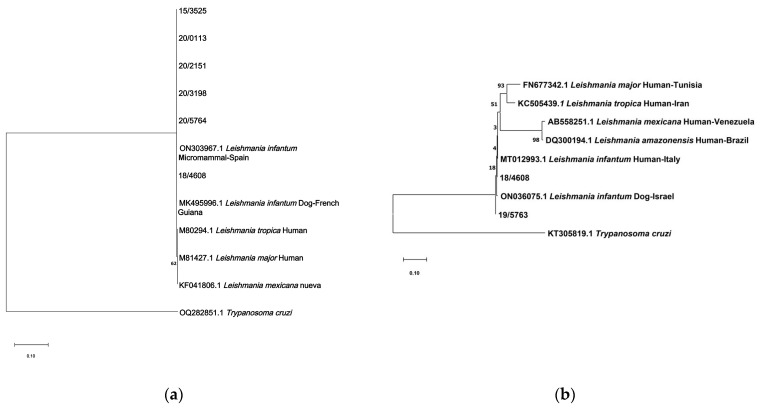
Zoonotic leishmaniasis caused by is distributed worldwide and affects humans and domestic and wild mammals. In Europe, specifically in the Mediterranean basin, leishmaniasis is endemic due to the concurrence of the phlebotomine vectors and reservoir mammals, including carnivorous wildlife species and other less studied wild species. In this article, spleen, skin, and eye or oral swabs taken from 134 wild mammals admitted to five wildlife recovery centers in Spain were used. PCR employing fragments of the Repeat region, ITS1, and SSUrRNA were used for detection, and positive samples were processed for sequencing. was detected in three out of the nine species analyzed, including European hedgehog, European badger, and red squirrel, with percentages ranging from 11.53 to 35.71%, depending on the species. Most of the species showed higher percentages of positivity in spleen samples than in skin samples. A small number of animals from the remaining six species tested negative, including Algerian hedgehog, stone marten, least weasel, garden dormouse, western polecat, and Egyptian mongoose. Hedgehogs and badgers are good candidates for consideration as epidemiological sentinels and pose a higher risk as potential reservoirs of leishmaniasis based on their percentage of infection and wide distribution.
由……引起的人畜共患利什曼病在全球范围内分布,影响人类以及家养和野生哺乳动物。在欧洲,特别是在地中海盆地,由于白蛉媒介和保虫宿主哺乳动物(包括食肉野生动物物种和其他研究较少的野生物种)同时存在,利什曼病呈地方性流行。在本文中,使用了从西班牙五个野生动物救助中心收治的134只野生哺乳动物身上采集的脾脏、皮肤以及眼部或口腔拭子。采用重复区域片段、ITS1和SSUrRNA的聚合酶链反应(PCR)进行检测,对阳性样本进行测序处理。在所分析的9个物种中,在3个物种中检测到了……,包括欧洲刺猬、欧洲獾和红松鼠,根据物种不同,阳性率在11.53%至35.71%之间。大多数物种的脾脏样本阳性率高于皮肤样本。其余6个物种中的少数动物检测为阴性,包括阿尔及利亚刺猬、石貂、伶鼬、花园睡鼠、艾鼬和埃及獴。基于刺猬和獾的感染率及其广泛分布,它们是作为流行病学哨兵的良好候选者,并且作为利什曼病的潜在保虫宿主具有较高风险。