Department of Ultrasound, Sichuan Clinical Research Center for Cancer, Sichuan Cancer Hospital & Institute, Sichuan Cancer Center, Affiliated Cancer Hospital of University of Electronic Science and Technology of China, Chengdu, China.
School of Life Science and Technology, University of Electronic Science and Technology of China, Chengdu, China.
J Nanobiotechnology. 2023 Aug 26;21(1):297. doi: 10.1186/s12951-023-02074-z.
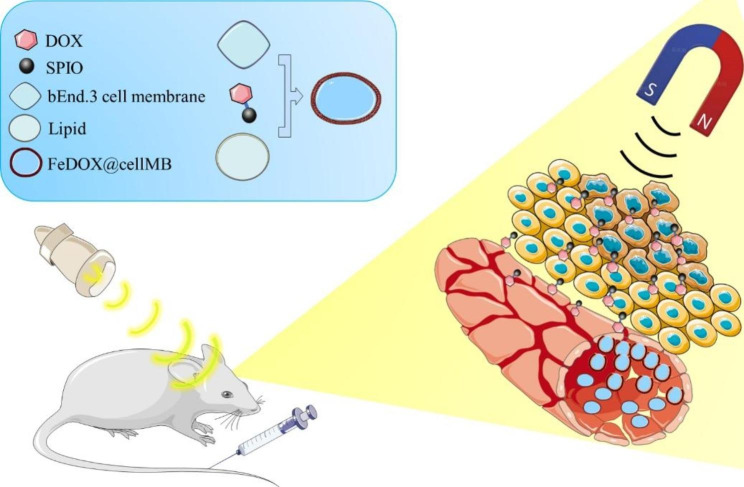
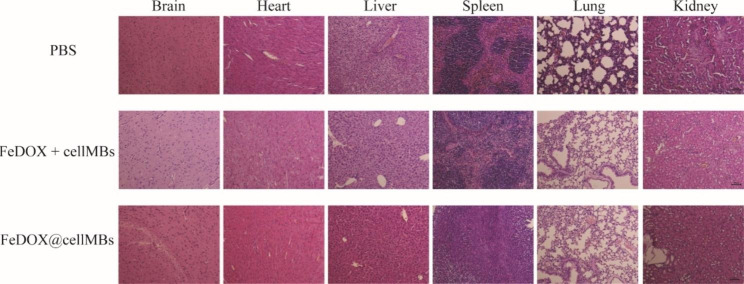
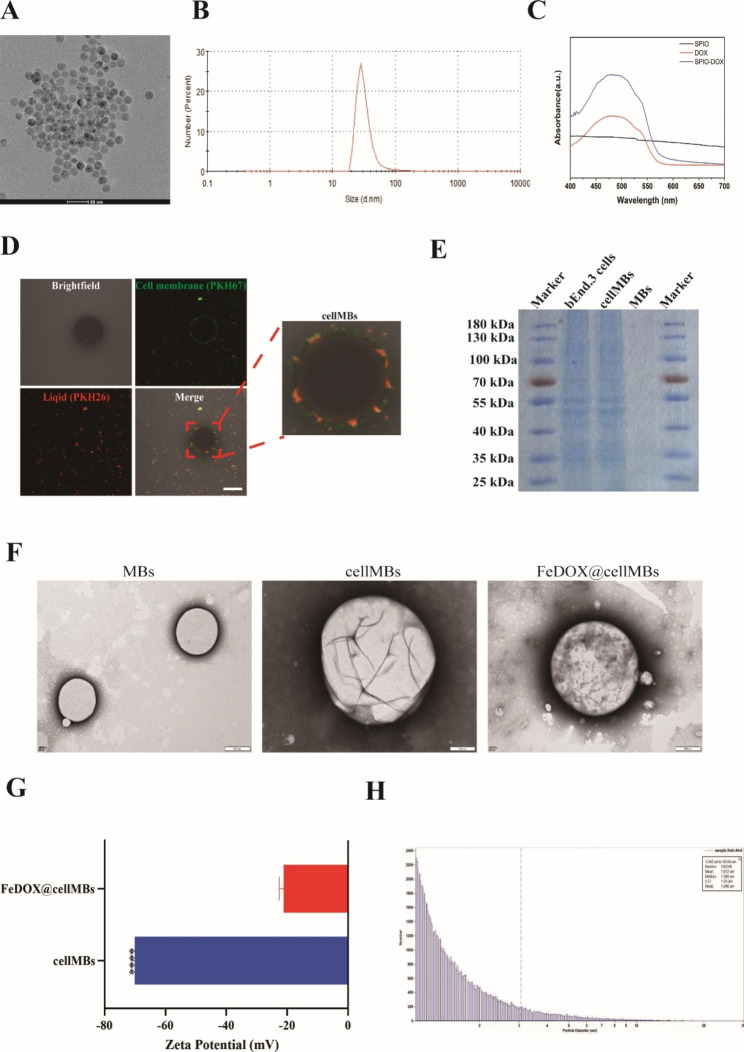
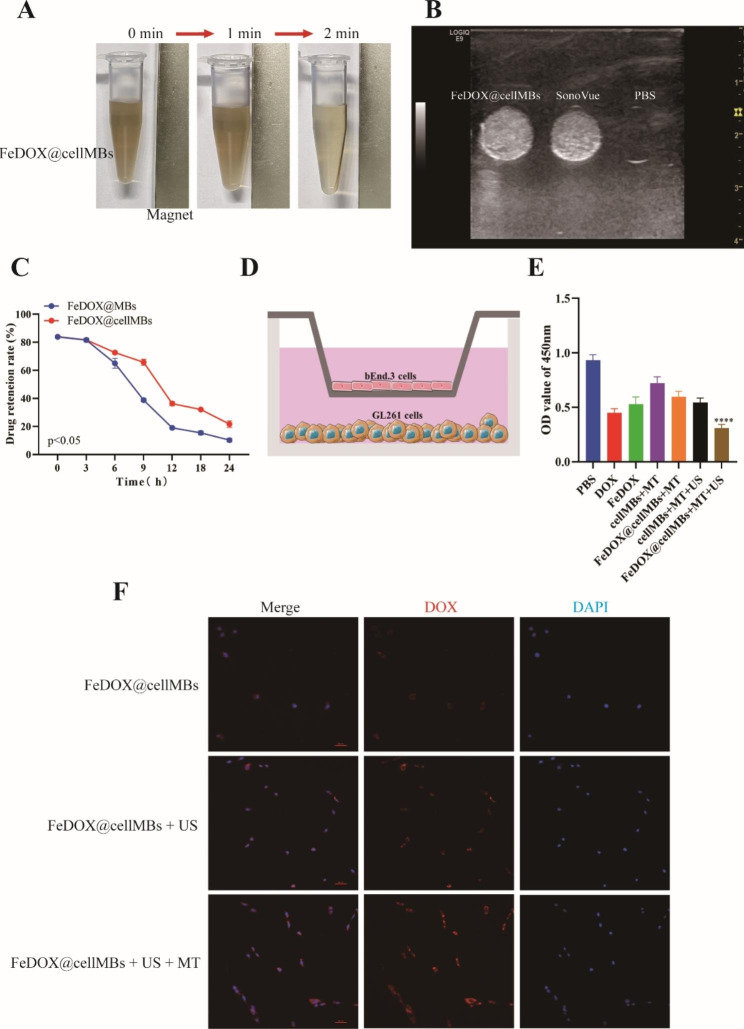
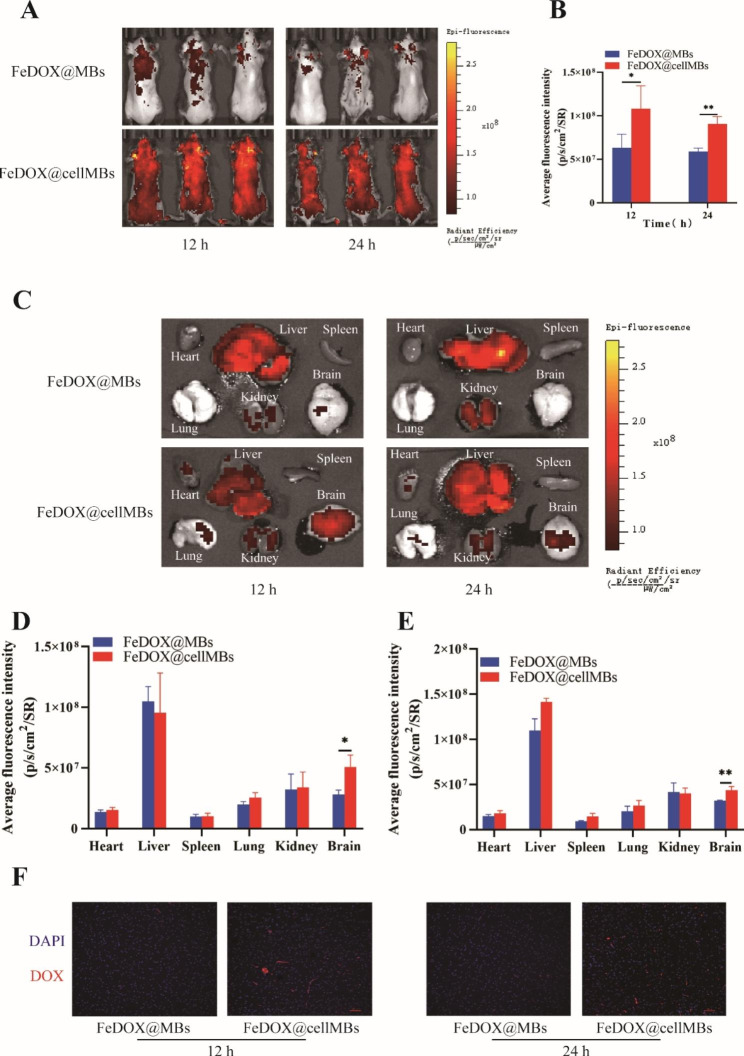
Glioblastoma is the most common type of brain tumor. Due to the presence of the blood-brain barrier, the effects of chemotherapy have been unsatisfactory. The combination of focused ultrasound and microbubbles to reversibly open the blood-brain barrier is now considered a key factor in improving treatment outcomes of glioblastoma. In this study, we developed bionic drug delivery microbubbles, which in combination with focused ultrasound had an obvious inhibitory effect on glioblastoma. We extracted the brain microvascular cell membranes, combined them with lipid components, and loaded them with superparamagnetic iron oxide and doxorubicin to prepare biomimetic drug delivery microbubbles (FeDOX@cellMBs). We demonstrated that FeDOX@cellMBs retained the intrinsic properties of loading, such as magnetic properties and drug toxicity, both in vitro and in vivo. FeDOX@cellMBs exhibited good tumor targeting and uptake under the combined action of magnetic and focused ultrasound. Importantly, the FeDOX@cellMBs demonstrated excellent internal stability and effectively inhibited tumor growth in orthotopic glioblastoma mice. Finally, organ H&E staining confirmed that FeDOX@cellMBs were safe for use. In conclusion, FeDOX@cellMBs successfully penetrated the blood-brain barrier and effectively inhibited glioblastoma growth under the combined effects of focused ultrasound and magnetic stimulation. These results provide a new approach for the treatment of glioblastoma, with implications for future clinical translation.
胶质母细胞瘤是最常见的脑肿瘤类型。由于血脑屏障的存在,化疗的效果并不理想。将聚焦超声与微泡相结合,可逆地打开血脑屏障,现在被认为是改善胶质母细胞瘤治疗效果的关键因素。在这项研究中,我们开发了仿生药物传递微泡,它与聚焦超声联合使用对胶质母细胞瘤有明显的抑制作用。我们提取脑微血管细胞膜,将其与脂质成分结合,并装载超顺磁性氧化铁和阿霉素,制备仿生药物传递微泡(FeDOX@cellMBs)。我们证明,FeDOX@cellMBs 在体外和体内都保留了装载的固有特性,如磁性和药物毒性。在磁和聚焦超声的联合作用下,FeDOX@cellMBs 表现出良好的肿瘤靶向性和摄取性。重要的是,FeDOX@cellMBs 表现出优异的内部稳定性,有效地抑制了原位胶质母细胞瘤小鼠的肿瘤生长。最后,器官 H&E 染色证实了 FeDOX@cellMBs 的安全性。总之,FeDOX@cellMBs 在聚焦超声和磁刺激的联合作用下成功穿透血脑屏障,有效抑制了胶质母细胞瘤的生长。这些结果为胶质母细胞瘤的治疗提供了一种新方法,为未来的临床转化提供了启示。