Balconi Michela, Angioletti Laura, Acconito Carlotta
International Research Center for Cognitive Applied Neuroscience (IrcCAN), Catholic University of the Sacred Heart, Largo Gemelli 1, 20123 Milan, Italy.
Research Unit in Affective and Social Neuroscience, Department of Psychology, Catholic University of the Sacred Heart, Largo Gemelli 1, 20123 Milan, Italy.
Brain Sci. 2023 Aug 3;13(8):1163. doi: 10.3390/brainsci13081163.
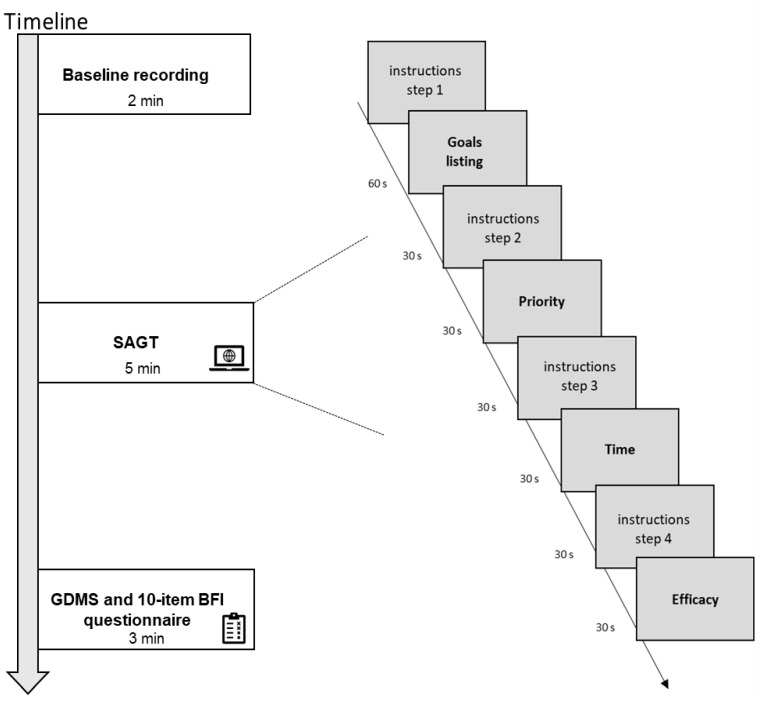
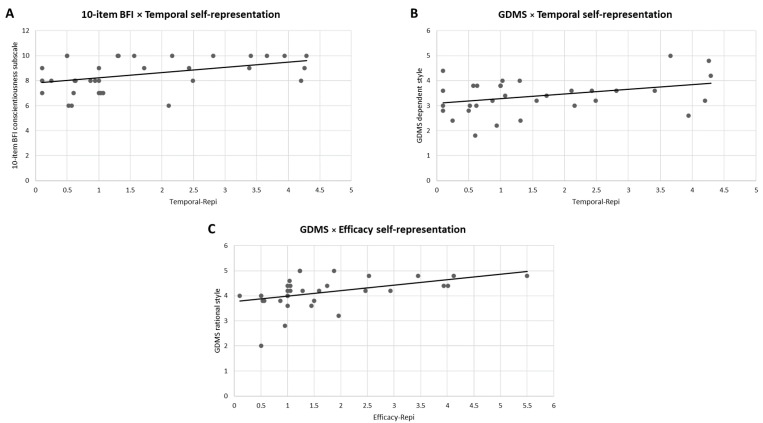
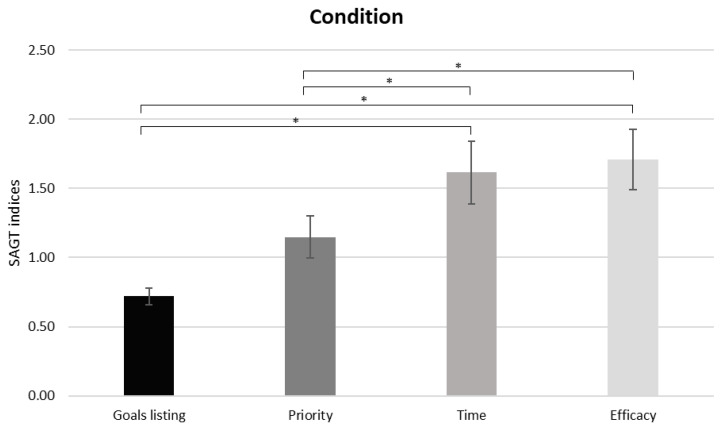
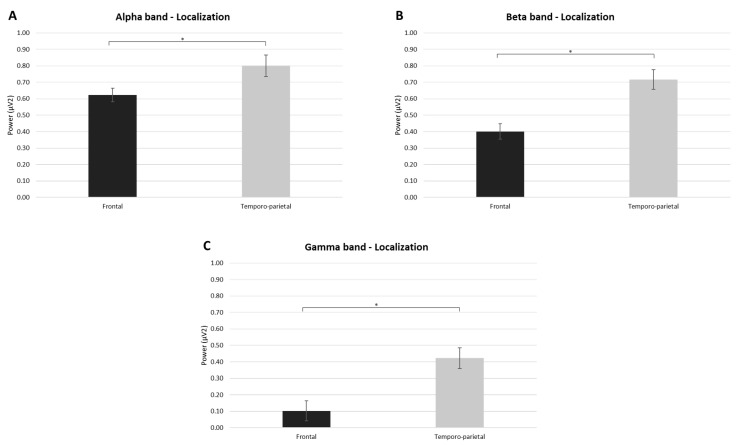
A goal's self-awareness and the planning to achieve it drive decision makers. Through a neuroscientific approach, this study explores the self-awareness of goals by analyzing the explicit and implicit processes linked to the ability to self-represent goals and sort them via an implicit dominant key. Thirty-five professionals performed a novel and ecological decision-making task, the Self-Awareness of Goals Task (SAGT), aimed at exploring the (i) self-representation of the decision-making goals of a typical working day; (ii) self-representation of how these goals were performed in order of priority; (iii) temporal sequence; and (iv) in terms of their efficacy. Electrophysiological (i.e., alpha, beta, and gamma band), autonomic, behavioral, and self-report data (General Decision Making Style and Big Five Inventory) are collected. Higher self-awareness of goals by time as well as efficacy and the greater activation of alpha, beta, and gamma bands in the temporoparietal brain area were found. Correlations reported positive associations between the self-awareness of goals via a time and dependent decision-making style and a conscientious personality, but also between the self-awareness of goals via an efficacy and rational decision-making style. The results obtained in this study suggest that the SAGT could activate recursive thinking in the examinee and grasp individual differences in self-representation and aware identification of decision-making goals.
目标的自我意识以及实现目标的规划驱动着决策者。本研究通过神经科学方法,通过分析与自我表征目标及按隐含主导关键对其进行分类的能力相关的显性和隐性过程,来探索目标的自我意识。35名专业人员完成了一项新颖且符合实际的决策任务——目标自我意识任务(SAGT),旨在探索:(i)典型工作日决策目标的自我表征;(ii)这些目标按优先级执行的自我表征;(iii)时间顺序;以及(iv)目标的效能。收集了电生理数据(即阿尔法、贝塔和伽马波段)、自主神经数据、行为数据和自我报告数据(一般决策风格和大五人格量表)。研究发现,随着时间推移目标的自我意识以及效能有所提高,颞顶叶脑区的阿尔法、贝塔和伽马波段激活增强。相关性分析表明,通过时间和依赖型决策风格的目标自我意识与尽责型人格之间存在正相关,通过效能和理性决策风格的目标自我意识之间也存在正相关。本研究所得结果表明,SAGT能够激活受试者的递归思维,并把握自我表征和决策目标意识识别方面的个体差异。