Department of Hematology and Oncology, Children's Hospital, Los Angeles, CA 90027, USA.
Terasaki Foundation Laboratory, Santa Monica, CA 90064, USA.
Biomolecules. 2023 Jul 28;13(8):1178. doi: 10.3390/biom13081178.
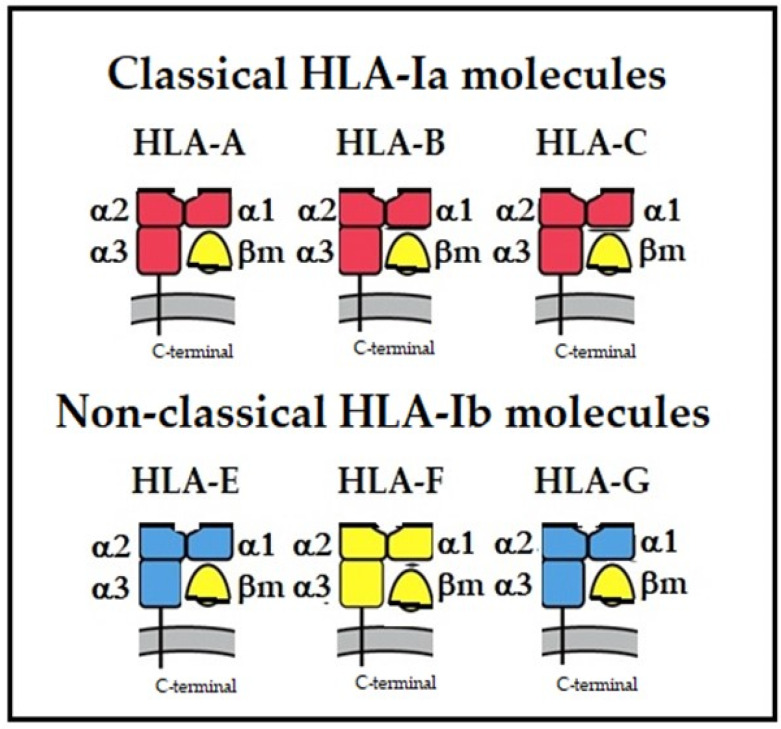
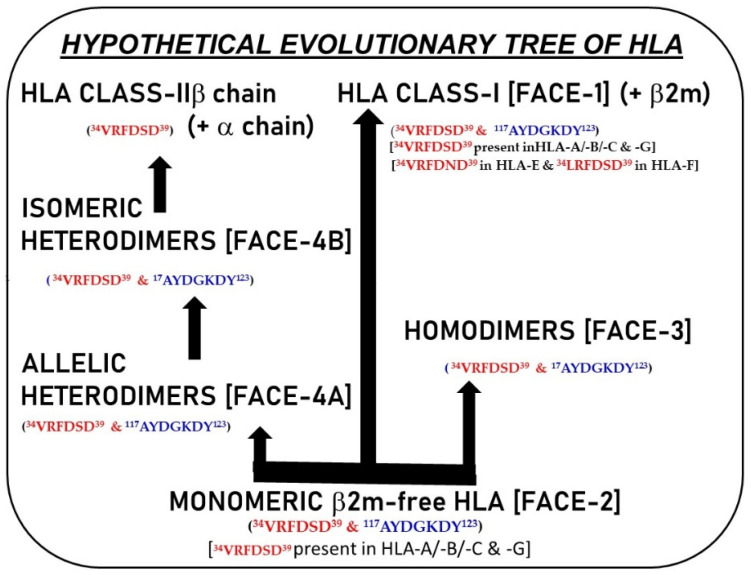
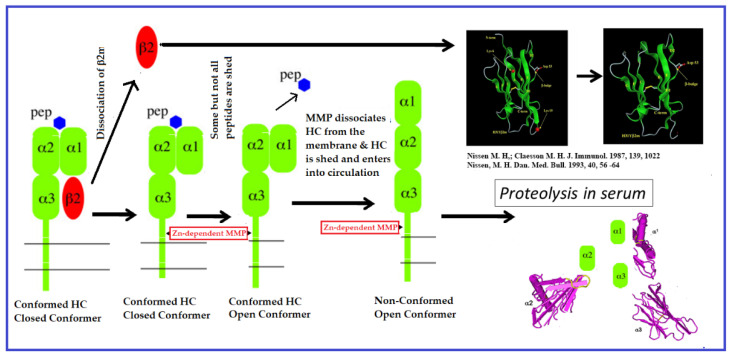
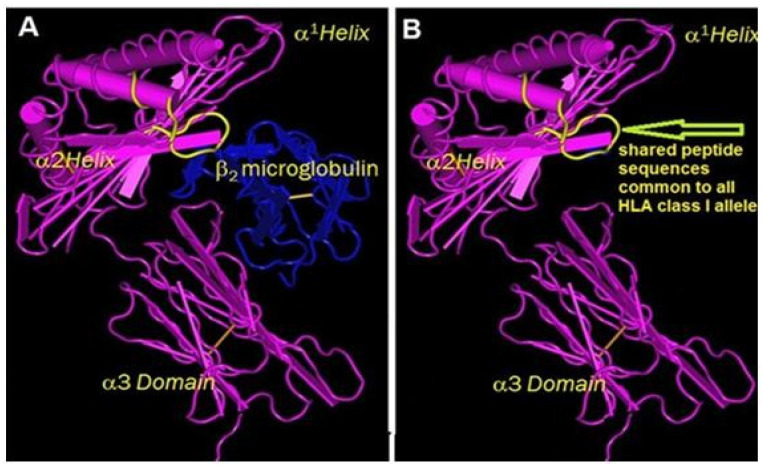
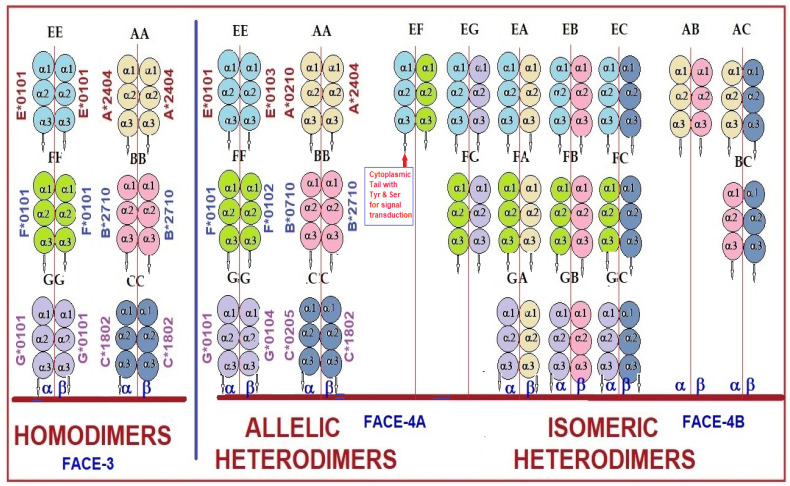
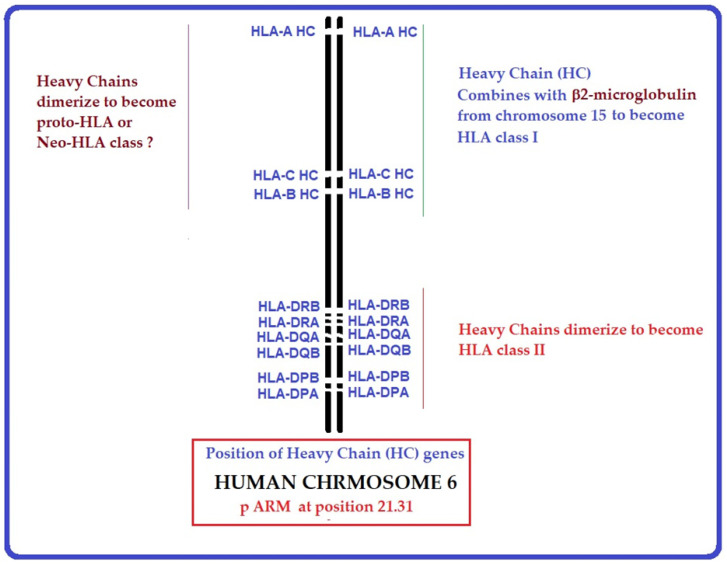
Cell surface HLA-I molecules (Face-1) consist of a polypeptide heavy chain (HC) with two groove domains (G domain) and one constant domain (C-domain) as well as a light chain, B2-microglobulin (B2m). However, HCs can also independently emerge unfolded on the cell surface without peptides as B2m-free HC monomers (Face-2), B2m-free HC homodimers (Face 3), and B2m-free HC heterodimers (Face-4). The transport of these HLA variants from ER to the cell surface was confirmed by antiviral antibiotics that arrest the release of newly synthesized proteins from the ER. Face-2 occurs at low levels on the normal cell surface of the lung, bronchi, epidermis, esophagus, breast, stomach, ilium, colorectum, gall bladder, urinary bladder, seminal vesicles ovarian epithelia, endometrium, thymus, spleen, and lymphocytes. They are upregulated on immune cells upon activation by proinflammatory cytokines, anti-CD3 antibodies, antibiotics (e.g., ionomycin), phytohemagglutinin, retinoic acid, and phorbol myristate acetate. Their density on the cell surface remains high as long as the cells remain in an activated state. After activation-induced upregulation, the Face-2 molecules undergo homo- and hetero-dimerization (Face-3 and Face-4). Alterations in the redox environment promote dimerization. Heterodimerization can occur among and between the alleles of different haplotypes. The glycosylation of these variants differ from that of Face-1, and they may occur with bound exogenous peptides. Spontaneous arthritis occurs in HLA-B27+ mice lacking B2m (HLA-B27+ B2m-/-) but not in HLA-B27+ B2m+/- mice. The mice with HLA-B27 in Face-2 spontaneous configuration develop symptoms such as changes in nails and joints, hair loss, and swelling in paws, leading to ankyloses. Anti-HC-specific mAbs delay disease development. Some HLA-I polyreactive mAbs (MEM series) used for immunostaining confirm the existence of B2m-free variants in several cancer cells. The upregulation of Face-2 in human cancers occurs concomitantly with the downregulation of intact HLAs (Face-1). The HLA monomeric and dimeric variants interact with inhibitory and activating ligands (e.g., KIR), growth factors, cytokines, and neurotransmitters. Similarities in the amino acid sequences of the HLA-I variants and HLA-II β-chain suggest that Face-2 could be the progenitor of both HLA classes. These findings may support the recognition of these variants as a neo-HLA class and proto-HLA.
细胞表面 HLA-I 分子(Face-1)由一条多肽重链(HC)组成,该重链具有两个凹槽结构域(G 结构域)和一个恒定结构域(C 结构域)以及一条轻链,β2-微球蛋白(B2m)。然而,HC 也可以独立地在细胞表面以无肽的方式出现,形成 B2m 游离的 HC 单体(Face-2)、B2m 游离的 HC 同源二聚体(Face 3)和 B2m 游离的 HC 异源二聚体(Face-4)。抗病毒抗生素可以阻止新合成的蛋白质从内质网中释放出来,从而证实了这些 HLA 变体从内质网运输到细胞表面。Face-2 在肺、支气管、表皮、食管、乳腺、胃、髂骨、结直肠、胆囊、膀胱、精囊、卵巢上皮、子宫内膜、胸腺、脾脏和淋巴细胞的正常细胞表面以低水平存在。在受到促炎细胞因子、抗 CD3 抗体、抗生素(如离子霉素)、植物血凝素、视黄酸和十四烷酰佛波醇乙酸酯的激活后,免疫细胞会上调这些 HLA 变体的表达。只要细胞保持激活状态,它们在细胞表面的密度就会保持很高。在激活诱导的上调后,Face-2 分子发生同型和异型二聚化(Face-3 和 Face-4)。氧化还原环境的改变促进二聚化。异源二聚化可以发生在不同单倍型的等位基因之间和之间。这些变体的糖基化与 Face-1 不同,它们可能与结合的外源性肽结合。缺乏 B2m(HLA-B27+B2m-/-)的 HLA-B27+ 小鼠会自发发生关节炎,但 HLA-B27+B2m+/- 小鼠则不会。以 Face-2 自发构象存在的 HLA-B27 小鼠会出现指甲和关节变化、脱发和爪子肿胀等症状,导致强直。抗 HC 特异性 mAb 可延迟疾病的发展。一些用于免疫染色的 HLA-I 多反应性 mAb(MEM 系列)证实了几种癌细胞中存在 B2m 游离变体。人类癌症中 Face-2 的上调与完整 HLA(Face-1)的下调同时发生。HLA 单体和二聚体变体与抑制性和激活性配体(如 KIR)、生长因子、细胞因子和神经递质相互作用。HLA-I 变体和 HLA-II β 链的氨基酸序列相似性表明,Face-2 可能是这两个 HLA 类别的前体。这些发现可能支持将这些变体识别为新 HLA 类和原 HLA。