Kojima Shoji, Ikemoto Tatsunori, Arai Young-Chang, Hirasawa Atsuhiko, Deie Masataka, Takahashi Nobunori
Department of Orthopaedic Surgery, Aichi Medical University, Nagakute 480-1195, Japan.
Multidisciplinary Pain Center, Aichi Medical University, Nagakute 480-1195, Japan.
Healthcare (Basel). 2023 Aug 21;11(16):2357. doi: 10.3390/healthcare11162357.
This study aimed to investigate the location and distribution of pain in adults with chronic low back pain (LBP) with degenerative lumbar scoliosis (DLS) according to coronal deformities.
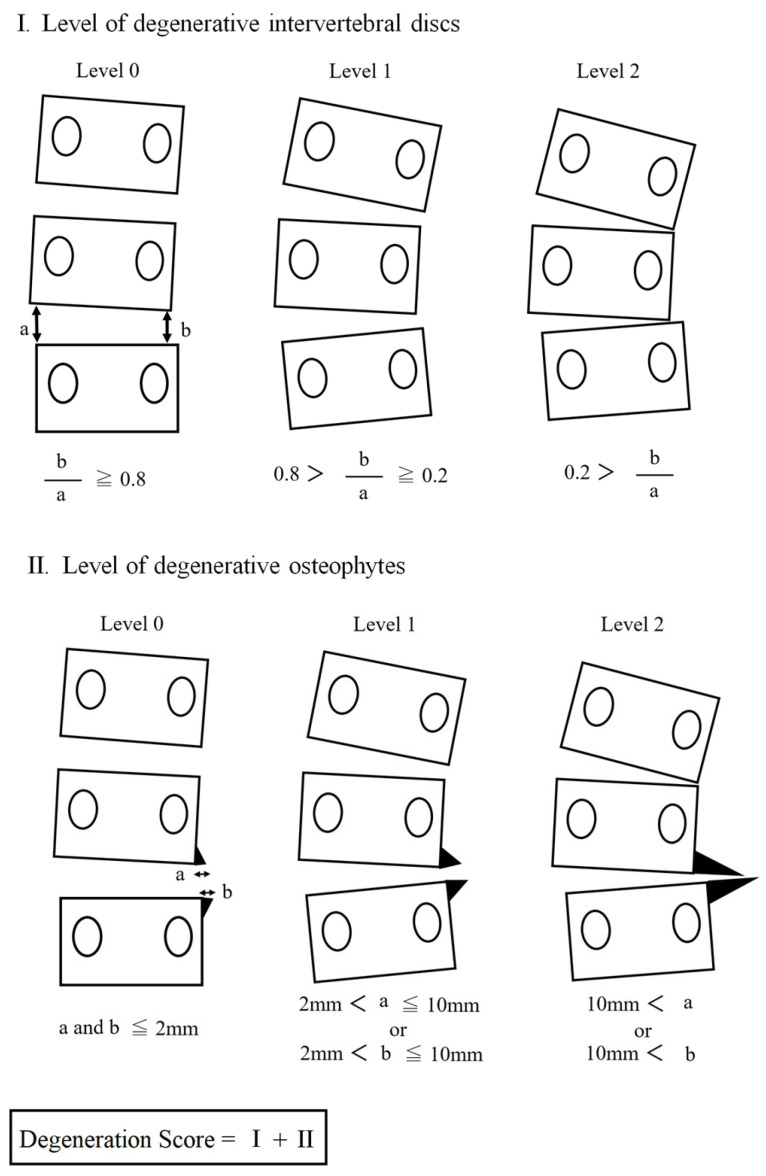
We enrolled 100 adults with chronic LBP and DLS, dividing them into two groups, a right-convex DLS group (n = 50) and a left-convex DLS group (n = 50). Dominant pain location was analyzed by dividing it into three parts-left side, right side, and center-and pain areas were identified using the pain drawing method; then, a heat map was created for each group. An association between pain location and convex side was analyzed as the primary outcome. Additionally, we assessed pain characteristics and radiological parameters, such as the curve structure and degree of degeneration. We used the Mann-Whitney U test or the chi-squared test to compare the clinical characteristics of the two groups, and generalized linear models were utilized to determine which variables were associated with pain severity or pain area.
The results indicated that there was no significant difference between the two groups in terms of the association between the curve structure, pain severity and location. In multivariate analysis, although we did not find any variables associated with pain severity, we observed that age and a left-convex DLS were negatively correlated with pain area among all participants. The heat map demonstrated that individuals with chronic LBP frequently experienced pain in the central lumbar region, regardless of the coronal curve structure.
Our findings suggest that degenerative coronal lumbar deformities may not have a specific pain pattern associated with a curved structure.
本研究旨在根据冠状面畸形调查患有退行性腰椎侧弯(DLS)的慢性下腰痛(LBP)成人的疼痛位置和分布情况。
我们招募了100名患有慢性LBP和DLS的成年人,将他们分为两组,即右凸DLS组(n = 50)和左凸DLS组(n = 50)。通过将主要疼痛位置分为左侧、右侧和中央三个部分进行分析,并使用疼痛绘图法确定疼痛区域;然后,为每组创建一个热图。将疼痛位置与凸侧之间的关联作为主要结果进行分析。此外,我们评估了疼痛特征和放射学参数,如曲线结构和退变程度。我们使用Mann-Whitney U检验或卡方检验比较两组的临床特征,并使用广义线性模型确定哪些变量与疼痛严重程度或疼痛区域相关。
结果表明,两组在曲线结构、疼痛严重程度和位置之间的关联方面没有显著差异。在多变量分析中,虽然我们没有发现任何与疼痛严重程度相关的变量,但我们观察到在所有参与者中,年龄和左凸DLS与疼痛区域呈负相关。热图显示,无论冠状曲线结构如何,患有慢性LBP的个体经常在腰椎中部区域感到疼痛。
我们的研究结果表明,退行性冠状面腰椎畸形可能没有与弯曲结构相关的特定疼痛模式。