Stefan Miruna Florina, Herghelegiu Catalin Gabriel, Magda Stefania Lucia
Department of Cardiology, University and Emergency Hospital, 050098 Bucharest, Romania.
Institutul National Pentru Sanatatea Mamei si a Copilului "Alessandrescu Rusescu", 020395 Bucharest, Romania.
Life (Basel). 2023 Jul 27;13(8):1631. doi: 10.3390/life13081631.
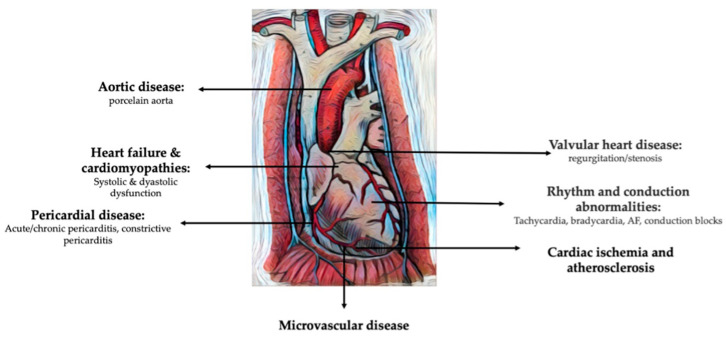
The number of patients diagnosed with breast cancer and cardiovascular disease is continuously rising. Treatment options for breast cancer have greatly evolved, but radiotherapy (RT) still has a key role in it. Despite many advances in RT techniques, cardiotoxicity is one of the most important side effects. The new cardio-oncology guidelines recommend a baseline evaluation, risk stratification and follow-up of these patients. Cardiotoxicity induced by RT can be represented by almost all forms of cardiovascular disease, with atherosclerosis being the most frequent. An interdisciplinary team should manage these patients, in order to have maximum therapeutic effect and minimum cardiovascular toxicity. This review will summarize the current incidence, risk factors, mechanisms and follow-up of RT-induced cardiovascular toxicity.
被诊断患有乳腺癌和心血管疾病的患者数量在持续上升。乳腺癌的治疗方案有了很大进展,但放射治疗(RT)在其中仍起着关键作用。尽管RT技术取得了许多进步,但心脏毒性仍是最重要的副作用之一。新的心脏肿瘤学指南建议对这些患者进行基线评估、风险分层和随访。RT引起的心脏毒性几乎可以表现为所有形式的心血管疾病,其中动脉粥样硬化最为常见。为了获得最大的治疗效果和最小的心血管毒性,应由一个跨学科团队来管理这些患者。本综述将总结RT诱导的心血管毒性的当前发病率、危险因素、机制和随访情况。