Sato Mariana Rillo, Oshiro-Junior João Augusto, Rodero Camila Fernanda, Boni Fernanda Isadora, Araújo Victor Hugo Sousa, Bauab Taís Maria, Nicholas Dean, Callan John Francis, Chorilli Marlus
School of Pharmaceutical Sciences, São Paulo State University (UNESP), Araraquara 14800-903, SP, Brazil.
Graduation Program in Pharmaceutical Sciences, State University of Paraíba, Campina Grande 58429-500, PB, Brazil.
Pharmaceuticals (Basel). 2023 Aug 1;16(8):1094. doi: 10.3390/ph16081094.
Vulvovaginal candidiasis (VVC) is a worldwide public health problem caused predominantly by the opportunistic polymorphic fungus , whose pathogenicity is associated with its morphological adaptability. To potentiate the treatment of -induced VVC by an alternative method as photodynamic therapy (PDT), hypericin (Hy), a potent photosensitizer compound was incorporated into a nanostructured lipid carrier (NLC) and dispersed in hydrogel (HG).
After preparation of the sonication process, an NLC loaded with Hy was dispersed in HG based on Poloxamer 407 and chitosan obtaining Hy.NLC-HG. This hydrogel system was physically and chemically characterized and its in vitro and in vivo photodynamic and antifungal effects were evaluated.
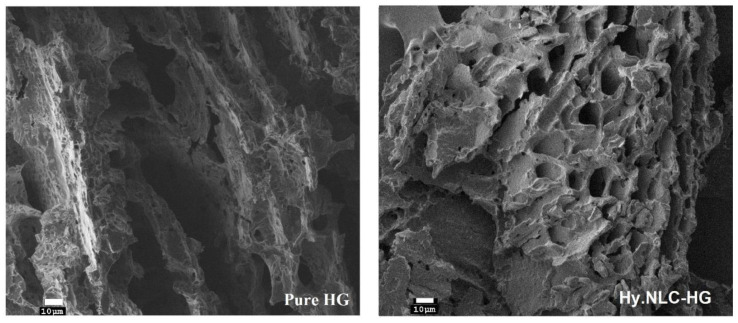
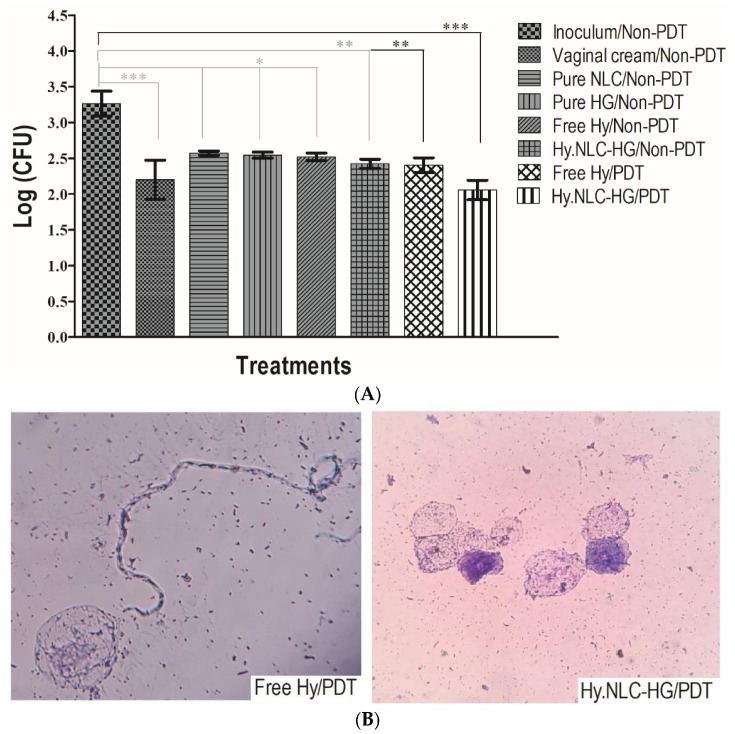
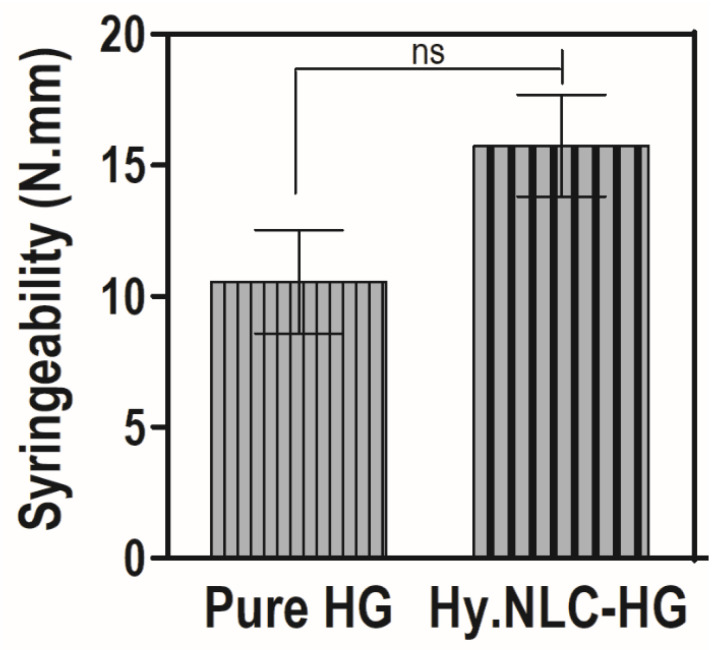
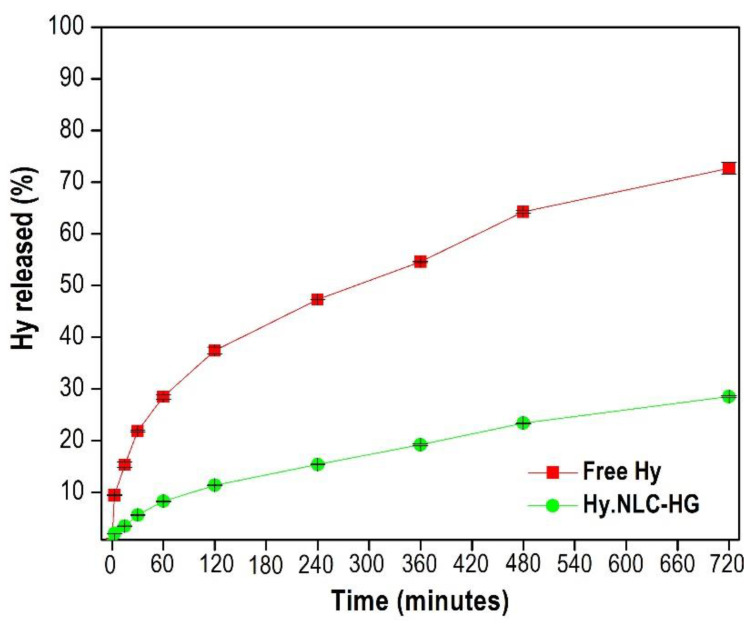
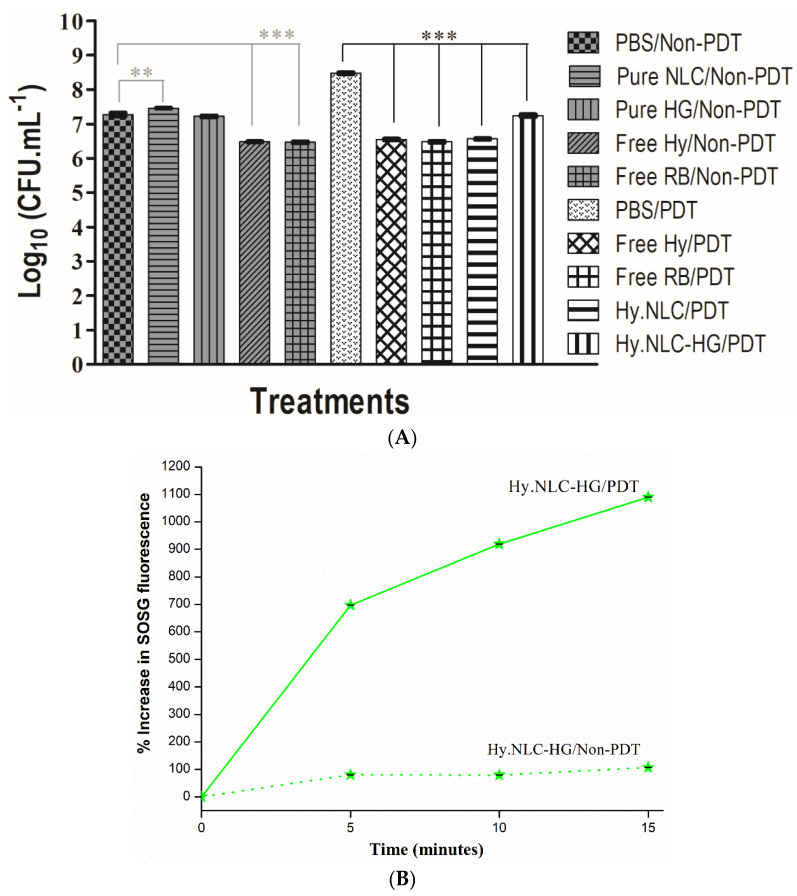
Through scanning electron microscopy, it was possible to observe a hydrogel system with a porous polymeric matrix and irregular microcavities. The Hy.NLC-HG system showed mucoadhesive properties (0.45 ± 0.08 N) and a satisfactory injectability (15.74 ± 4.75 N.mm), which indicates that it can be easily applied in the vaginal canal, in addition to a controlled and sustained Hy release profile from the NLC-HG of 28.55 ± 0.15% after 720 min. The in vitro antibiofilm assay significantly reduced the viability of ( < 0.001) by 1.2 log for Hy.NLC-HG/PDT and 1.9 log for PS/PDT, Hy.NLC/PDT, and free RB/PDT, compared to the PBS/PDT negative control. The in vivo antifungal evaluation showed that animals treated with the vaginal cream (non-PDT) and the PDT-mediated Hy.NLC-HG system showed a significant difference of < 0.001 in the number of colonies (log) in the vaginal canal, compared to the inoculation control group.
Thus, we demonstrate the pharmaceutical, antifungal, and photodynamic potential of hydrogel systems for Hy vaginal administration.
外阴阴道念珠菌病(VVC)是一个全球性的公共卫生问题,主要由机会性多态真菌引起,其致病性与其形态适应性有关。为了通过光动力疗法(PDT)等替代方法加强对VVC的治疗,将一种有效的光敏剂化合物金丝桃素(Hy)掺入纳米结构脂质载体(NLC)中并分散在水凝胶(HG)中。
在超声处理过程制备完成后,将负载Hy的NLC分散在基于泊洛沙姆407和壳聚糖的HG中,得到Hy.NLC-HG。对该水凝胶系统进行了物理和化学表征,并评估了其体外和体内的光动力及抗真菌作用。
通过扫描电子显微镜,可以观察到一种具有多孔聚合物基质和不规则微腔的水凝胶系统。Hy.NLC-HG系统表现出粘膜粘附特性(0.45±0.08 N)和令人满意的可注射性(15.74±4.75 N.mm),这表明它可以很容易地应用于阴道,此外,在720分钟后,Hy从NLC-HG中的释放曲线可控且持续,释放率为28.55±0.15%。与PBS/PDT阴性对照相比,体外生物膜试验显示,Hy.NLC-HG/PDT使白色念珠菌的活力显著降低(<0.001),降低了1.2个对数,PS/PDT、Hy.NLC/PDT和游离RB/PDT使白色念珠菌的活力降低了1.9个对数。体内抗真菌评估显示,与接种对照组相比,用阴道乳膏(非PDT)和PDT介导的Hy.NLC-HG系统治疗的动物在阴道内白色念珠菌菌落数(对数)上有显著差异(<0.001)。
因此,我们证明了水凝胶系统用于Hy阴道给药的药学、抗真菌和光动力潜力。