Jo Hee-Geun, Kim Hyehwa, Baek Eunhye, Lee Donghun, Hwang Ji Hye
Department of Herbal Pharmacology, College of Korean Medicine, Gachon University, 1342 Seongnamdae-ro, Sujeong-gu, Seongnam-si 13120, Gyeonggi-do, Republic of Korea.
Naturalis Inc. 6, Daewangpangyo-ro, Bundang-gu, Seongnam-si 13549, Gyeonggi-do, Republic of Korea.
Pharmaceuticals (Basel). 2023 Aug 15;16(8):1160. doi: 10.3390/ph16081160.
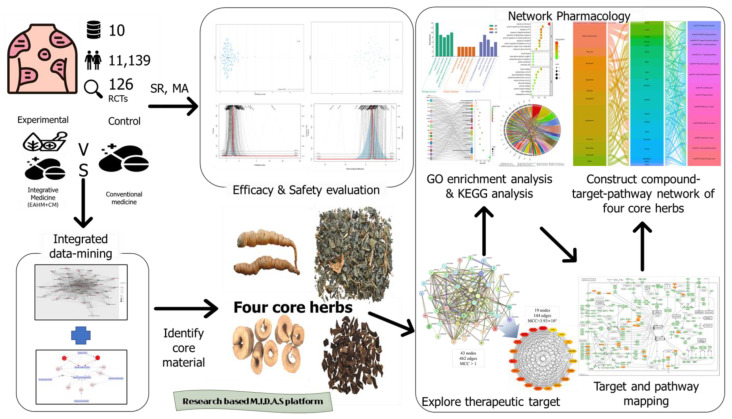
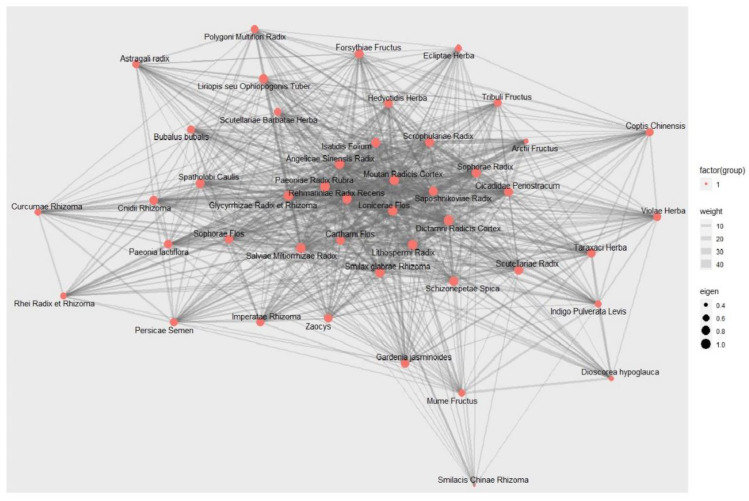
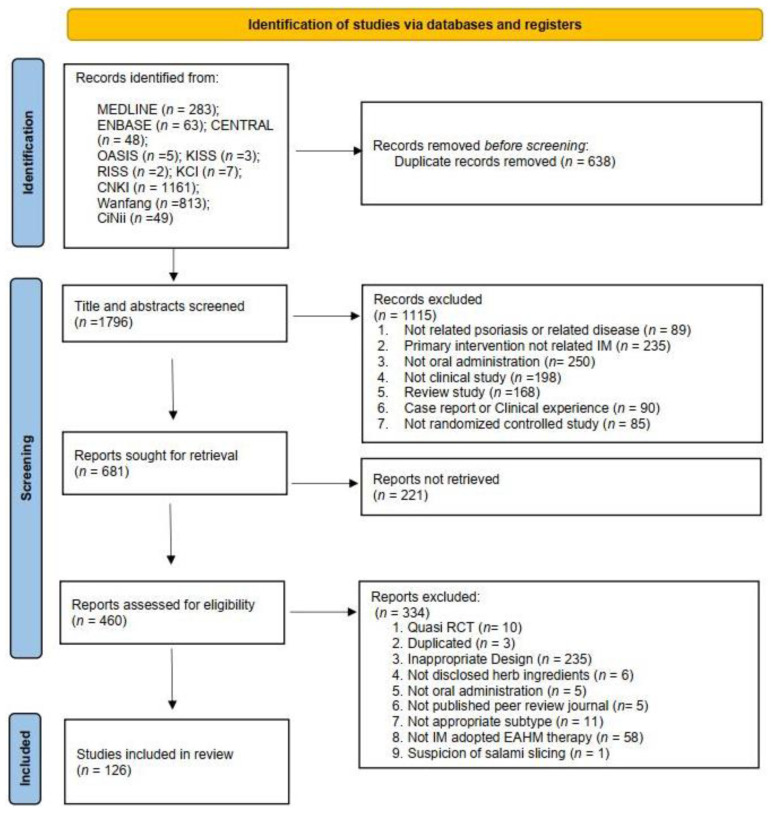
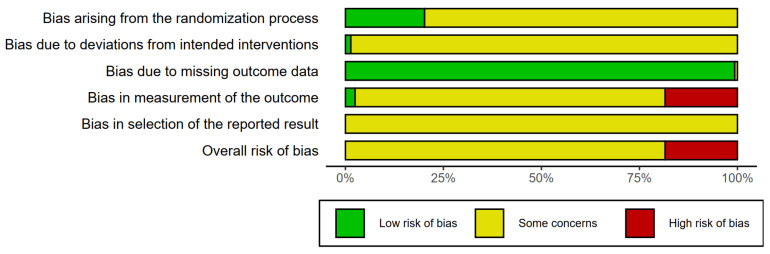
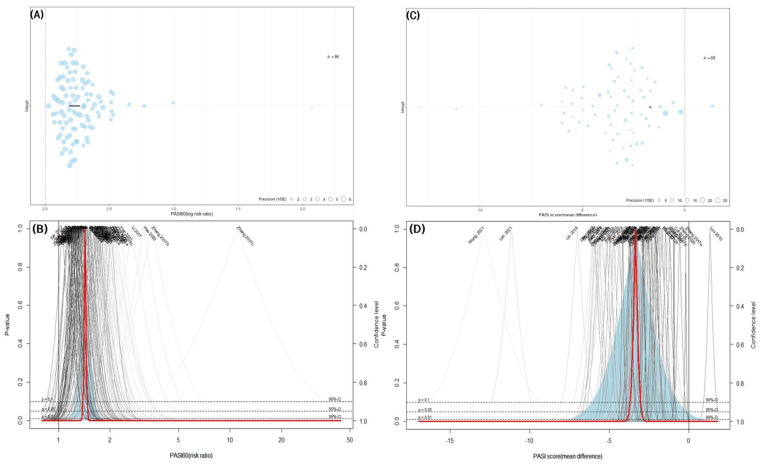
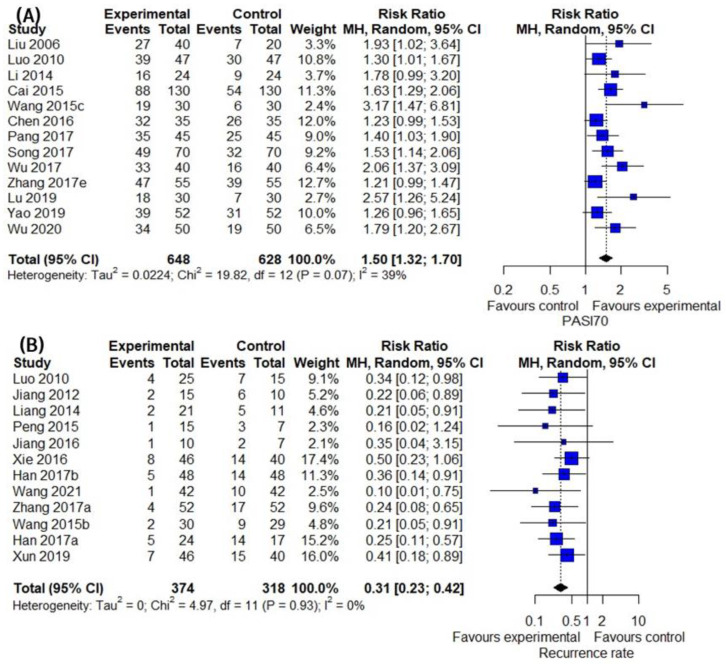
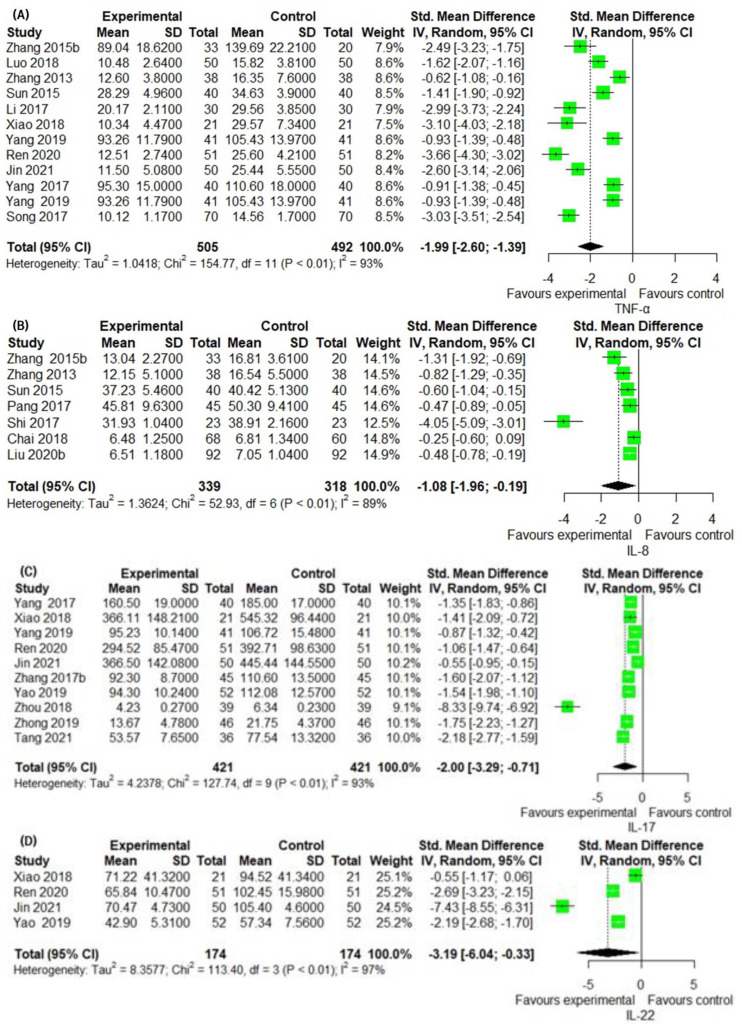
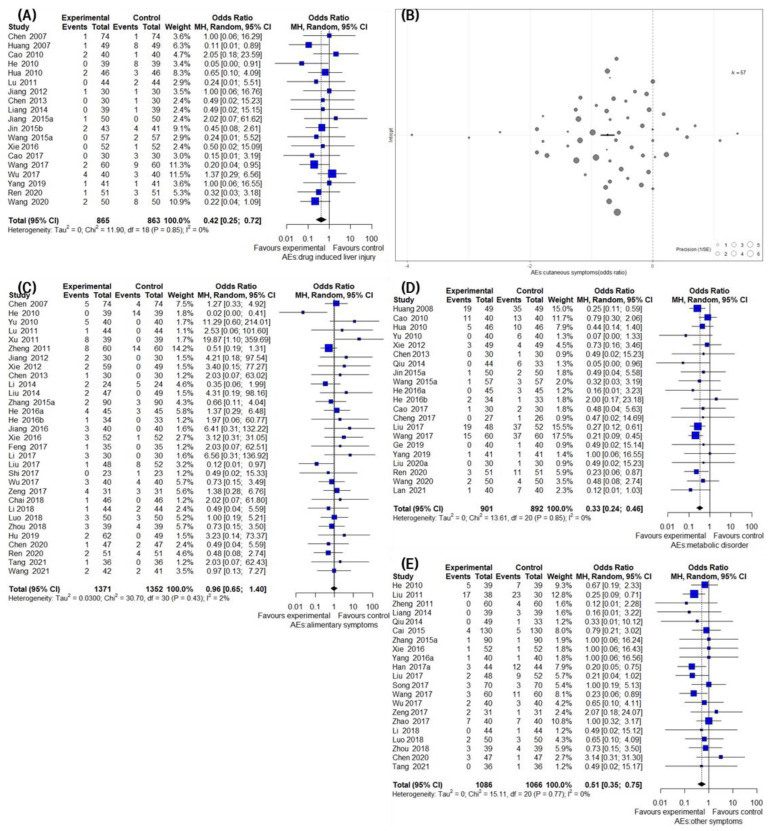
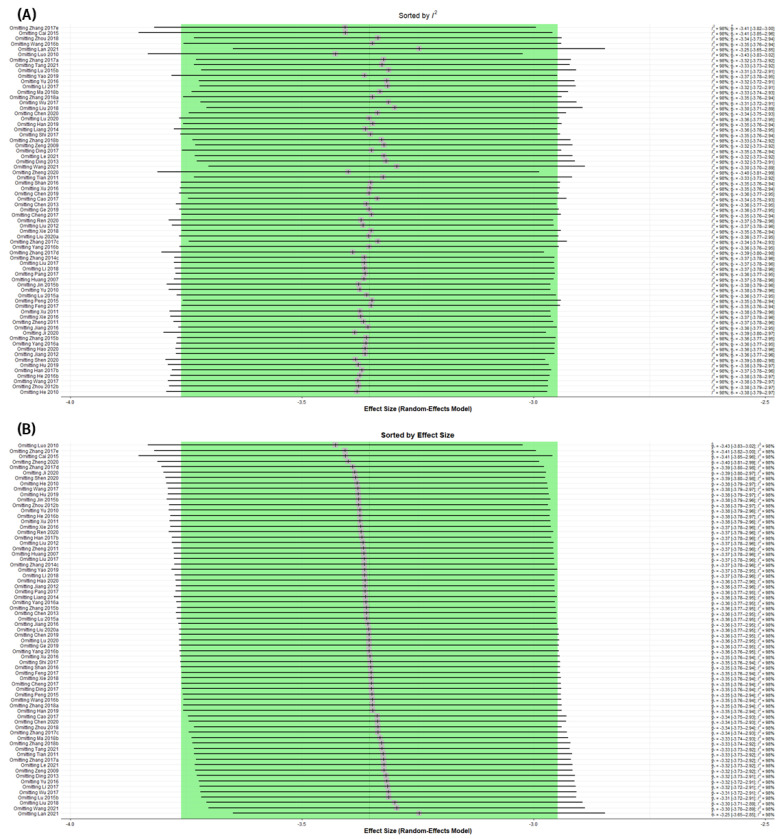
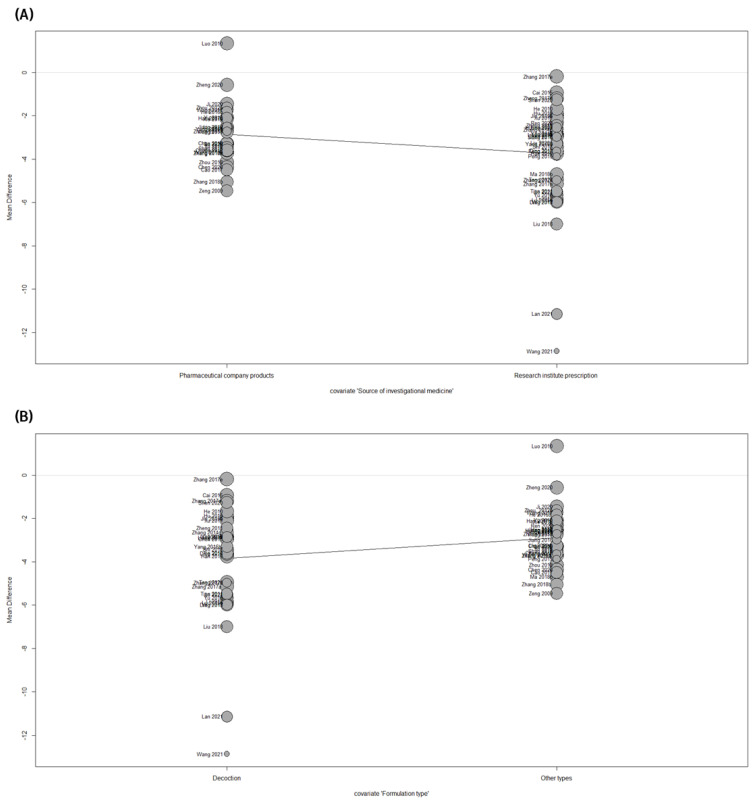
Psoriasis is a chronic inflammatory disease that places a great burden on both individuals and society. The use of East Asian herbal medicine (EAHM) in combination with conventional medications is emerging as an effective strategy to control the complex immune-mediated inflammation of this disease from an integrative medicine (IM) perspective. The safety and efficacy of IM compared to conventional medicine (CM) were evaluated by collecting randomized controlled trial literature from ten multinational research databases. We then searched for important key materials based on integrated drug data mining. Network pharmacology analysis was performed to predict the mechanism of the anti-inflammatory effect. Data from 126 randomized clinical trials involving 11,139 patients were used. Compared with CM, IM using EAHM showed significant improvement in the Psoriasis Area Severity Index (PASI) 60 (RR: 1.4280; 95% CI: 1.3783-1.4794; < 0.0001), PASI score (MD: -3.3544; 95% CI: -3.7608 to -2.9481; < 0.0001), inflammatory skin lesion outcome, quality of life, serum inflammatory indicators, and safety index of psoriasis. Through integrated data mining of intervention data, we identified four herbs that were considered to be representative of the overall clinical effects of IM: (Gaertn.) DC., subsp. (Boiss.) Papan., Andrews, and Hemsl. They were found to have mechanisms to inhibit pathological keratinocyte proliferation and immune-mediated inflammation, which are major pathologies of psoriasis, through multiple pharmacological actions on 19 gene targets and 8 pathways in network pharmacology analysis. However, the quality of the clinical trial design and pharmaceutical quality control data included in this study is still not optimal; therefore, more high-quality clinical and non-clinical studies are needed to firmly validate the information explored in this study. This study is informative in that it presents a focused hypothesis and methodology for the value and direction of such follow-up studies.
银屑病是一种慢性炎症性疾病,给个人和社会都带来了沉重负担。从整合医学(IM)的角度来看,使用东亚草药(EAHM)联合传统药物正成为控制该疾病复杂免疫介导炎症的有效策略。通过从十个跨国研究数据库收集随机对照试验文献,评估了IM与传统医学(CM)相比的安全性和有效性。然后,我们基于综合药物数据挖掘搜索重要的关键材料。进行网络药理学分析以预测抗炎作用的机制。使用了来自126项涉及11139名患者的随机临床试验的数据。与CM相比,使用EAHM的IM在银屑病面积和严重程度指数(PASI)60(RR:1.4280;95%CI:1.3783 - 1.4794;<0.0001)、PASI评分(MD:-3.3544;95%CI:-3.7608至-2.9481;<0.0001)、炎性皮肤病变结局、生活质量、血清炎症指标以及银屑病的安全指数方面均有显著改善。通过对干预数据的综合数据挖掘,我们确定了四种被认为代表IM整体临床效果的草药:地锦草(Euphorbia humifusa Willd.)、大籽蒿(Artemisia sieversiana Ehrh. ex Willd.)、糙叶败酱(Patrinia scabra Bunge)和地黄(Rehmannia glutinosa Libosch.)。通过网络药理学分析对19个基因靶点和8条通路的多种药理作用,发现它们具有抑制病理性角质形成细胞增殖和免疫介导炎症的机制,而这是银屑病的主要病理特征。然而,本研究中纳入的临床试验设计质量和药物质量控制数据仍不理想;因此,需要更多高质量的临床和非临床研究来坚定地验证本研究中探索的信息。本研究具有参考价值,因为它为这类后续研究的价值和方向提出了有针对性的假设和方法。