Hurwitz Joshua, Haggstrom Lucy Roxana, Lim Elgene
St. Vincent's Clinical School, Faculty of Medicine and Health, University of New South Wales, Kensington, NSW 2053, Australia.
Garvan Institute of Medical Research, Darlinghurst, NSW 2010, Australia.
Pharmaceutics. 2023 Jul 26;15(8):2017. doi: 10.3390/pharmaceutics15082017.
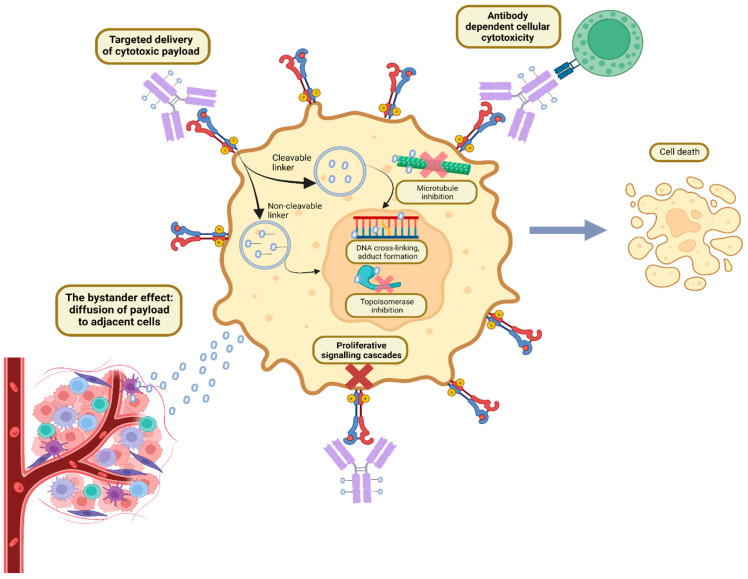
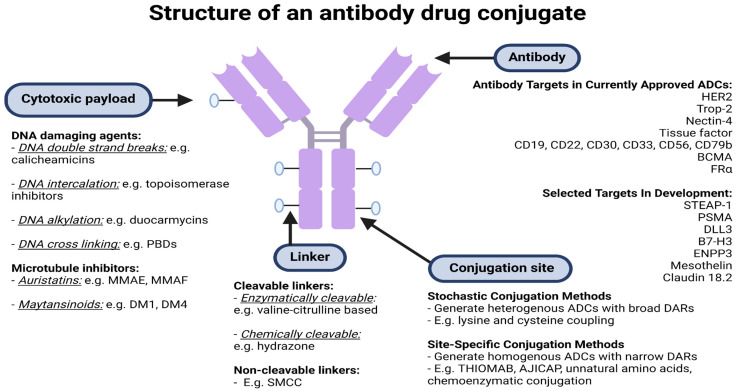
Antibody-drug conjugates (ADCs) have provided new therapeutic options and significant promise for patients with cancer, particularly where existing treatments are limited. Substantial effort in ADC development is underway globally, with 13 ADCs currently approved and many more in development. The therapeutic benefits of ADCs leverage the ability to selectively target cancer cells through antibody binding, resultant relative sparing of non-malignant tissues, and the targeted delivery of a cytotoxic payload. Consequently, this drug class has demonstrated activity in multiple malignancies refractory to standard therapeutic options. Despite this, limitations exist, including narrow therapeutic windows, unique toxicity profiles, development of therapeutic resistance, and appropriate biomarker selection. This review will describe the development of ADCs, their mechanisms of action, pivotal trials, and approved indications and identify common themes. Current challenges and opportunities will be discussed for this drug class in cancer therapeutics at a time when significant developments in antibody therapies, immunotherapy, and targeted agents are occurring.
抗体药物偶联物(ADCs)为癌症患者提供了新的治疗选择,并带来了巨大希望,尤其是在现有治疗方法有限的情况下。全球范围内正在大力开展ADC的研发工作,目前已有13种ADC获批,还有更多处于研发阶段。ADC的治疗优势在于能够通过抗体结合选择性地靶向癌细胞,从而相对减少对非恶性组织的损伤,并实现细胞毒性有效载荷的靶向递送。因此,这类药物已在多种对标准治疗方案耐药的恶性肿瘤中显示出活性。尽管如此,仍存在一些局限性,包括治疗窗口狭窄、独特的毒性特征、治疗耐药性的产生以及合适生物标志物的选择。本综述将描述ADC的发展历程、作用机制、关键试验、获批适应症,并找出共同主题。在抗体疗法、免疫疗法和靶向药物取得重大进展之际,将探讨这类药物在癌症治疗中当前面临的挑战和机遇。