Wu Haiyang, Dai Yuntong, Li Kai
School of Civil Engineering, Anhui Jianzhu University, Hefei 230601, China.
Polymers (Basel). 2023 Aug 20;15(16):3483. doi: 10.3390/polym15163483.
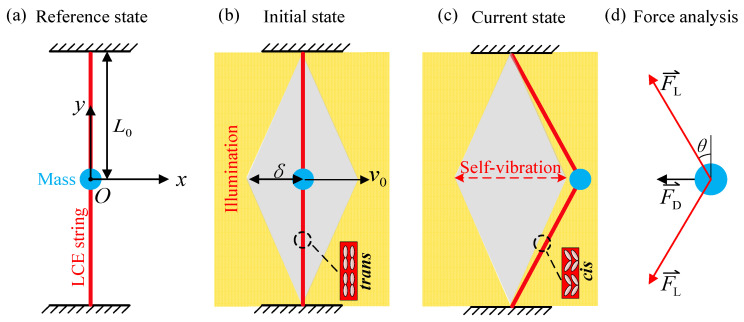
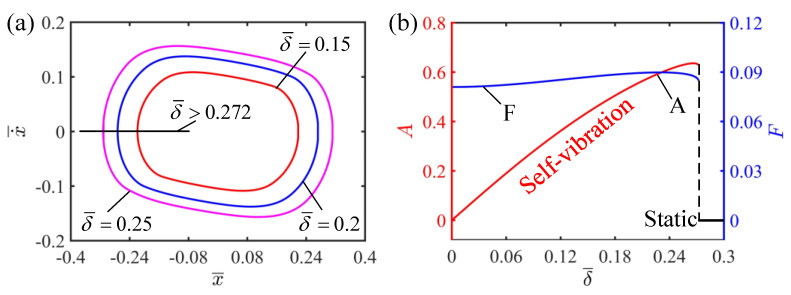
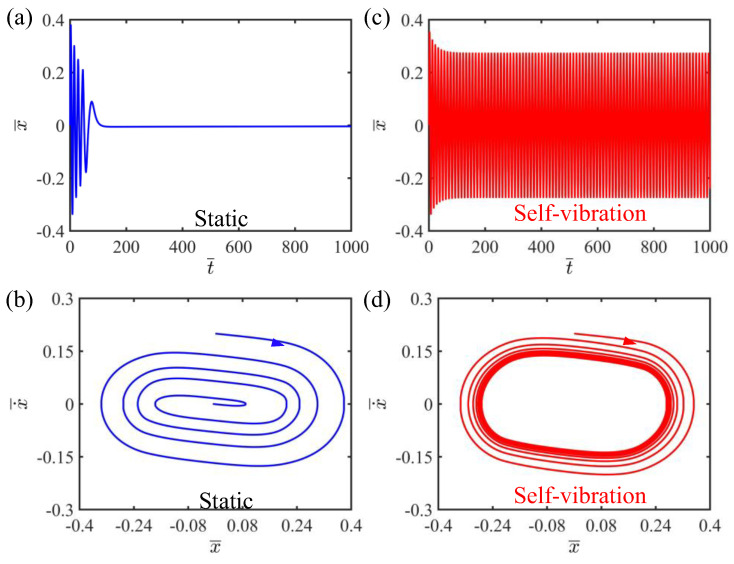
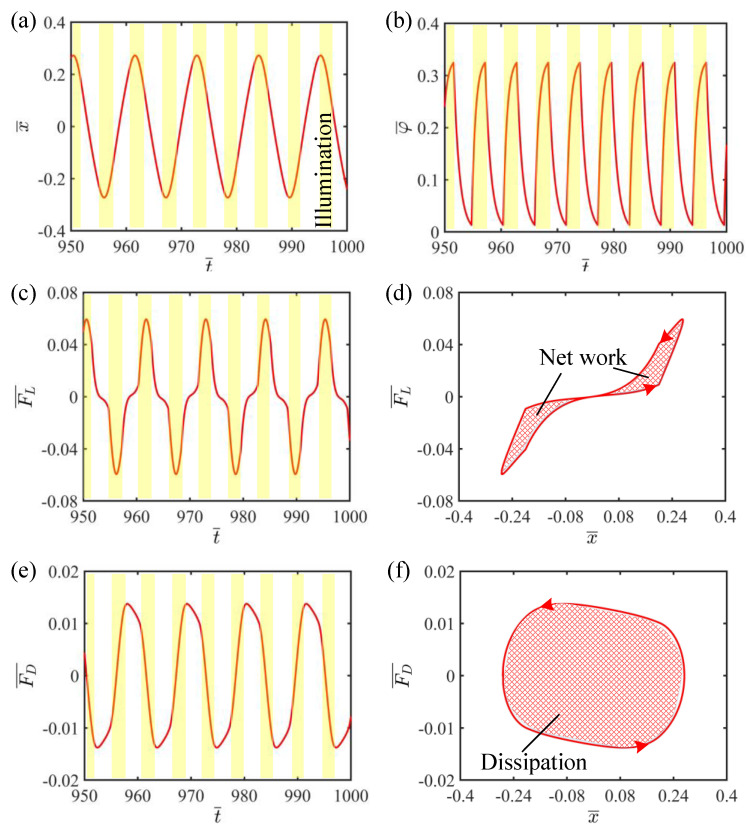
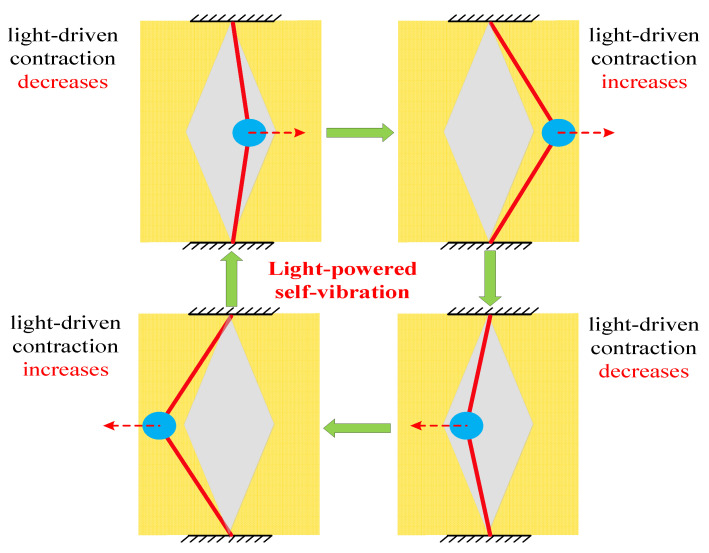
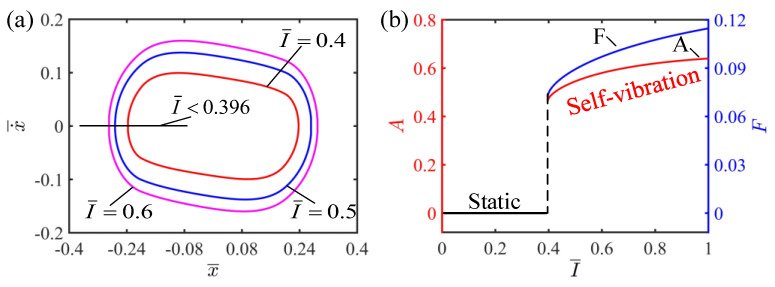
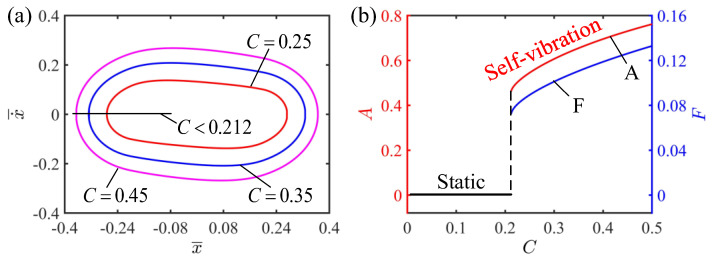
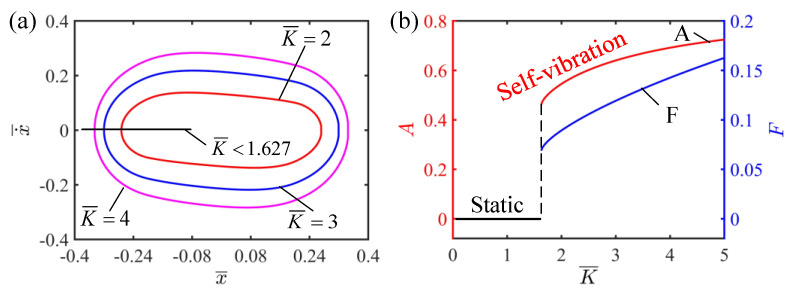
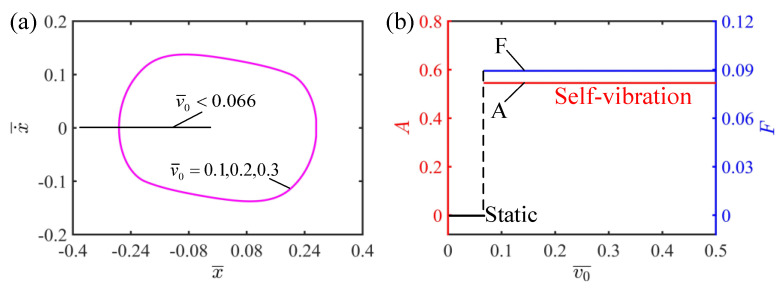
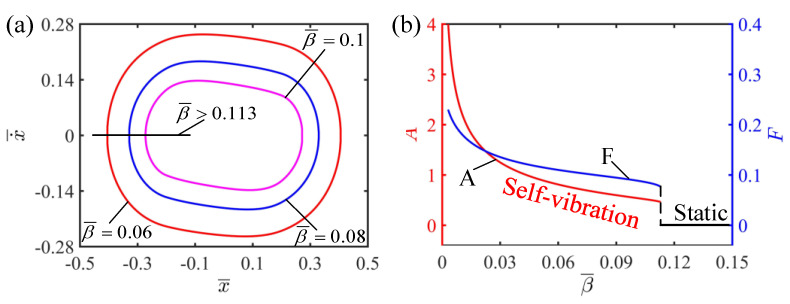
Self-vibrating systems based on active materials have been widely developed, but most of the existing self-oscillating systems are complex and difficult to control. To fulfill the requirements of different functions and applications, it is necessary to construct more self-vibrating systems that are easy to control, simple in material preparation and fast in response. This paper proposes a liquid crystal elastomer (LCE) string-mass structure capable of continuous vibration under steady illumination. Based on the linear elastic model and the dynamic LCE model, the dynamic governing equations of the LCE string-mass system are established. Through numerical calculation, two regimes of the LCE string-mass system, namely the static regime and the self-vibration regime, are obtained. In addition, the light intensity, contraction coefficient and elastic coefficient of the LCE can increase the amplitude and frequency of the self-vibration, while the damping coefficient suppresses the self-oscillation. The LCE string--mass system proposed in this paper has the advantages of simple structure, easy control and customizable size, which has a wide application prospect in the fields of energy harvesting, autonomous robots, bionic instruments and medical equipment.
基于活性材料的自振动系统已得到广泛发展,但现有的大多数自振荡系统都很复杂且难以控制。为满足不同功能和应用的需求,有必要构建更多易于控制、材料制备简单且响应快速的自振动系统。本文提出了一种在稳定光照下能够持续振动的液晶弹性体(LCE)串-质量结构。基于线性弹性模型和动态LCE模型,建立了LCE串-质量系统的动态控制方程。通过数值计算,得到了LCE串-质量系统的两种状态,即静态状态和自振状态。此外,LCE的光强、收缩系数和弹性系数可以增加自振的振幅和频率,而阻尼系数则抑制自振荡。本文提出的LCE串-质量系统具有结构简单、易于控制和尺寸可定制的优点,在能量收集、自主机器人、仿生仪器和医疗设备等领域具有广阔的应用前景。