Animal Infectious Diseases Laboratory, College of Veterinary Medicine, Yangzhou University, Yangzhou, Jiangsu, China.
Jiangsu Co-innovation Center for Prevention and Control of Important Animal Infectious Diseases and Zoonoses, Yangzhou University, Yangzhou, Jiangsu, China.
Virulence. 2023 Dec;14(1):2250065. doi: 10.1080/21505594.2023.2250065.
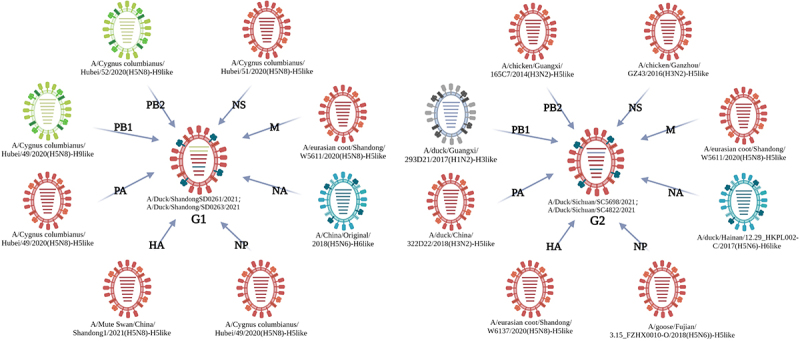
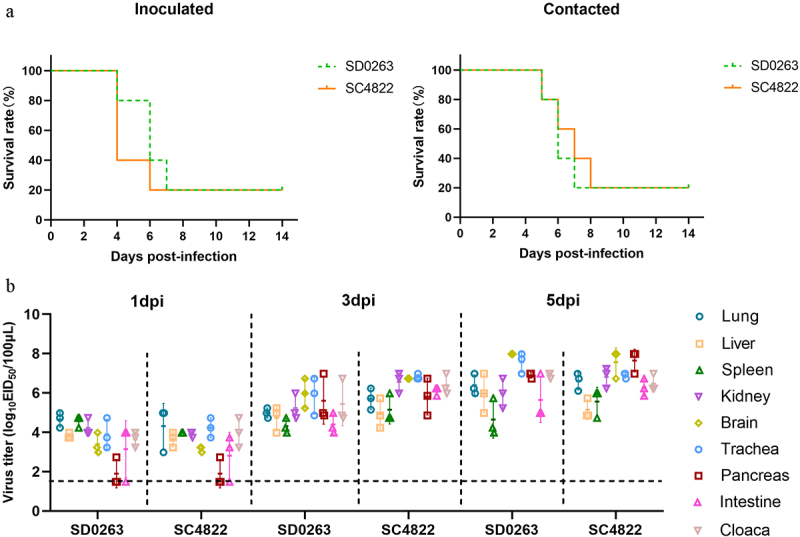
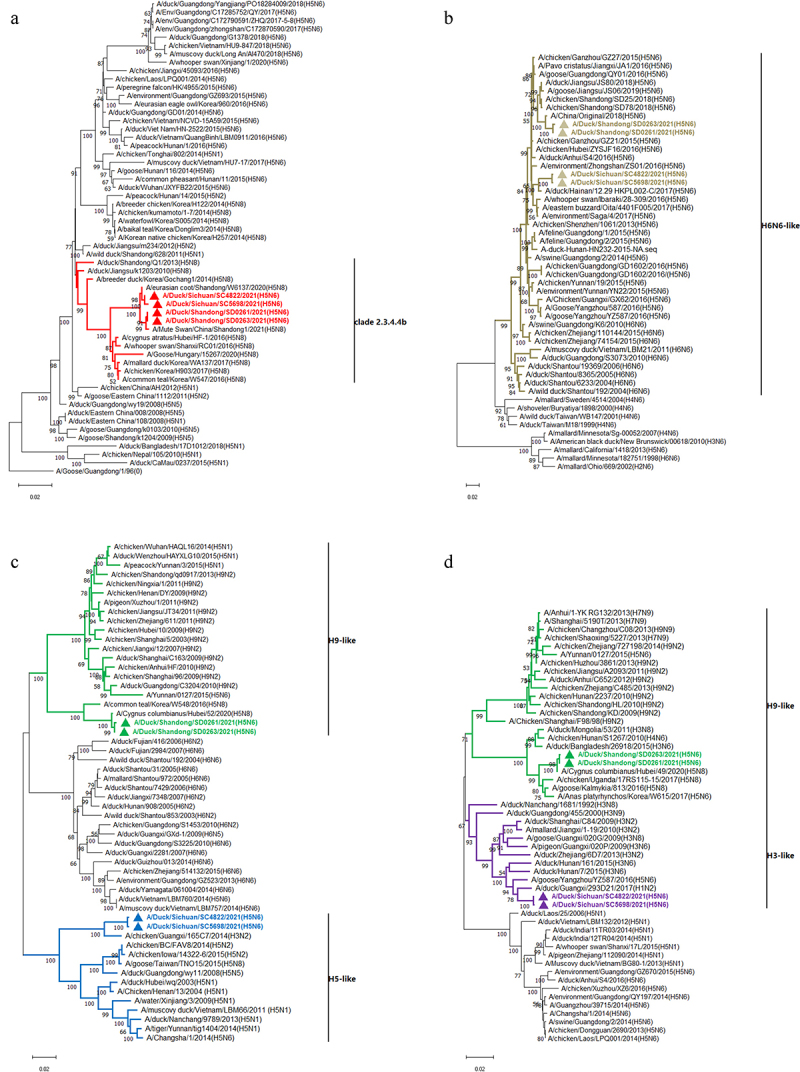
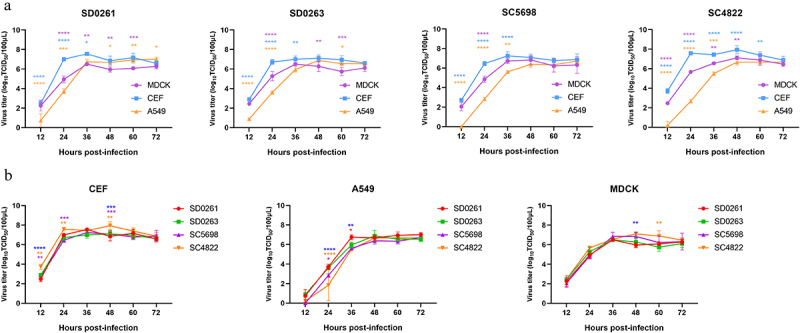
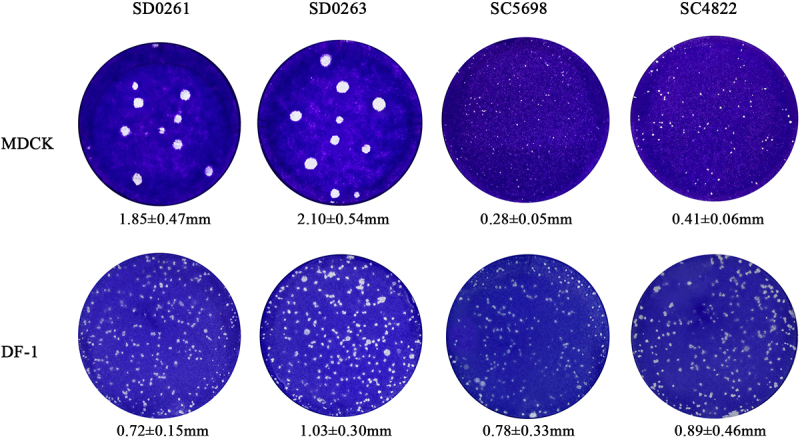
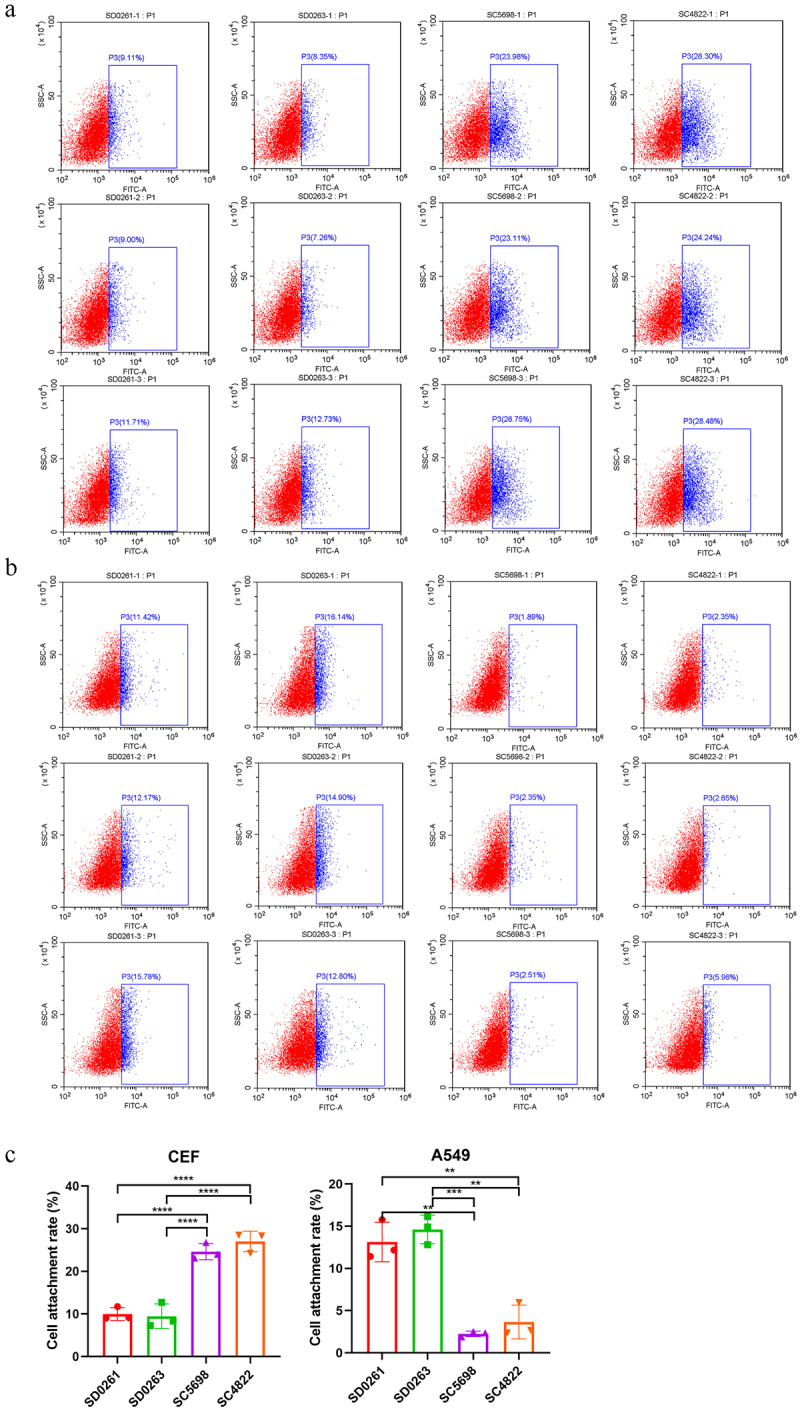
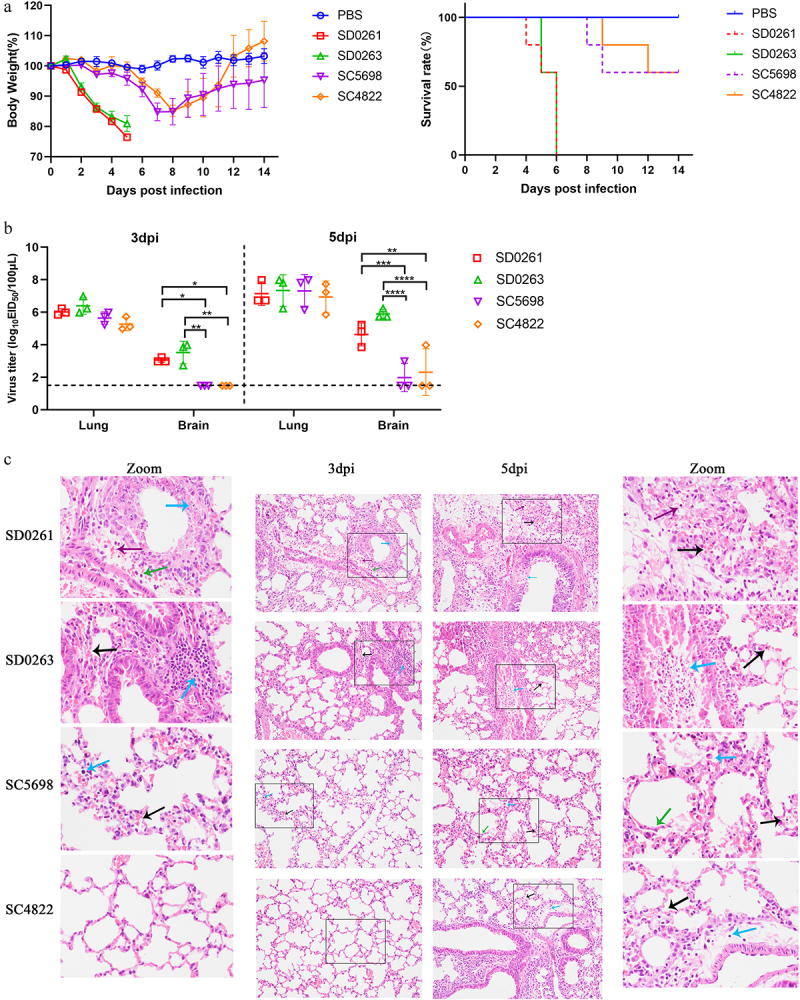
Clade 2.3.4.4 H5N6 avian influenza virus (AIV) has been predominant in poultry in China, and the circulating haemagglutinin (HA) gene has changed from clade 2.3.4.4h to clade 2.3.4.4b in recent years. In 2021, we isolated four H5N6 viruses from ducks during the routine surveillance of AIV in China. The whole-genome sequencing results demonstrated that the four isolates all belonged to the currently prevalent clade 2.3.4.4b but had different internal gene constellations, which could be divided into G1 and G2 genotypes. Specifically, G1 possessed H9-like PB2 and PB1 genes on the H5-like genetic backbone while G2 owned an H3-like PB1 gene and the H5-like remaining internal genes. By determining the characteristics of H5N6 viruses, including growth performance on different cells, plaque-formation ability, virus attachment ability, and pathogenicity and transmission in different animal models, we found that G1 strains were more conducive to replication in mammalian cells (MDCK and A549) and BALB/c mice than G2 strains. However, G2 strains were more advantageously replicated in avian cells (CEF and DF-1) and slightly more transmissible in waterfowls (mallards) than G1 strains. This study enriched the epidemiological data of H5 subtype AIV to further understand its dynamic evolution, and laid the foundation for further research on the mechanism of low pathogenic AIV internal genes in generating novel H5 subtype reassortants.
在中国,禽群中主要流行 Clade 2.3.4.4 H5N6 禽流感病毒(AIV),近年来其流行的血凝素(HA)基因已从 Clade 2.3.4.4h 转变为 Clade 2.3.4.4b。2021 年,我们在中国的 AIV 常规监测中从鸭子中分离到 4 株 H5N6 病毒。全基因组测序结果表明,这 4 个分离株均属于目前流行的 Clade 2.3.4.4b,但具有不同的内部基因组合,可分为 G1 和 G2 基因型。具体来说,G1 在 H5 样遗传背景上具有 H9 样 PB2 和 PB1 基因,而 G2 则具有 H3 样 PB1 基因和 H5 样剩余内部基因。通过确定 H5N6 病毒的特性,包括在不同细胞上的生长性能、空斑形成能力、病毒附着能力以及在不同动物模型中的致病性和传播性,我们发现 G1 株在哺乳动物细胞(MDCK 和 A549)和 BALB/c 小鼠中比 G2 株更有利于复制。然而,G2 株在禽细胞(CEF 和 DF-1)中更有利于复制,在水禽(绿头鸭)中的传播能力略高于 G1 株。本研究丰富了 H5 亚型 AIV 的流行病学数据,进一步了解了其动态进化,并为进一步研究低致病性 AIV 内部基因在产生新型 H5 亚型重配体中的作用机制奠定了基础。