Lu Shuaizhi, Zhang Dou, Wang Le, Dong Lei, Liu Changcheng, Hou Dongjie, Chen Guoping, Qiao Xianguo, Wang Yuyouting, Guo Ke
State Key Laboratory of Vegetation and Environmental Change, Institute of Botany, Chinese Academy of Sciences, Beijing, China.
University of Chinese Academy of Sciences, Beijing, China.
Front Plant Sci. 2023 Aug 11;14:1120050. doi: 10.3389/fpls.2023.1120050. eCollection 2023.
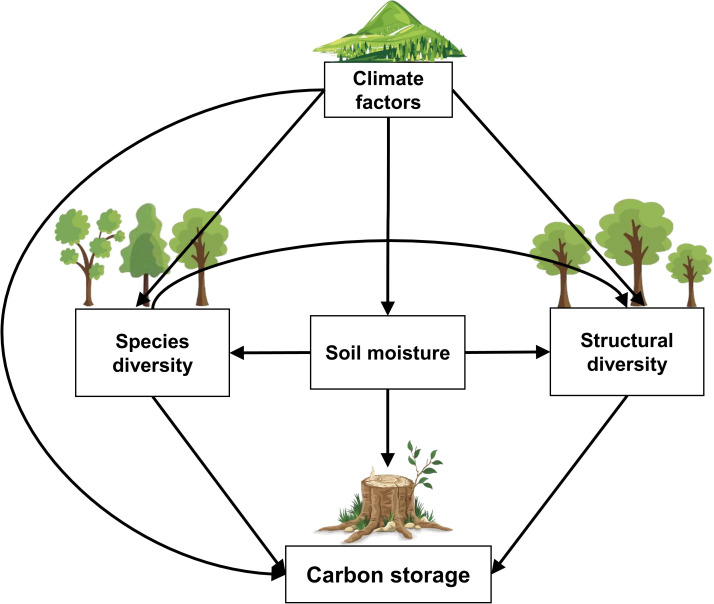
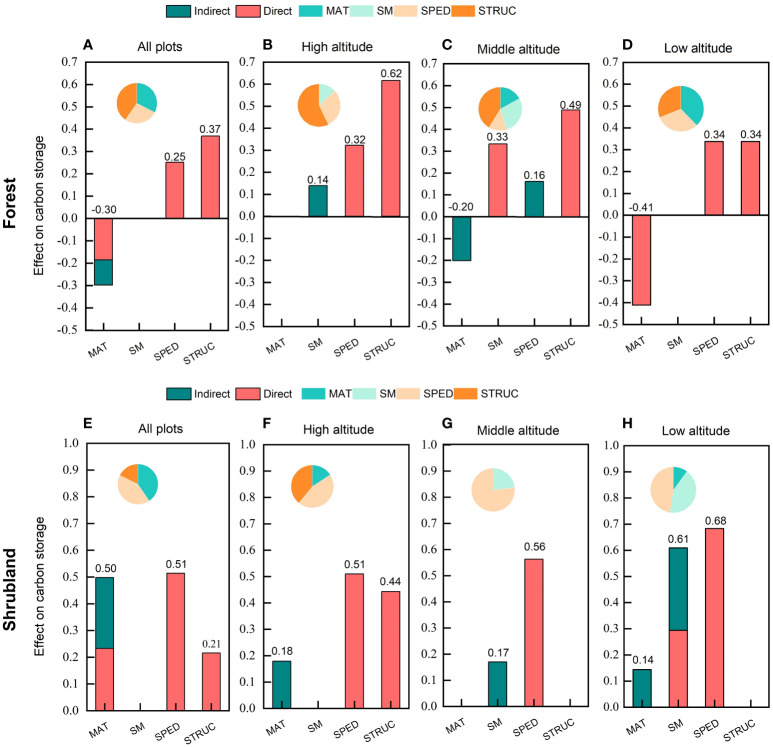
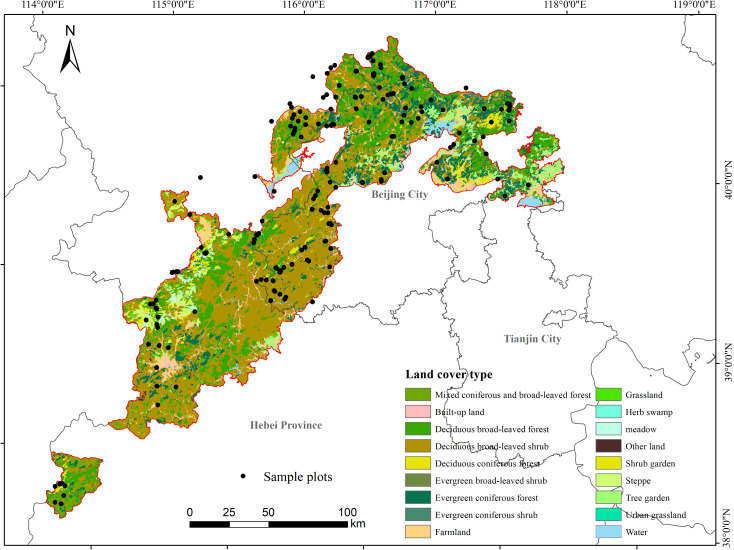
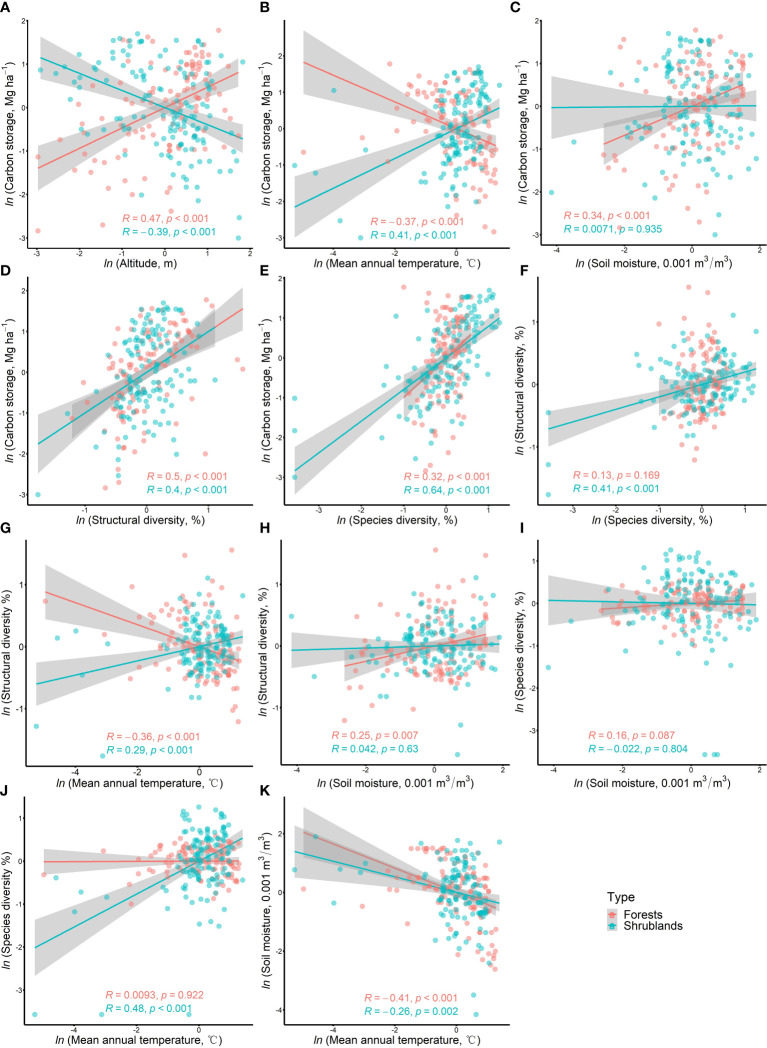
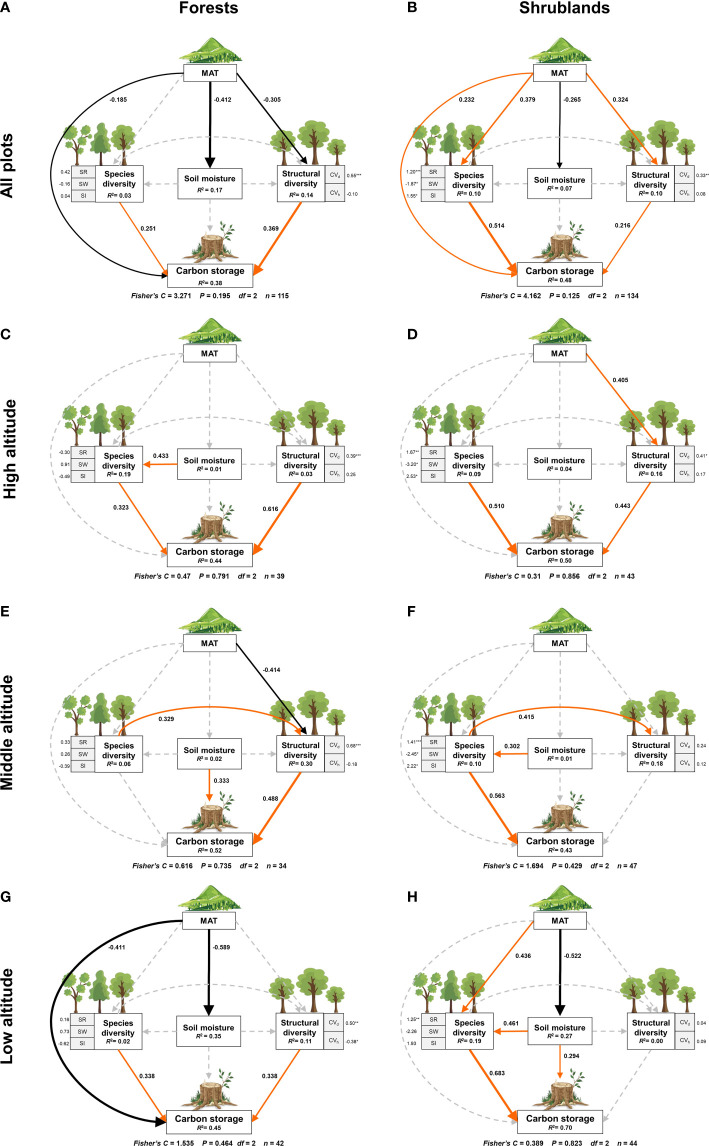
Understanding the mechanisms underlying the relationship between biodiversity and ecosystem function (BEF) is critical for the implementation of productive and resilient ecosystem management. However, the differences in BEF relationships along altitudinal gradients between forests and shrublands are poorly understood, impeding the ability to manage terrestrial ecosystems and promote their carbon sinks. Using data from 37962 trees of 115 temperate forest and 134 shrubland plots of Taihang Mountains Priority Reserve, we analyzed the effects of species diversity, structural diversity, climate factors and soil moisture on carbon storage along altitudinal gradients in temperate forests and shrublands. We found that: (1) Structural diversity, rather than species diversity, mainly promoted carbon storage in forests. While species diversity had greater positive effect on carbon storage in shrublands. (2) Mean annual temperature (MAT) had a direct negative effect on forest carbon storage, and indirectly affected forest carbon storage by inhibiting structural diversity. In contrast, MAT promoted shrubland carbon storage directly and indirectly through the positive mediating effect of species diversity. (3) Increasing altitudinal gradients enhanced the structural diversity-carbon relationship in forests, but weakened the species diversity-carbon relationship in shrublands. Niche and architectural complementarity and different life strategies of forests and shrubs mainly explain these findings. These differential characteristics are critical for our comprehensive understanding of the BEF relationship and could help guide the differentiated management of forests and shrublands in reaction to environmental changes.
了解生物多样性与生态系统功能(BEF)之间关系的潜在机制对于实施高效且有韧性的生态系统管理至关重要。然而,森林和灌丛沿海拔梯度的BEF关系差异尚不清楚,这阻碍了陆地生态系统管理及促进其碳汇的能力。利用来自太行山重点保护区115个温带森林和134个灌丛样地的37962棵树的数据,我们分析了物种多样性、结构多样性、气候因素和土壤湿度对温带森林和灌丛沿海拔梯度碳储存的影响。我们发现:(1)结构多样性而非物种多样性主要促进森林中的碳储存。而物种多样性对灌丛中的碳储存有更大的积极影响。(2)年均温度(MAT)对森林碳储存有直接负面影响,并通过抑制结构多样性间接影响森林碳储存。相比之下,MAT通过物种多样性的正向中介作用直接和间接地促进灌丛碳储存。(3)海拔梯度增加增强了森林中结构多样性与碳的关系,但削弱了灌丛中物种多样性与碳的关系。生态位和结构互补性以及森林和灌丛不同的生活策略主要解释了这些发现。这些差异特征对于我们全面理解BEF关系至关重要,并有助于指导针对环境变化对森林和灌丛进行差异化管理。