Rodrigues Nuno José Pinho, Carvalho João M S
Instituto Politécnico de Gestão e Tecnologia, V. N. de Gaia, Portugal.
REMIT-Universidade Portucalense, R. António Bernardino de Almeida, 541, 4200-072, Porto, Portugal.
Heliyon. 2023 Aug 14;9(8):e19122. doi: 10.1016/j.heliyon.2023.e19122. eCollection 2023 Aug.
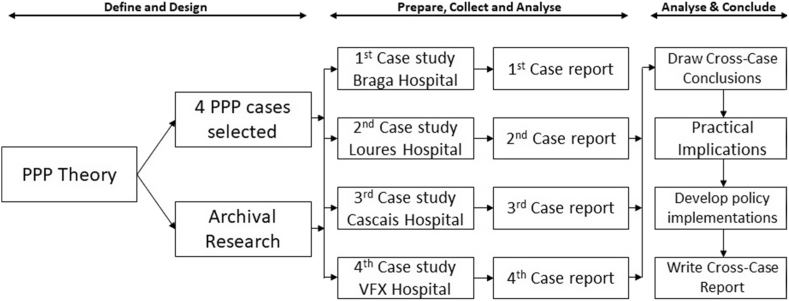
Since 2001, in Portugal, constant reforms in hospital management have accompanied the transformations in the management models applied to public administration, intending to ensure a higher quality of services and, simultaneously, a more significant economic efficiency. This study aims to analyse, for the period between 2012 and 2021, the economic and financial results (value-for-money) of the PPP model, compared with the public management hospitals (PMH). It used a mixed research approach based on multiple case studies and archival research. As the main results, it was found that: i) the PPP model, applied to the health sector, appears to be advantageous, not only regarding the economic and financial results but also concerning the quality of service provision; and ii) despite the value-for-money generated by the PPP model, the lower operating costs and the superior performance in comparison with PMH, the government has permanently opted to revert from a PPP model to a PMH model. This study concluded that the hospital management model is instead seen as an instrumentalised political instrument than a management tool that could generate savings for the taxpayers. Several practical implications are presented.
自2001年以来,在葡萄牙,医院管理方面的持续改革伴随着公共行政应用管理模式的转变,旨在确保更高的服务质量,同时实现更高的经济效率。本研究旨在分析2012年至2021年期间,公私合营模式(PPP)与公立医院管理(PMH)相比的经济和财务结果(性价比)。它采用了基于多个案例研究和档案研究的混合研究方法。作为主要结果,发现:i)应用于卫生部门的公私合营模式似乎具有优势,不仅在经济和财务结果方面,而且在服务提供质量方面;ii)尽管公私合营模式产生了性价比,运营成本较低且与公立医院管理相比表现更优,但政府却一直选择从公私合营模式转回公立医院管理模式。本研究得出结论,医院管理模式被视为一种工具化的政治手段,而非一种可为纳税人节省开支的管理工具。文中还提出了一些实际影响。