Neutel Cédric H G, Wesley Callan D, De Meyer Guido R Y, Martinet Wim, Guns Pieter-Jan
Laboratory of Physiopharmacology, University of Antwerp, Campus Drie Eiken, Antwerp, Belgium.
Front Physiol. 2023 Aug 11;14:1218924. doi: 10.3389/fphys.2023.1218924. eCollection 2023.
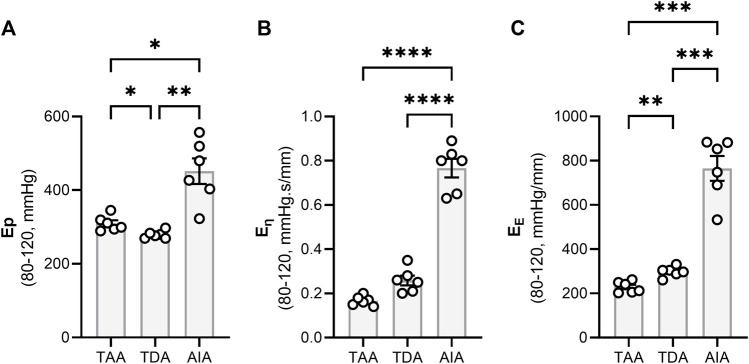
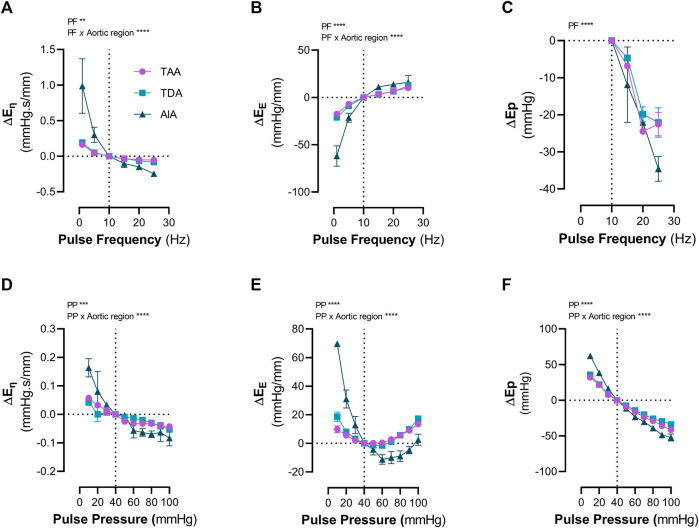
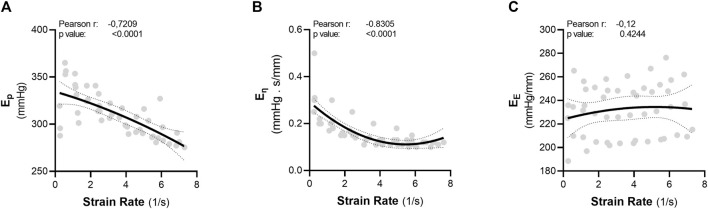
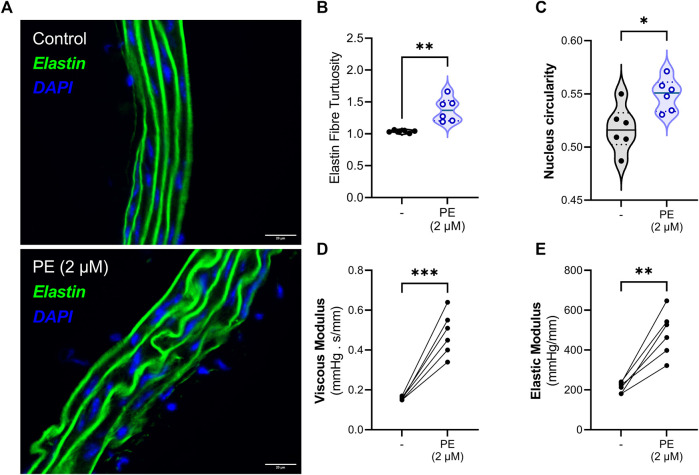
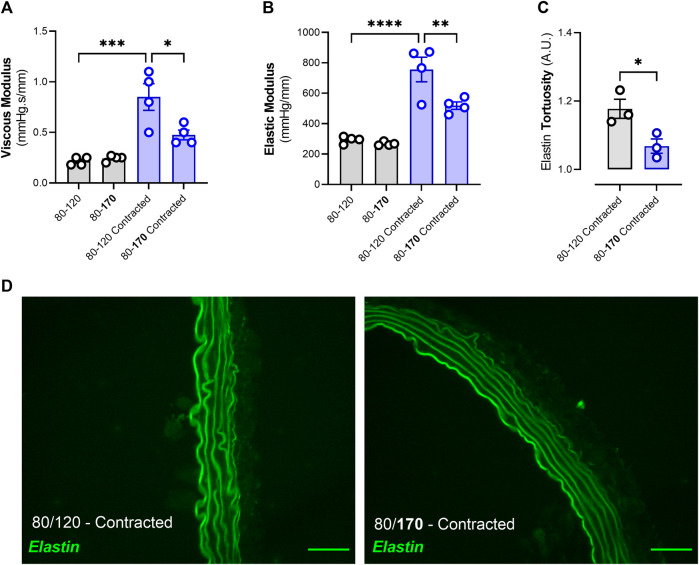
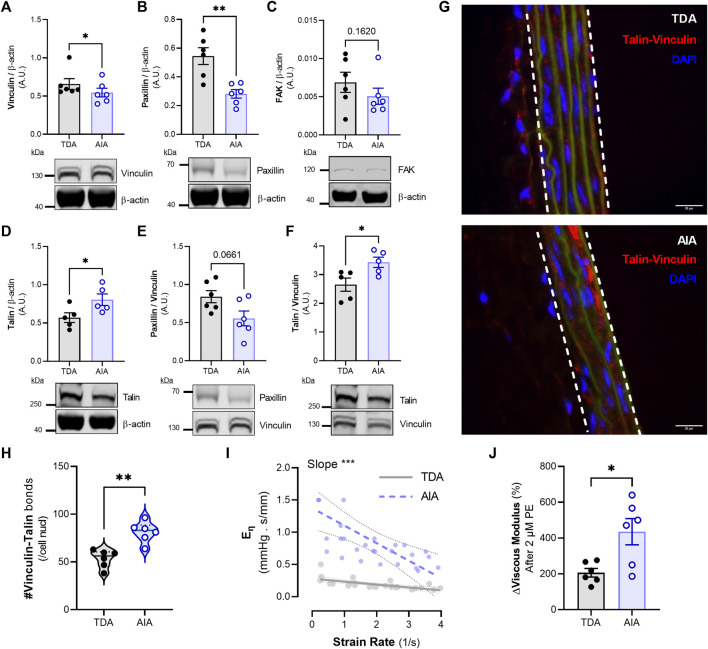
Due to its viscoelastic properties, the aorta aids in dampening blood pressure pulsatility. At the level of resistance-arteries, the pulsatile flow will be transformed into a continuous flow to allow for optimal perfusion of end organs such as the kidneys and the brain. In this study, we investigated the viscoelastic properties of different regions of the aorta of healthy C57Bl6/J adult mice as well as the interplay between (altered) cyclic stretch and viscoelasticity. We demonstrated that the viscoelastic parameters increase along the distal aorta and that the effect of altered cyclic stretch is region dependent. Increased cyclic stretch, either by increased pulse pressure or pulse frequency, resulted in decreased aortic viscoelasticity. Furthermore, we identified that the vascular smooth muscle cell (VSMC) is an important modulator of viscoelasticity, as we have shown that VSMC contraction increases viscoelastic parameters by, in part, increasing elastin fiber tortuosity. Interestingly, an acute increase in stretch amplitude reverted the changes in viscoelastic properties induced by VSMC contraction, such as a decreasing contraction-induced elastin fiber tortuosity. Finally, the effects of altered cyclic stretch and VSMC contraction on viscoelasticity were more pronounced in the abdominal infrarenal aorta, compared to both the thoracic ascending and descending aorta, and were attributed to the activity and stability of VSMC focal adhesion. Our results indicate that cyclic stretch is a modulator of aortic viscoelasticity, acting on VSMC focal adhesion. Conditions of (acute) changes in cyclic stretch amplitude and/or frequency, such as physical exercise or hypertension, can alter the viscoelastic properties of the aorta.
由于其粘弹性特性,主动脉有助于缓冲血压的脉动性。在阻力动脉水平,脉动血流将转变为连续血流,以实现对肾脏和大脑等终末器官的最佳灌注。在本研究中,我们调查了健康C57Bl6/J成年小鼠主动脉不同区域的粘弹性特性,以及(改变的)周期性拉伸与粘弹性之间的相互作用。我们证明,粘弹性参数沿主动脉远端增加,且改变的周期性拉伸的影响具有区域依赖性。通过增加脉压或脉搏频率来增加周期性拉伸,会导致主动脉粘弹性降低。此外,我们确定血管平滑肌细胞(VSMC)是粘弹性的重要调节因子,因为我们已经表明,VSMC收缩通过部分增加弹性纤维的曲折度来增加粘弹性参数。有趣的是,拉伸幅度的急性增加可逆转由VSMC收缩引起的粘弹性特性变化,如收缩诱导的弹性纤维曲折度降低。最后,与胸段升主动脉和降主动脉相比,改变的周期性拉伸和VSMC收缩对腹段肾下主动脉粘弹性的影响更为明显,这归因于VSMC粘着斑的活性和稳定性。我们的结果表明,周期性拉伸是主动脉粘弹性的调节因子,作用于VSMC粘着斑。周期性拉伸幅度和/或频率的(急性)变化情况,如体育锻炼或高血压,可改变主动脉的粘弹性特性。