Haleem Noman, Lundervold Astri J, Lied Gülen Arslan, Hillestad Eline Margrete Randulff, Bjorkevoll Maja, Bjørsvik Ben René, Teige Erica Sande, Brønstad Ingeborg, Steinsvik Elisabeth Kjelsvik, Nagaraja Bharath Halandur, Hausken Trygve, Berentsen Birgitte, Lundervold Arvid
National Center for Functional Gastrointestinal Disorders, Department of Medicine, Haukeland University Hospital, Bergen, Norway.
Mohn Medical Imaging and Visualization Center, Department of Radiology, Haukeland University Hospital, Bergen, Norway.
Open Res Eur. 2023 Jan 27;3:19. doi: 10.12688/openreseurope.15009.1. eCollection 2023.
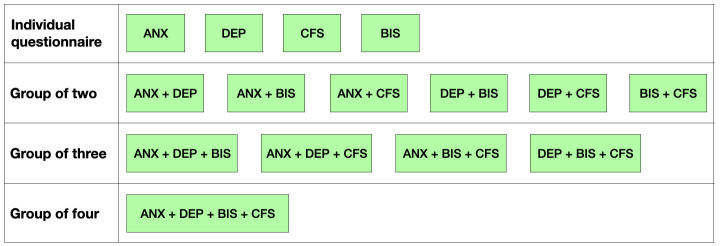
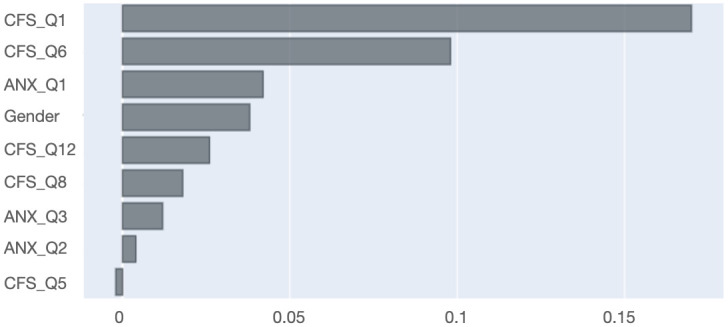
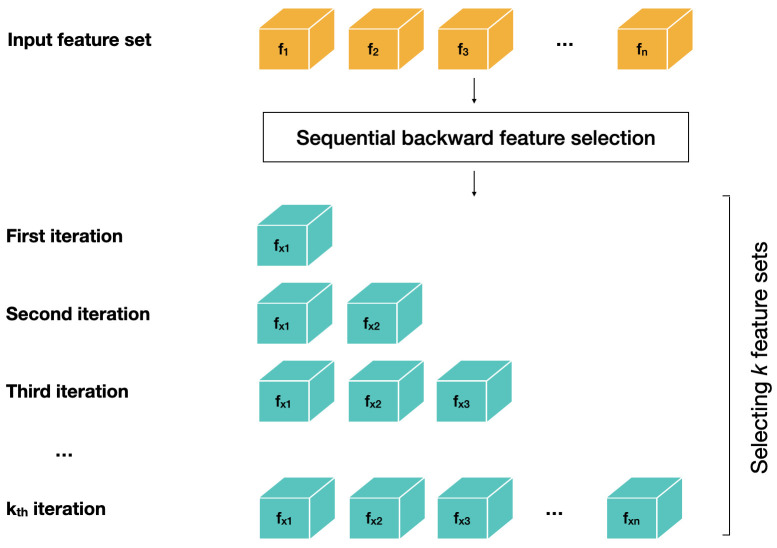
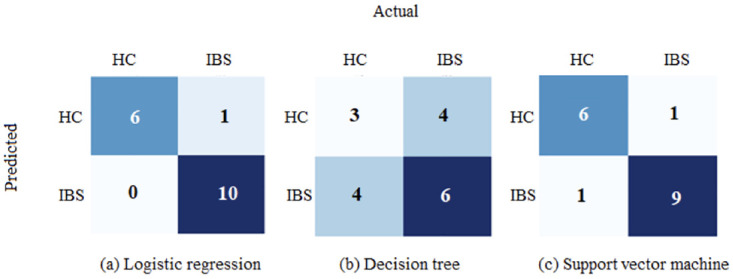
: Irritable bowel syndrome (IBS) is a chronic functional gastrointestinal disorder characterized by recurrent abdominal pain associated with alterations in stool form and/or stool frequency. Co-morbidities such as anxiety, depression, fatigue, and insomnia are frequently reported by patients suffering from IBS. Identification of these symptoms should thus be an integral part of an IBS assessment. However, an optimal tool to screen for core psychological symptoms in IBS is still missing. Here, we aim to develop a psychological symptom based machine learning model to efficiently help clinicians to identify patients suffering from IBS. : We developed a machine learning workflow to select the most significant psychological features associated with IBS in a dataset including 49 patients with IBS and 35 healthy controls. These features were used to train three different types of machine learning models: logistic regression, decision trees and support vector machine classifiers; which were validated on a holdout validation dataset and an unseen test set. The performance of these models was compared in terms of balanced accuracy scores. : A logistic regression model including a combination of symptom features associated with anxiety and fatigue resulted in a balanced accuracy score of 0.93 (0.81-1.0) on unseen test data and outperformed the other comparable models. The same model correctly identified all patients with IBS in a test set (recall score 1) and misclassified one non-IBS subject (precision score 0.91). A complementary post-hoc leave-one-out cross validation analysis including the same symptom features showed similar, but slightly inferior results (balanced accuracy 0.84, recall 0.88, precision 0.86). : Inclusion of machine learning based psychological evaluation can complement and improve existing clinical procedure for diagnosis of IBS.
肠易激综合征(IBS)是一种慢性功能性胃肠疾病,其特征为反复出现腹痛,并伴有大便形态和/或排便频率改变。IBS患者经常报告有焦虑、抑郁、疲劳和失眠等共病。因此,识别这些症状应是IBS评估的一个组成部分。然而,目前仍缺少一种用于筛查IBS核心心理症状的最佳工具。在此,我们旨在开发一种基于心理症状的机器学习模型,以有效帮助临床医生识别IBS患者。我们开发了一种机器学习工作流程,以在一个包含49例IBS患者和35名健康对照的数据集里选择与IBS相关的最显著心理特征。这些特征被用于训练三种不同类型的机器学习模型:逻辑回归、决策树和支持向量机分类器;并在一个留出验证数据集和一个未见测试集上进行验证。根据平衡准确率得分对这些模型的性能进行比较。一个包含与焦虑和疲劳相关的症状特征组合的逻辑回归模型在未见测试数据上的平衡准确率得分为0.93(0.81 - 1.0),优于其他可比模型。同一模型在一个测试集中正确识别了所有IBS患者(召回率得分1),并将一名非IBS受试者误分类(精确率得分0.91)。一项包含相同症状特征的补充性事后留一法交叉验证分析显示了相似但略逊的结果(平衡准确率0.84,召回率0.88,精确率0.86)。纳入基于机器学习的心理评估可以补充和改进现有的IBS诊断临床程序。