Rosseel Liesbeth, Mylotte Darren, Cosyns Bernard, Vanhaverbeke Maarten, Zweiker David, Teles Rui Campante, Angerås Oskar, Neylon Antoinette, Rudolph Tanja Katharina, Wykrzykowska Joanna J, Patterson Tiffany, Costa Giulia, Ojeda Soledad, Tzikas Apostolos, Abras Marcel, Leroux Lionel, Van Belle Eric, Tchétché Didier, Bleiziffer Sabine, Swaans Martin J, Parma Radoslaw, Blackman Daniel J, Van Mieghem Nicolas M, Grygier Marek, Redwood Simon, Prendergast Bernard, Van Camp Guy, De Backer Ole
Department of Cardiology, Algemeen Stedelijk Hospital, Aalst, Belgium.
Faculteit Geneeskunde, Vrije Universiteit Brussel (VUB), Brussels, Belgium.
Front Cardiovasc Med. 2023 Aug 14;10:1227217. doi: 10.3389/fcvm.2023.1227217. eCollection 2023.
A steep rise in the use of transcatheter aortic valve implantation (TAVI) for the management of symptomatic severe aortic stenosis occurred. Minimalist TAVI procedures and streamlined patient pathways within experienced Heart Valve Centres are designed to overcome the challenges of ever-increasing procedural volume.
The 2022 European TAVI Pathway Survey aims to describe contemporary TAVI practice across Europe.
Between October and December 2022, TAVI operators from 32 European countries were invited to complete an online questionnaire regarding their current practice.
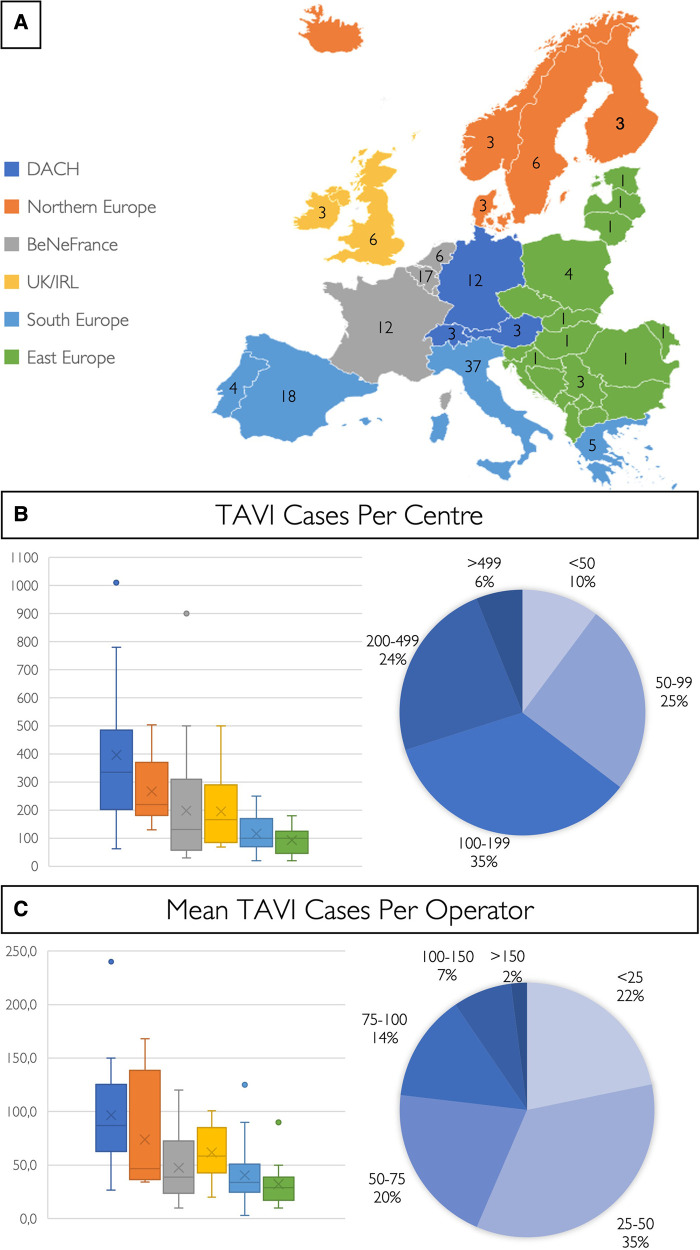
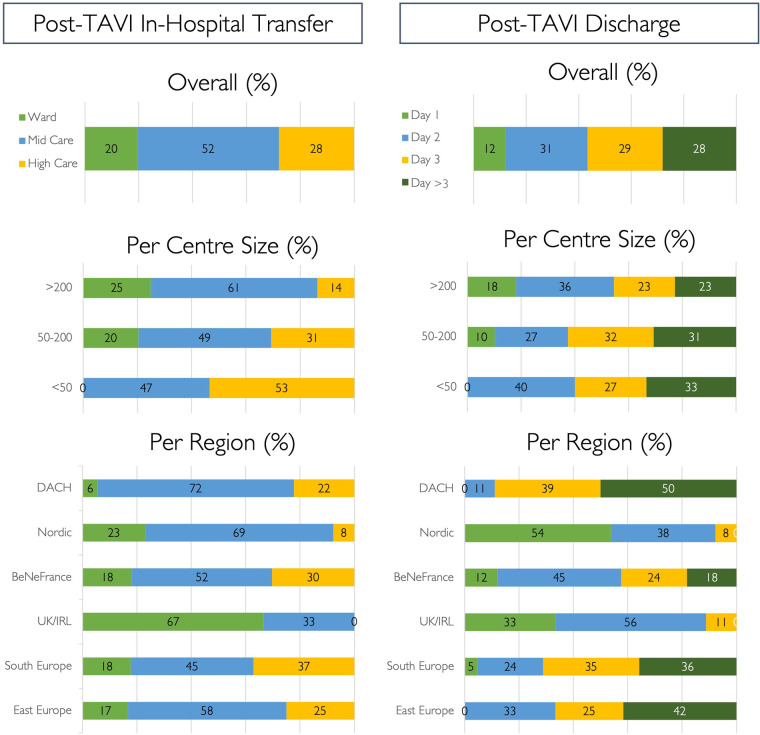
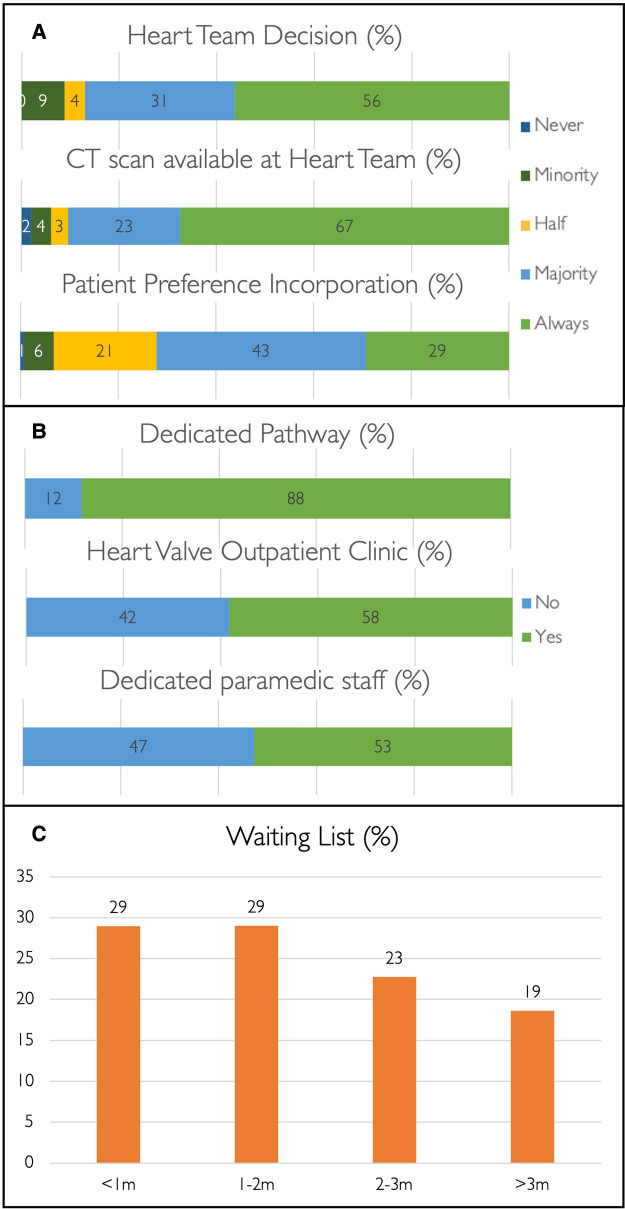
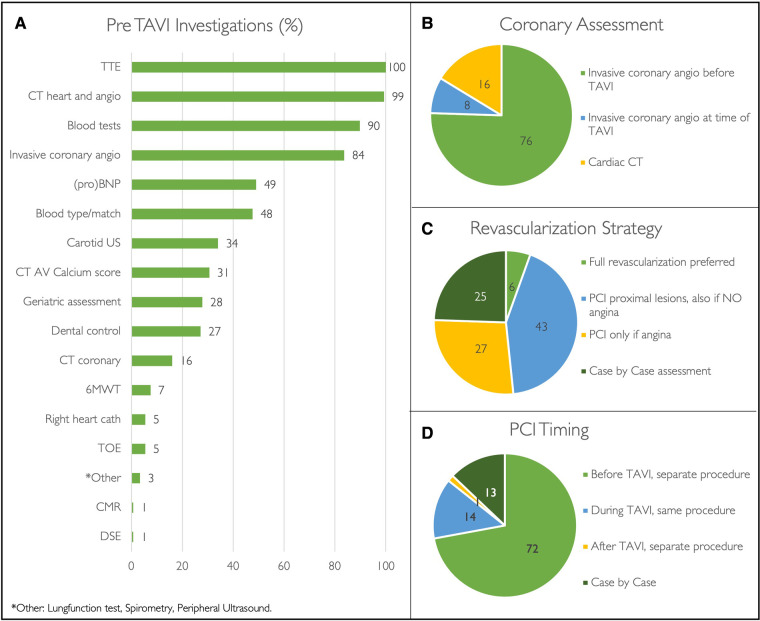
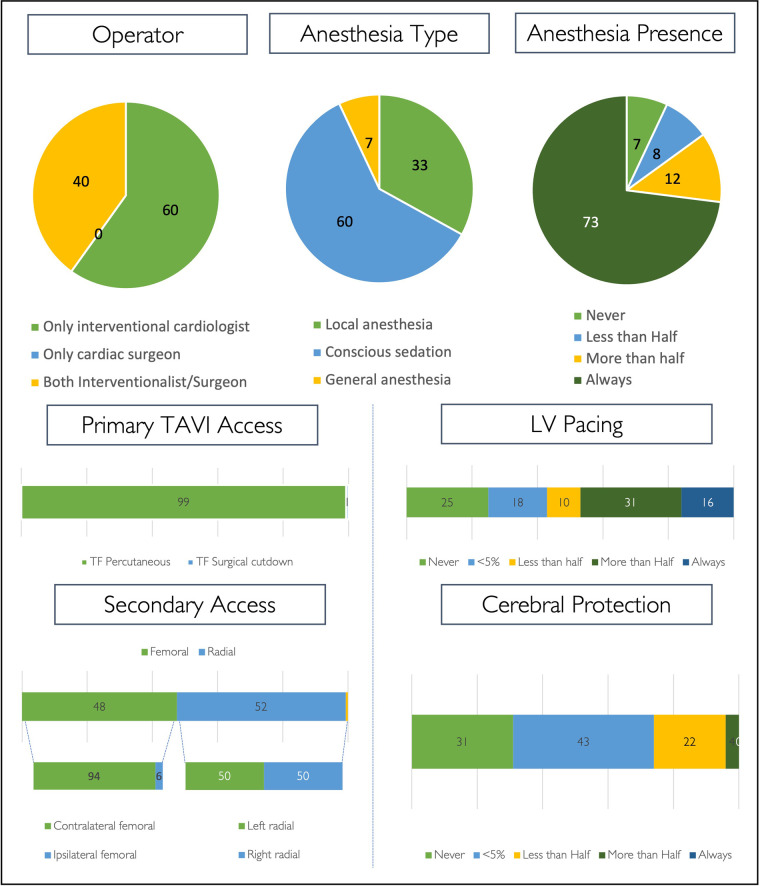
Responses were available from 147 TAVI centres in 26 countries. In 2021, the participating centres performed a total number of 27,223 TAVI procedures, with a mean of 185 TAVI cases per centre (median 138; IQR 77-194). Treatment strategies are usually (87%) discussed at a dedicated Heart Team meeting. Transfemoral TAVI is performed with local anaesthesia only (33%), with associated conscious sedation (60%), or under general anaesthesia (7%). Primary vascular access is percutaneous transfemoral (99%) with secondary radial access (52%). After uncomplicated TAVI, patients are transferred to a high-, medium-, or low-care unit in 28%, 52%, and 20% of cases, respectively. Time to discharge is day 1 (12%), day 2 (31%), day 3 (29%), or day 4 or more (28%).
Reported adoption of minimalist TAVI techniques is common among European TAVI centres, but rates of next-day discharge remain low. This survey highlights the significant progress made in refining TAVI treatment and pathways in recent years and identifies possible areas for further improvement.
经导管主动脉瓣植入术(TAVI)用于治疗有症状的严重主动脉瓣狭窄的使用量急剧上升。经验丰富的心脏瓣膜中心采用简化的TAVI手术和简化的患者治疗路径,旨在应对手术量不断增加的挑战。
2022年欧洲TAVI治疗路径调查旨在描述欧洲各地当代TAVI的实践情况。
2022年10月至12月期间,邀请来自32个欧洲国家的TAVI手术医生完成一份关于他们当前实践的在线问卷。
来自26个国家的147个TAVI中心提供了回复。2021年,参与调查的中心共进行了27223例TAVI手术,每个中心平均185例TAVI病例(中位数138;四分位间距77 - 194)。治疗策略通常(87%)在专门的心脏团队会议上进行讨论。经股动脉TAVI仅在局部麻醉下进行(33%),伴有清醒镇静(60%),或在全身麻醉下进行(7%)。主要血管通路是经皮股动脉(99%),其次是桡动脉通路(52%)。在无并发症的TAVI术后,分别有28%、52%和20%的患者被转至高、中、低护理病房。出院时间为第1天(12%)、第2天(31%)、第3天(29%)或第4天及以后(28%)。
据报告,在欧洲TAVI中心,采用简化的TAVI技术很常见,但次日出院率仍然很低。这项调查突出了近年来在完善TAVI治疗和治疗路径方面取得的重大进展,并确定了可能需要进一步改进的领域。