Alam Mohammad Khursheed, Abutayyem Huda, Alzabni Khalid Maziad D, Almuhyi Nawaf Hussain S, Alsabilah Khaled Ahmad S, Alkubaydan Faris Sultan T, Alswairki Haytham Jamil, Hajeer Mohammad Y, Awawdeh Mohammed Adel
Department of Preventive Dentistry, College of Dentistry, Jouf University, Sakaka, SAU.
Department of Clinical Sciences, Center of Medical and Bio-Allied Health Sciences Research, College of Dentistry, Ajman University, Ajman, ARE.
Cureus. 2023 Aug 28;15(8):e44243. doi: 10.7759/cureus.44243. eCollection 2023 Aug.
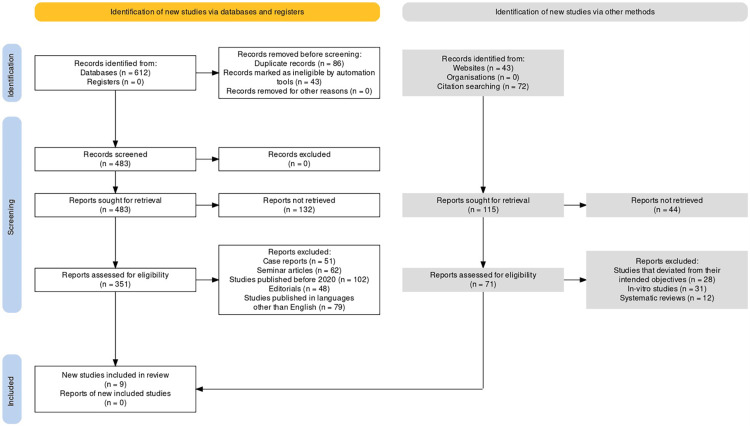
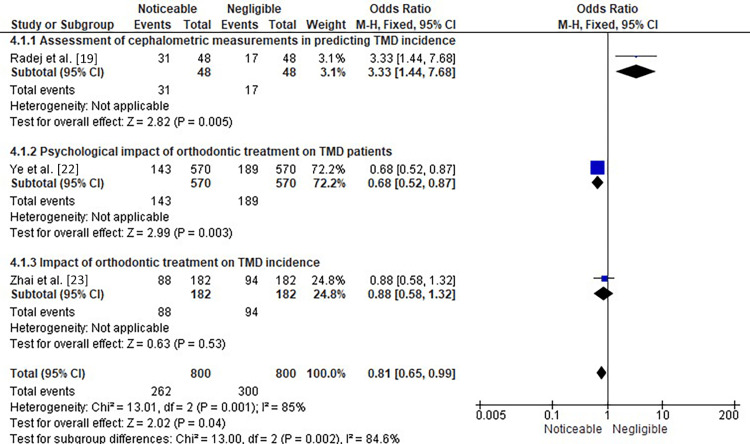
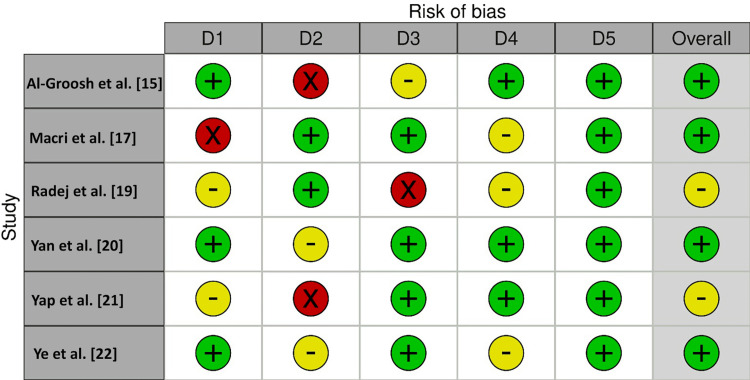
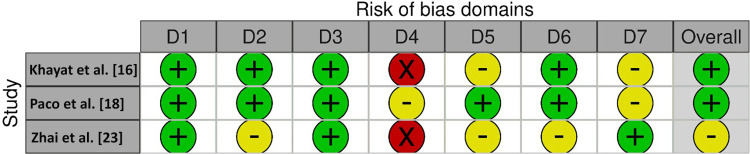
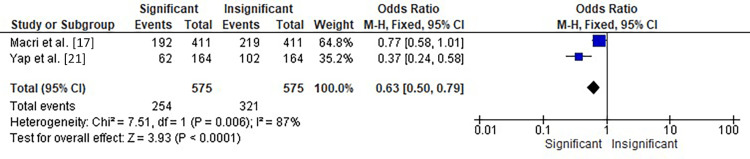
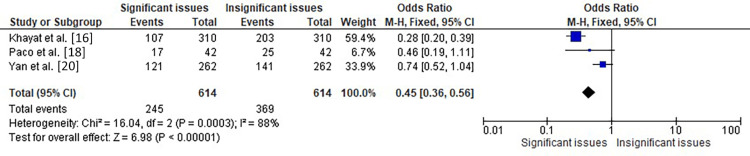
The literature on the impact of temporomandibular disorders (TMDs) on orthodontic management or vice versa lacks clarity. This study presents a review that aims to evaluate the influence of TMDs on orthodontic management and explore the association between TMDs and various aspects of orthodontic treatment. A systematic search was conducted across multiple databases to identify relevant articles documenting the correlation between TMD incidence and orthodontic treatment to achieve the objectives. The selection process followed predefined criteria, and the selected studies underwent bias assessment using the AXIS tool and Cochrane risk of bias (RoB) tool. Among the articles identified, nine studies were deemed suitable for inclusion in the review. The findings from the subsequent meta-analysis indicated a significant overall effect, suggesting that orthodontic treatment may increase the risk of developing TMD. Furthermore, the analysis revealed that patients with TMD had higher odds of experiencing orthodontic issues than those without TMD. Subgroup analysis further demonstrated that orthodontic treatment could have a negative impact on the psychological well-being of TMD patients, while its effect on TMD incidence was found to be negligible. The results highlight the need for additional research to gain a better understanding of the underlying mechanisms and develop appropriate interventions aimed at minimizing the risk of TMD in patients undergoing orthodontic treatment. Clinicians should be aware of TMD as a potential complication of orthodontic treatment and implement appropriate monitoring strategies.
关于颞下颌关节紊乱病(TMDs)对正畸治疗的影响或反之正畸治疗对TMDs的影响的文献尚不明确。本研究进行了一项综述,旨在评估TMDs对正畸治疗的影响,并探讨TMDs与正畸治疗各方面之间的关联。通过在多个数据库中进行系统检索,以识别记录TMD发病率与正畸治疗之间相关性的相关文章,从而实现研究目标。筛选过程遵循预定义标准,对所选研究使用AXIS工具和Cochrane偏倚风险(RoB)工具进行偏倚评估。在所识别的文章中,有九项研究被认为适合纳入该综述。随后的荟萃分析结果表明存在显著的总体效应,提示正畸治疗可能增加患TMD的风险。此外,分析显示患有TMD的患者出现正畸问题的几率高于未患TMD的患者。亚组分析进一步表明,正畸治疗可能对TMD患者的心理健康产生负面影响,而其对TMD发病率的影响可忽略不计。研究结果凸显了开展更多研究以更好地理解潜在机制并制定旨在降低正畸治疗患者患TMD风险的适当干预措施的必要性。临床医生应意识到TMD是正畸治疗的一种潜在并发症,并实施适当的监测策略。