Esteve Jorge, Rubio Pedro
Área de Paleontología, Departamento de Geodinámica, Estratigrafía y Paleontología Facultad de CC. Geológicas, UCM, José Antonio Nováis, 12, 28040 Madrid, Spain.
Burashi S.L., Avda. M Zambrano 24 - 6B, 50018 Zaragoza, Spain.
iScience. 2023 Jul 31;26(9):107512. doi: 10.1016/j.isci.2023.107512. eCollection 2023 Sep 15.
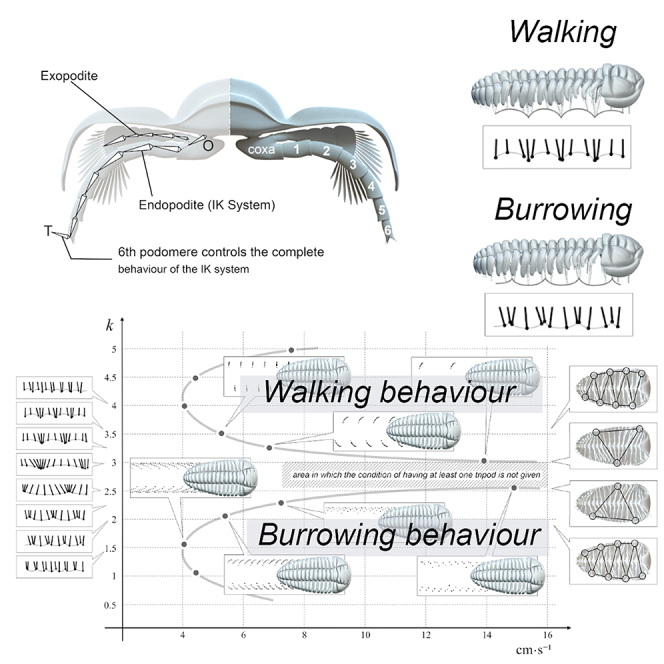
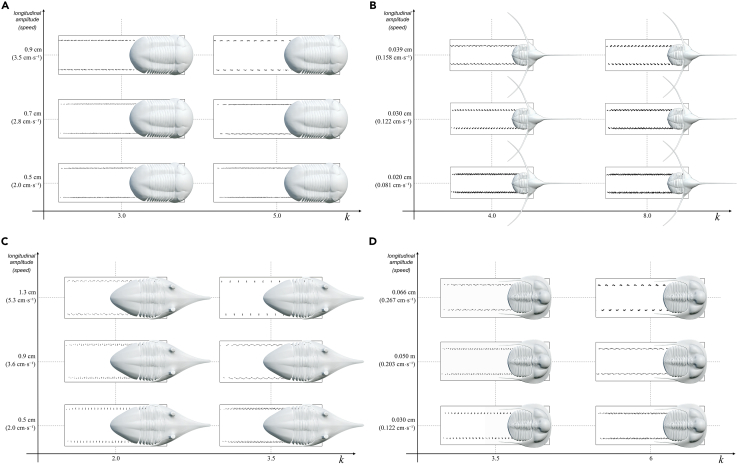
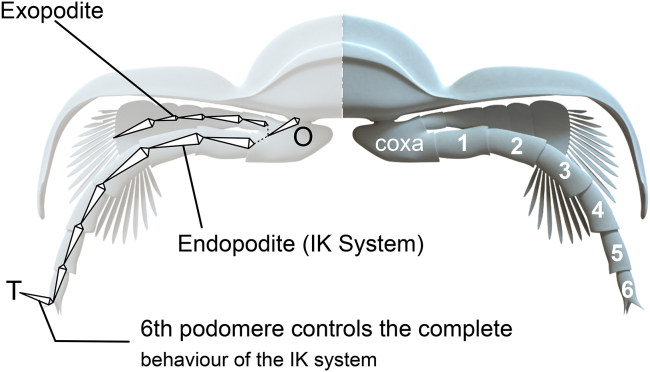
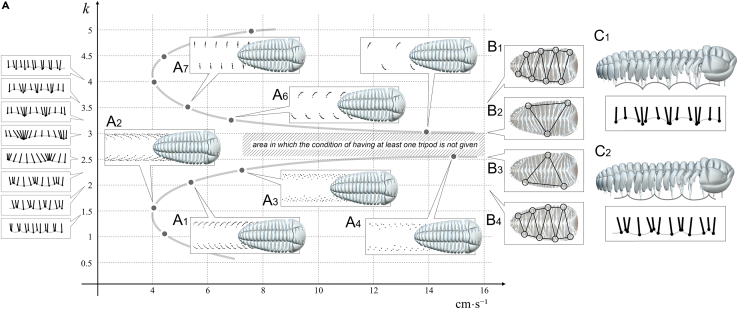
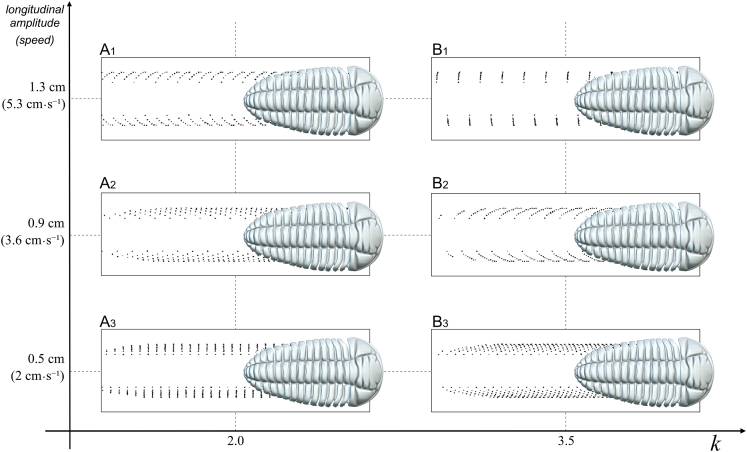
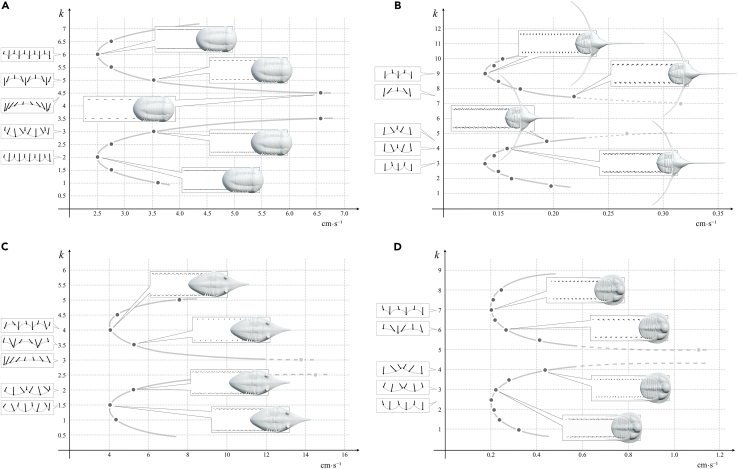
Trilobites were one of the first animals on Earth to leave their imprints on the seafloor. Such imprints represent behavioral traces related to feeding or protection, in both cases implying different types of locomotion. Modeling how trilobites moved is essential to understand their evolutionary history and ecological impact on marine substrates. Herein, locomotion in trilobites is approached by means of three-dimensional models, which yielded two main gait types. These two gaits reflect basic behaviors: burrowing and walking. This model reveals that trilobites could change their gait and consequently increase rapidly their speed varying the amplitude of the metachronal wave, a change independent from their biological structure. Fast increases in speed enhanced the protection of trilobites against predators and sudden environmental crises. The trilobite body pattern constrained their gaits, controlled by the distance between the pair of legs and between legs in a same segment.
三叶虫是地球上最早在海底留下印记的动物之一。这些印记代表了与觅食或保护相关的行为痕迹,在这两种情况下都意味着不同类型的运动。模拟三叶虫的移动方式对于理解它们的进化历史以及对海洋基质的生态影响至关重要。在此,通过三维模型来研究三叶虫的移动,该模型产生了两种主要的步态类型。这两种步态反映了基本行为:挖掘和行走。该模型表明,三叶虫可以改变它们的步态,从而通过改变顺序波的振幅迅速提高速度,这种变化与其生物结构无关。速度的快速提升增强了三叶虫对捕食者和突发环境危机的保护能力。三叶虫的身体形态限制了它们的步态,这由腿部之间以及同一节段内腿部之间的距离控制。