Synapse Research Institute, Maastricht, The Netherlands.
Department of Biochemistry, Cardiovascular Research Institute Maastricht, Maastricht University, The Netherlands.
Blood Adv. 2023 Nov 14;7(21):6717-6731. doi: 10.1182/bloodadvances.2023010027.
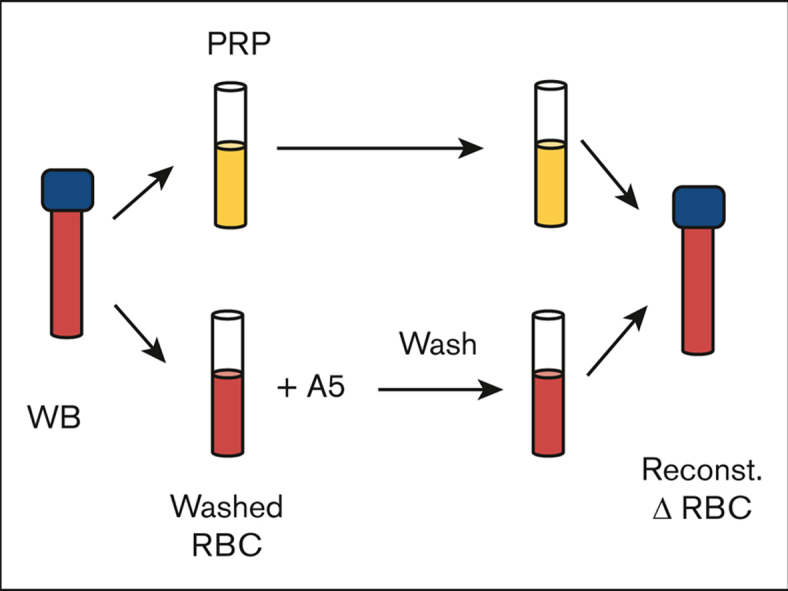
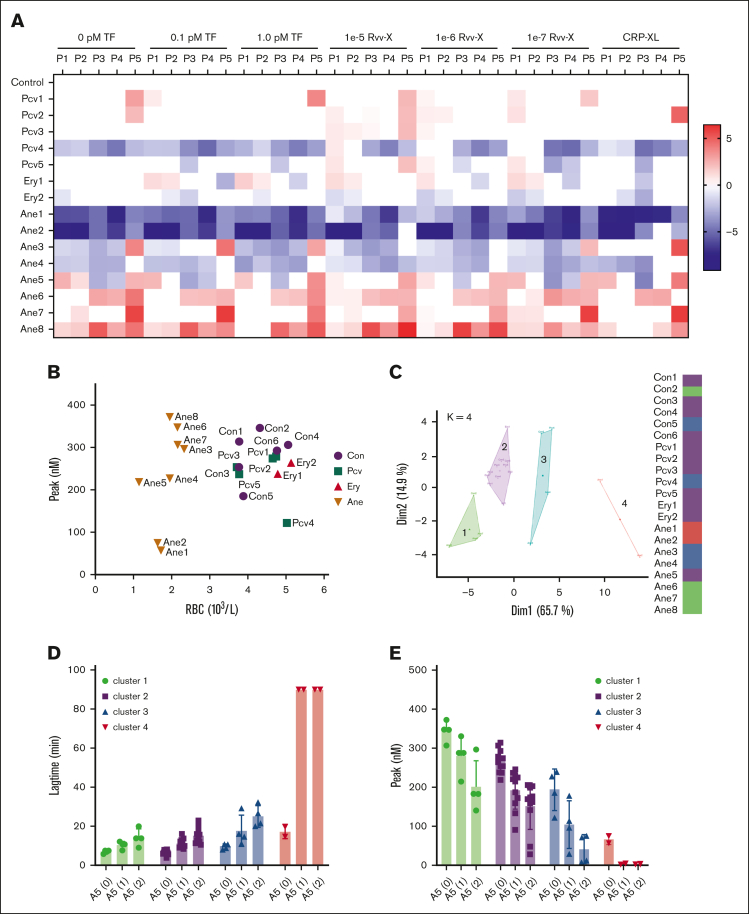
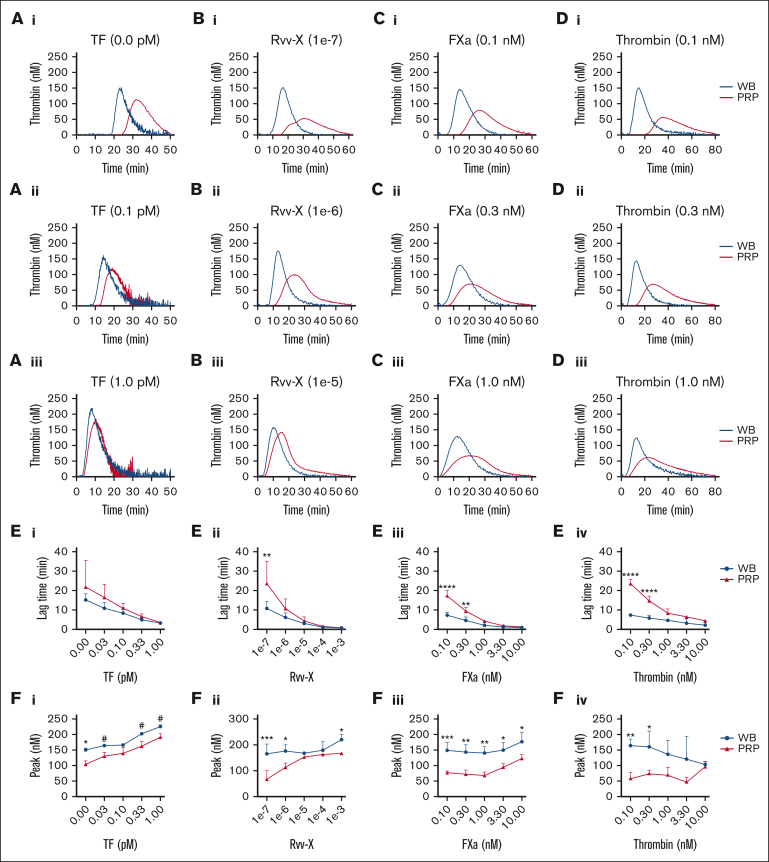
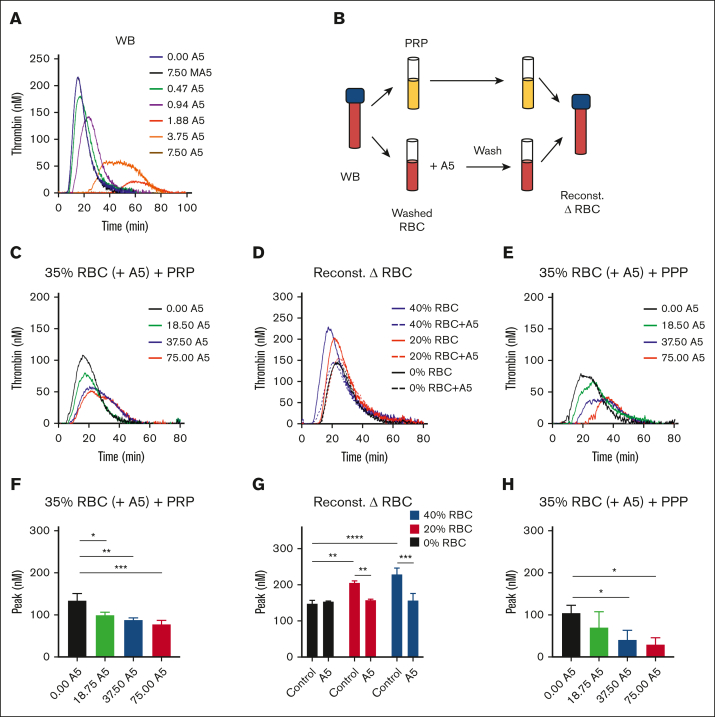
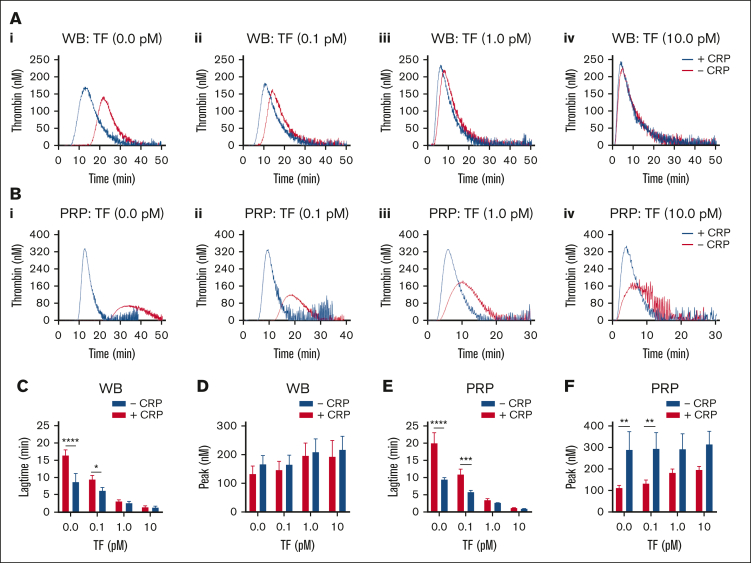
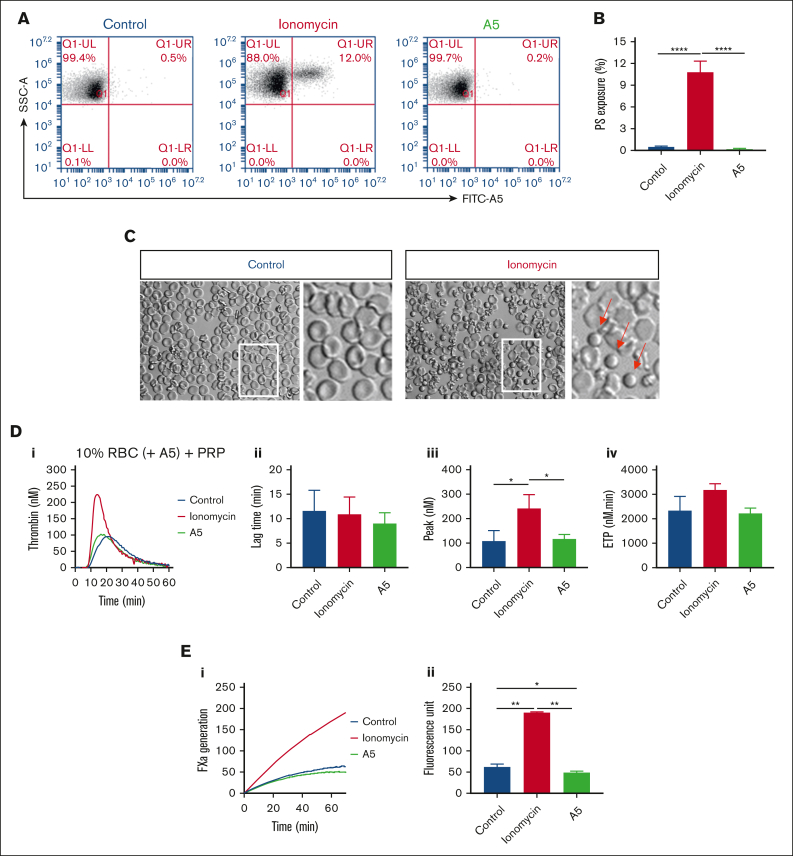
Red blood cells (RBCs) and platelets contribute to the coagulation capacity in bleeding and thrombotic disorders. The thrombin generation (TG) process is considered to reflect the interactions between plasma coagulation and the various blood cells. Using a new high-throughput method capturing the complete TG curve, we were able to compare TG in whole blood and autologous platelet-rich and platelet-poor plasma to redefine the blood cell contributions to the clotting process. We report a faster and initially higher generation of thrombin and shorter coagulation time in whole blood than in platelet-rich plasma upon low concentrations of coagulant triggers, including tissue factor, Russell viper venom factor X, factor Xa, factor XIa, and thrombin. The TG was accelerated with increased hematocrit and delayed after prior treatment of RBC with phosphatidylserine-blocking annexin A5. RBC treatment with ionomycin increased phosphatidylserine exposure, confirmed by flow cytometry, and increased the TG process. In reconstituted blood samples, the prior selective blockage of phosphatidylserine on RBC with annexin A5 enhanced glycoprotein VI-induced platelet procoagulant activity. For patients with anemia or erythrocytosis, cluster analysis revealed high or low whole-blood TG profiles in specific cases of anemia. The TG profiles lowered upon annexin A5 addition in the presence of RBCs and thus were determined by the extent of phosphatidylserine exposure of blood cells. Profiles for patients with polycythemia vera undergoing treatment were similar to that of control subjects. We concluded that RBC and platelets, in a phosphatidylserine-dependent way, contribute to the TG process. Determination of the whole-blood hypo- or hyper-coagulant activity may help to characterize a bleeding or thrombosis risk.
红细胞 (RBC) 和血小板有助于出血和血栓形成障碍中的凝血能力。凝血酶生成 (TG) 过程被认为反映了血浆凝血和各种血细胞之间的相互作用。使用一种新的高通量方法捕捉完整的 TG 曲线,我们能够比较全血和自体富血小板和血小板贫血浆中的 TG,以重新定义血细胞对凝血过程的贡献。我们报告说,在低浓度的凝血触发物(包括组织因子、响尾蛇毒因子 X、因子 Xa、因子 XIa 和凝血酶)下,全血中的 TG 生成更快且最初更高,凝血时间更短,而富血小板血浆中的 TG 生成较慢且凝血时间较长。当红细胞比容增加时,TG 会加速,并且在用磷脂酰丝氨酸阻断 annexin A5 预处理 RBC 后会延迟。用离子霉素处理 RBC 会增加磷脂酰丝氨酸的暴露,通过流式细胞术证实,并增加 TG 过程。在重建的血样中,用 annexin A5 对 RBC 进行选择性的磷脂酰丝氨酸阻断会增强糖蛋白 VI 诱导的血小板促凝活性。对于贫血或红细胞增多症患者,聚类分析显示在特定的贫血病例中存在高或低的全血 TG 谱。在 RBC 存在的情况下添加 annexin A5 会降低 TG 谱,因此 TG 谱由血细胞中磷脂酰丝氨酸暴露的程度决定。正在接受治疗的真性红细胞增多症患者的 TG 谱与对照受试者相似。我们得出结论,红细胞和血小板以磷脂酰丝氨酸依赖的方式有助于 TG 过程。确定全血低凝或高凝活性可能有助于表征出血或血栓形成风险。