Universidad de Concepción, Facultad de Medicina, Departamento de Medicina, Concepción, Chile.
Hospital Guillermo Grant Benavente, Servicio de Hematología, Concepción, Chile.
Colomb Med (Cali). 2023 Jun 28;54(2):e2005494. doi: 10.25100/cm.v54i2.5494. eCollection 2023 Apr-Jun.
Megaloblastic anemias secondary to Vitamin B12 deficiency are a group of pathologies produced by defective nuclear DNA synthesis.
To describe the maturation alterations found in hematopoietic precursors of the bone marrow in a series of patients with megaloblastic anemia.
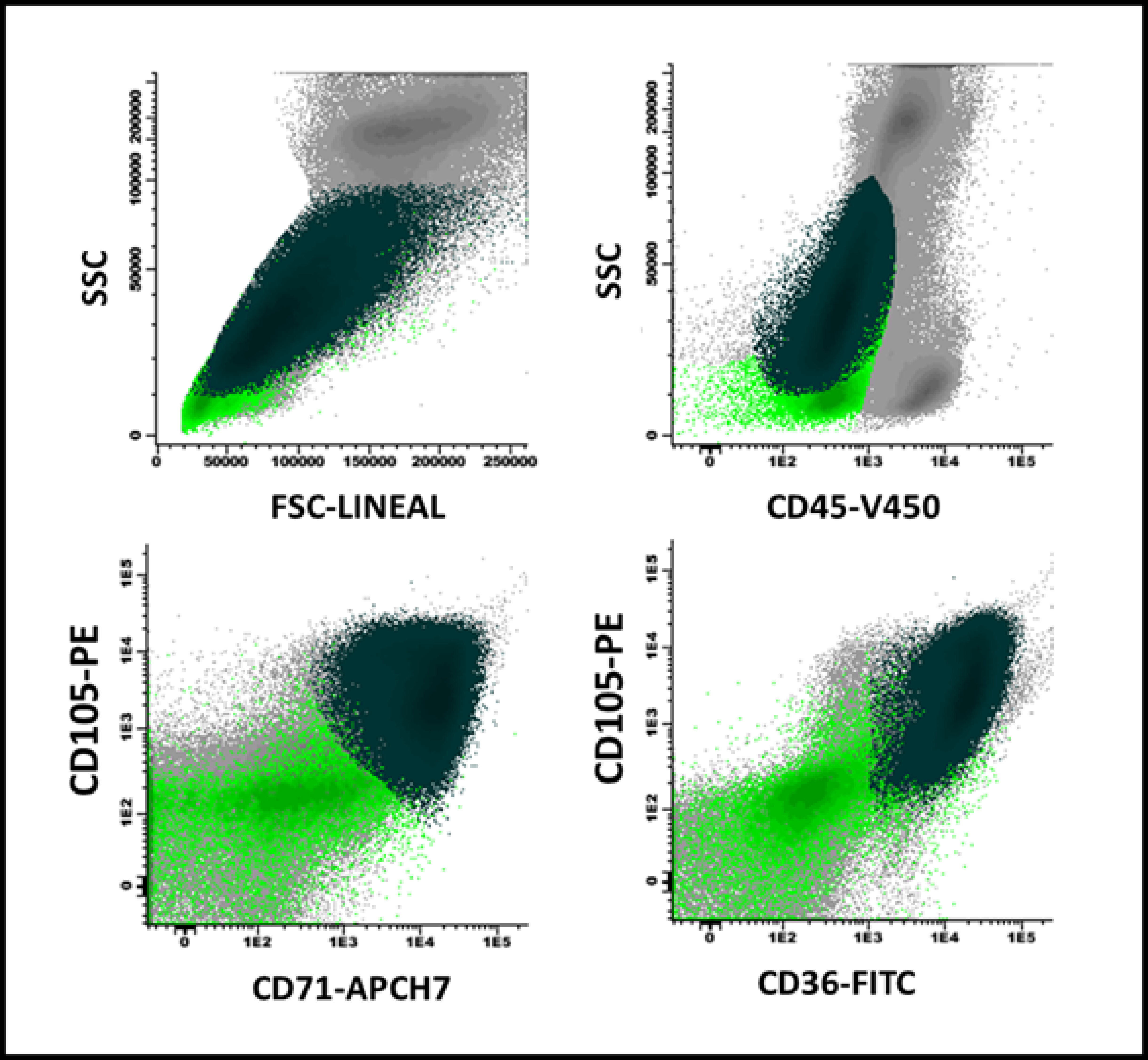
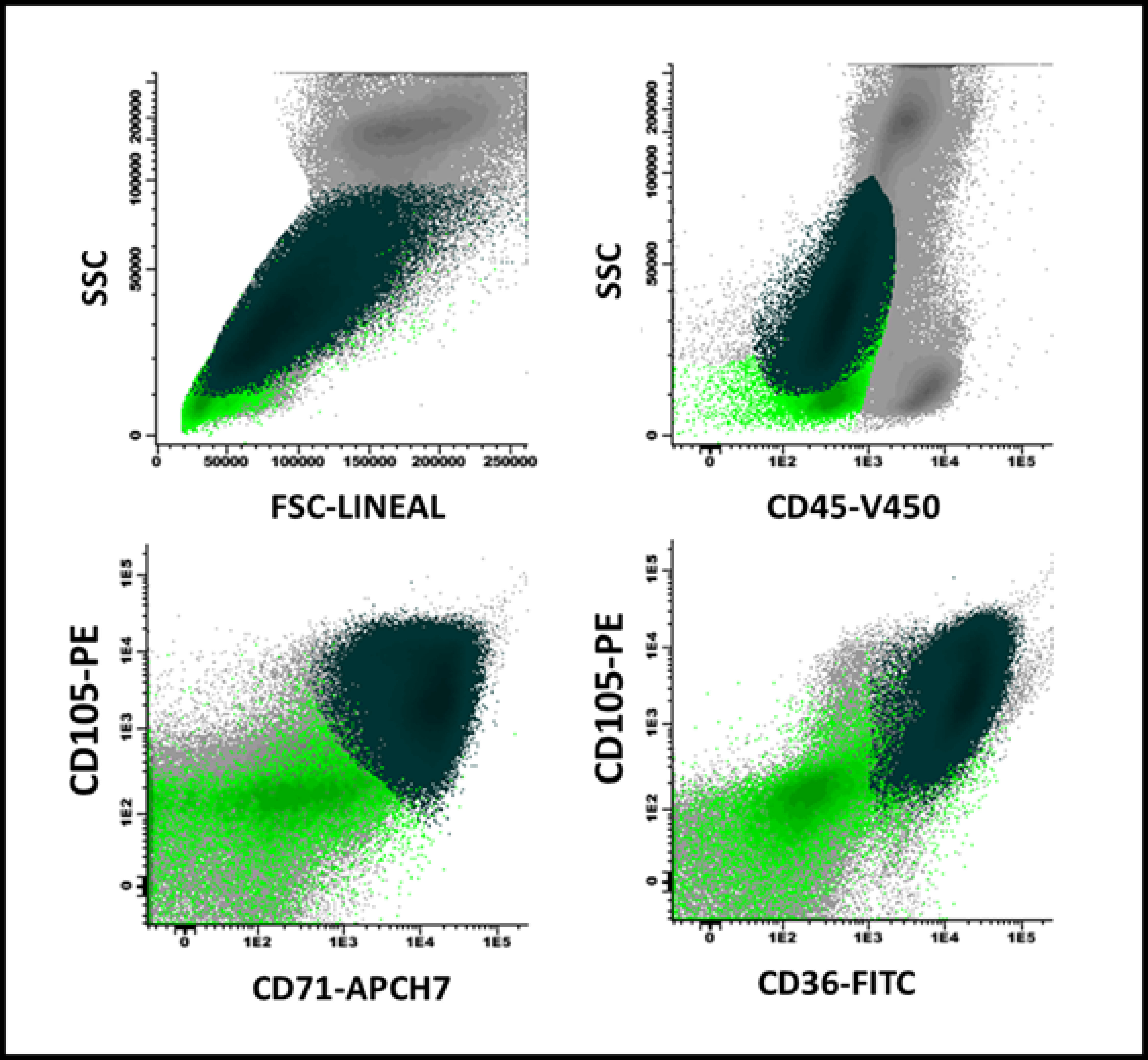
Were included patients attended at the Regional Hospital of Concepción with bone marrow samples sent for the study of cytopenia by flow cytometry whose final diagnosis was megaloblastic anemia. The immunophenotype was performed with CD45, CD34, CD117, HLA-DR, markers of neutrophil (CD13, CD11b, CD10, CD16) and/or erythroblast (CD105, CD71, CD36) maturation.
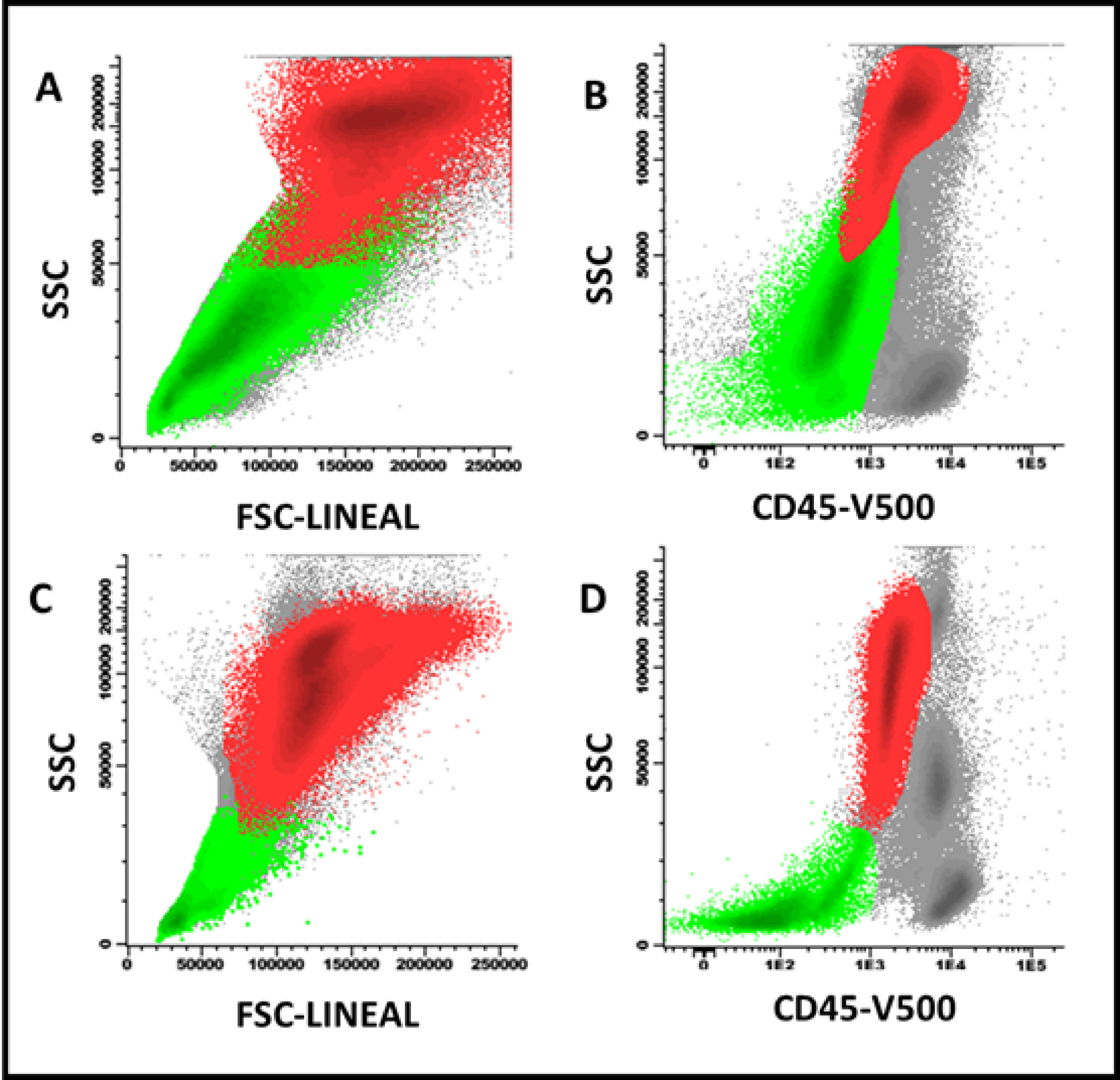
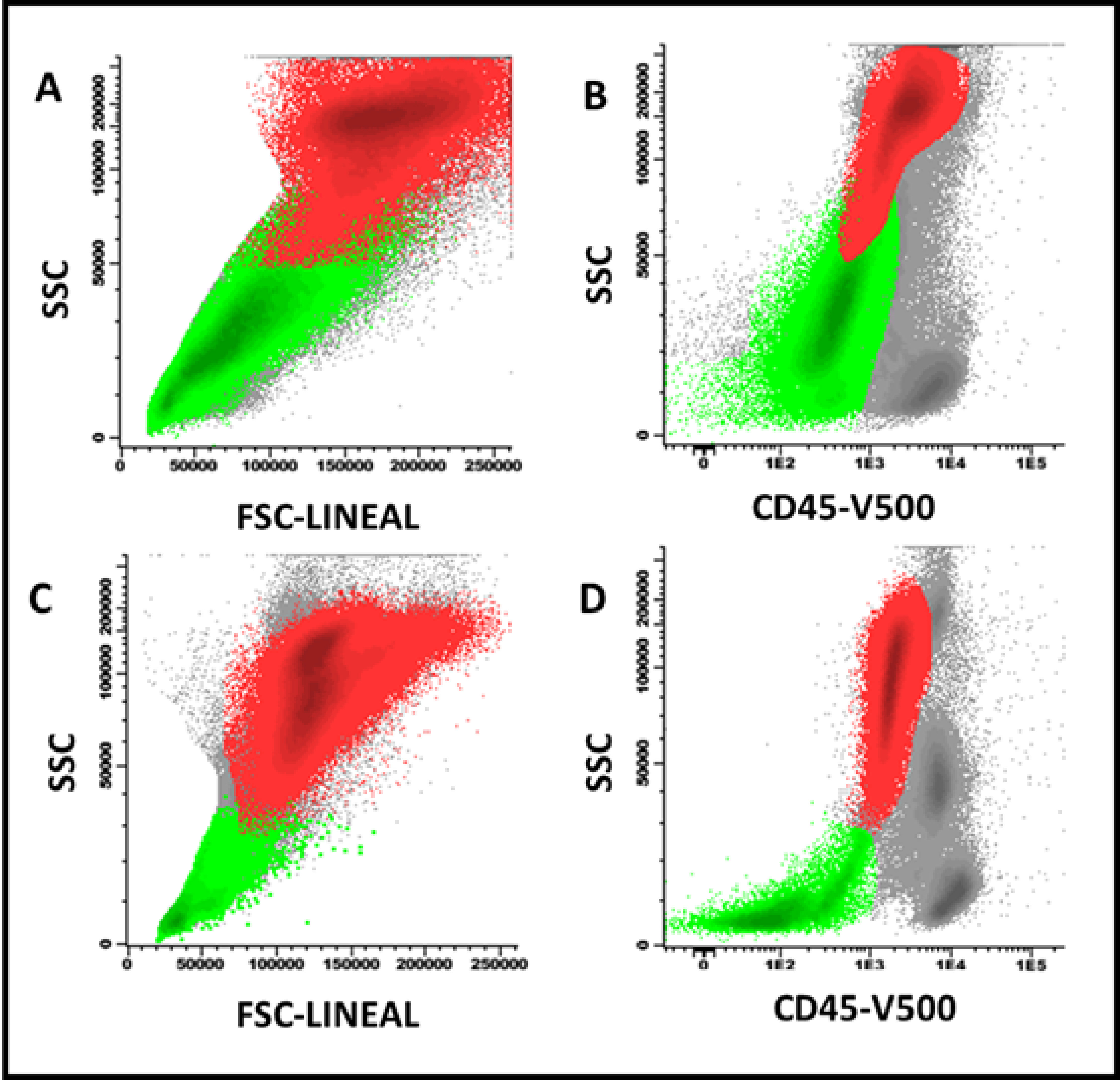
From the flow cytometry laboratory database, 8 patients with megaloblastic anemia were identified, and myelodysplastic syndromes (n=9) and normal or reactive bone marrow (n=10) were used as controls. 44% were men, with a median age of 58 years. Megaloblastic anemia was associated with a higher proportion of size and complexity of erythroid and myeloid progenitors compared to lymphocytes compared to controls. The total percentage of erythroblasts and the proportion of CD34+ myeloid cells associated with erythroid lineage was higher in megaloblastic anemia, associated with a maturation arrest in the CD105+ precursor stage (69% vs 19% and 23%, <0.001). The heterogeneity of CD36 and CD71 in megaloblastic anemia was similar to myelodysplastic syndromes.
Megaloblastic anemia produces a heterogeneous involvement of hematopoiesis, characterized by a greater size and cellular complexity of precursors of the neutrophil and erythroid series and a maturation arrest of the erythroblasts.
由于维生素 B12 缺乏导致的巨幼细胞性贫血是一组由于核 DNA 合成缺陷引起的病理学。
描述一系列巨幼细胞性贫血患者骨髓造血前体细胞中发现的成熟改变。
纳入在康塞普西翁地区医院就诊的患者,这些患者的骨髓样本因流式细胞术检测细胞减少而送检,最终诊断为巨幼细胞性贫血。免疫表型采用 CD45、CD34、CD117、HLA-DR 进行检测,同时检测中性粒细胞(CD13、CD11b、CD10、CD16)和/或红系(CD105、CD71、CD36)成熟的标志物。
从流式细胞实验室数据库中确定了 8 例巨幼细胞性贫血患者,并将骨髓增生异常综合征(n=9)和正常或反应性骨髓(n=10)作为对照。44%为男性,中位年龄为 58 岁。与对照相比,巨幼细胞性贫血患者的红系和髓系前体细胞大小和复杂性比例更高,淋巴细胞比例较低。巨幼细胞性贫血患者的总红系百分比和与红系谱系相关的 CD34+髓系细胞比例较高,与 CD105+前体细胞阶段的成熟停滞相关(69%对 19%和 23%,<0.001)。巨幼细胞性贫血中 CD36 和 CD71 的异质性与骨髓增生异常综合征相似。
巨幼细胞性贫血导致造血的异质性受累,特征为中性粒细胞和红系系列前体细胞的大小和细胞复杂性增加,以及红系细胞的成熟停滞。