Martinez-Carrasco Alejandro, Real Raquel, Lawton Michael, Iwaki Hirotaka, Tan Manuela M X, Wu Lesley, Williams Nigel M, Carroll Camille, Hu Michele T M, Grosset Donald G, Hardy John, Ryten Mina, Foltynie Tom, Ben-Shlomo Yoav, Shoai Maryam, Morris Huw R
Department of Clinical and Movement Neurosciences, UCL Queen Square Institute of Neurology, University College London, London, UK.
UCL Movement Disorders Centre, University College London, London, UK.
NPJ Parkinsons Dis. 2023 Aug 31;9(1):128. doi: 10.1038/s41531-023-00573-2.
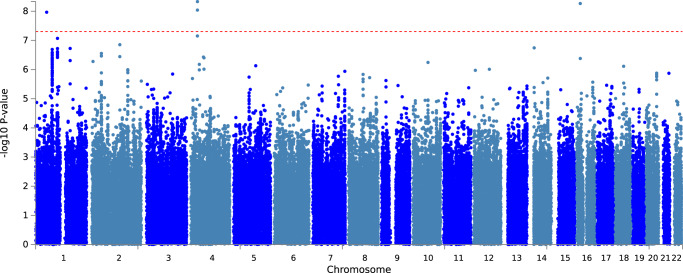
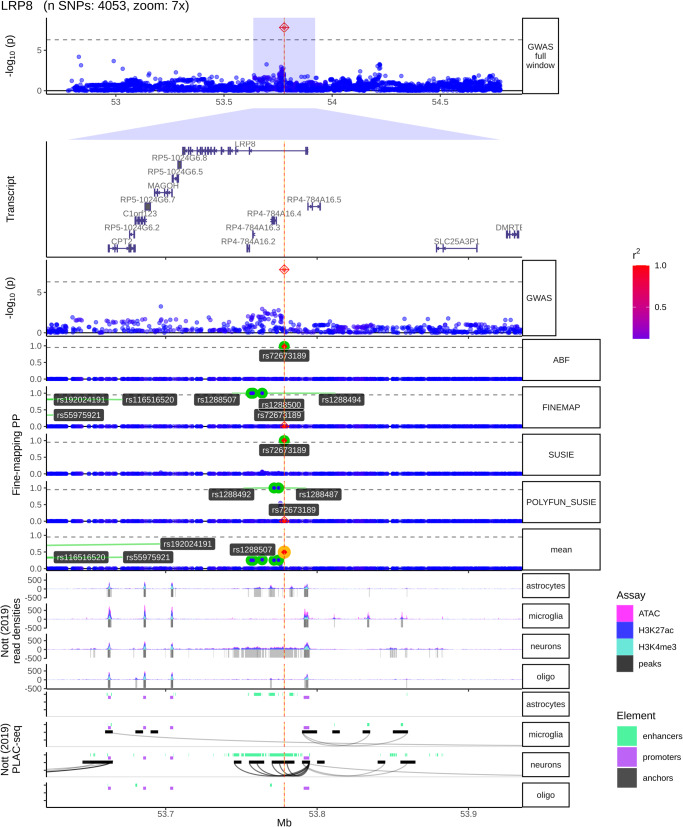
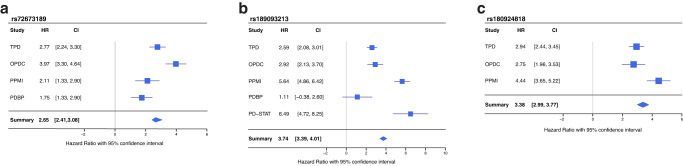
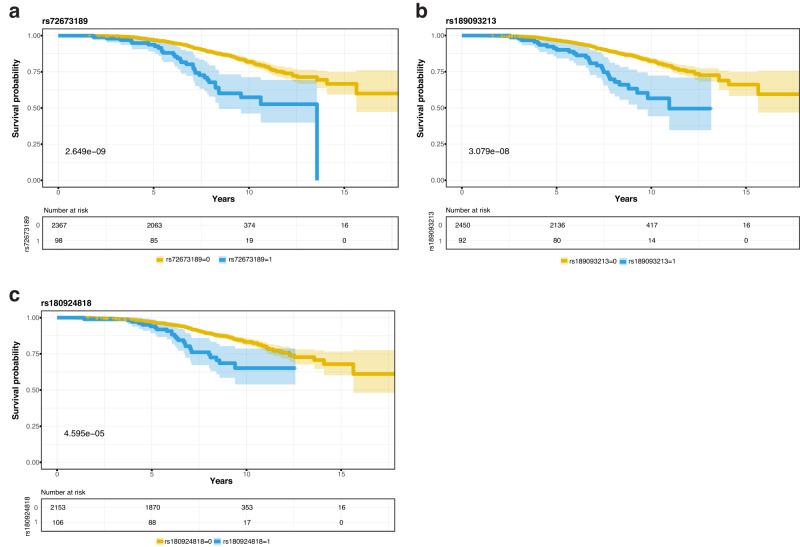
The genetic basis of levodopa-induced-dyskinesia (LiD) is poorly understood, and there have been few well-powered genome-wide studies. We performed a genome-wide survival meta-analyses to study the effect of genetic variation on the development of LiD in five separate longitudinal cohorts, and meta-analysed the results. We included 2784 PD patients, of whom 14.6% developed LiD. We found female sex (HR = 1.35, SE = 0.11, P = 0.007) and younger age at onset (HR = 1.8, SE = 0.14, P = 2 × 10) increased the probability of developing LiD. We identified three genetic loci significantly associated with time-to-LiD onset. rs72673189 on chromosome 1 (HR = 2.77, SE = 0.18, P = 1.53 × 10) located at the LRP8 locus, rs189093213 on chromosome 4 (HR = 3.06, SE = 0.19, P = 2.81 × 10) in the non-coding RNA LINC02353 locus, and rs180924818 on chromosome 16 (HR = 3.13, SE = 0.20, P = 6.27 × 10) in the XYLT1 locus. Based on a functional annotation analysis on chromosome 1, we determined that changes in DNAJB4 gene expression, close to LRP8, are an additional potential cause of increased susceptibility to LiD. Baseline anxiety status was significantly associated with LiD (OR = 1.14, SE = 0.03, P = 7.4 × 10). Finally, we performed a candidate variant analysis of previously reported loci, and found that genetic variability in ANKK1 (rs1800497, HR = 1.27, SE = 0.09, P = 8.89 × 10) and BDNF (rs6265, HR = 1.21, SE = 0.10, P = 4.95 × 10) loci were significantly associated with time to LiD in our large meta-analysis.
左旋多巴诱导的异动症(LiD)的遗传基础尚不清楚,且鲜有大规模的全基因组研究。我们进行了一项全基因组生存荟萃分析,以研究基因变异对五个独立纵向队列中LiD发生发展的影响,并对结果进行荟萃分析。我们纳入了2784例帕金森病患者,其中14.6%发生了LiD。我们发现女性(风险比[HR]=1.35,标准误[SE]=0.11,P=0.007)和发病年龄较轻(HR=1.8,SE=0.14,P=2×10)会增加发生LiD的概率。我们确定了三个与LiD发病时间显著相关的基因位点。位于第1号染色体上LRP8位点的rs72673189(HR=2.77,SE=0.18,P=1.53×10),位于非编码RNA LINC02353位点的第4号染色体上的rs189093213(HR=3.06,SE=0.19,P=2.81×10),以及位于XYLT1位点的第16号染色体上的rs180924818(HR=3.13,SE=0.20,P=6.27×10)。基于对第1号染色体的功能注释分析,我们确定靠近LRP8的DNAJB4基因表达变化是LiD易感性增加的另一个潜在原因。基线焦虑状态与LiD显著相关(比值比[OR]=1.14,SE=0.03,P=7.4×10)。最后,我们对先前报道的位点进行了候选变异分析,发现在我们的大型荟萃分析中,ANKK1(rs1800497,HR=1.27,SE=0.09,P=8.89×10)和BDNF(rs6265,HR=1.21,SE=0.10,P=4.95×10)位点的基因变异性与LiD发生时间显著相关。