Du Shu-Hao, Zhang Yong-Hui, Yang Qi-Hao, Wang Yu-Chen, Fang Yu, Wang Xue-Qiang
Department of Sport Rehabilitation, Shanghai University of Sport, Shanghai, China.
Department of Rehabilitation Medicine, Shanghai University of Medicine and Health Sciences Affiliated Zhoupu Hospital, Shanghai, China.
EFORT Open Rev. 2023 Sep 1;8(9):708-718. doi: 10.1530/EOR-23-0025.
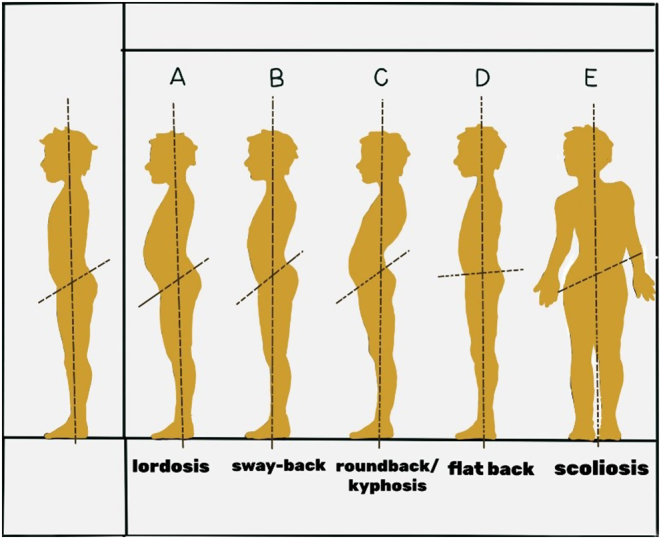
Postural assessment can help doctors and therapists identify risk factors for low back pain and determine appropriate follow-up treatment. Postural alignment is not perfectly symmetrical, and small asymmetries can instead represent norms and criteria for postural evaluation. It is necessary to comprehensively observe patients' posture in all directions and analyze the factors related to posture evaluation. The results of reliability show that in general intra-rater reliability is higher than inter-rater reliability, and inclinometers are being more reliable than other instrumentations. Some common postural problems can cause lumbar discomfort, and prolonged poor posture is a potential risk factor for lumbar spine injuries. On the basis of previous studies on posture evaluation, a unified standardized method for posture evaluation must be established in future research.
姿势评估可以帮助医生和治疗师识别腰痛的风险因素,并确定适当的后续治疗方案。姿势排列并非完全对称,相反,小的不对称可能代表姿势评估的规范和标准。有必要全面观察患者各个方向的姿势,并分析与姿势评估相关的因素。可靠性结果表明,一般来说,评估者内部的可靠性高于评估者之间的可靠性,并且倾角仪比其他仪器更可靠。一些常见的姿势问题会导致腰部不适,长期不良姿势是腰椎损伤的潜在风险因素。基于以往关于姿势评估的研究,未来的研究必须建立统一的标准化姿势评估方法。