Toida Kazuma, Kushida Wakana, Yamamoto Hiroki, Yamamoto Kyoka, Ishii Kaichi, Uesaka Kazuma, Kanaly Robert A, Kutsuna Shinsuke, Ihara Kunio, Fujita Yuichi, Iwasaki Hideo
Department of Electrical Engineering and Bioscience, Graduate School of Sciences and Engineering, TWIns, Waseda University , Tokyo, Japan.
Center for Gene Research, Nagoya University , Nagoya, Japan.
Microbiol Spectr. 2023 Sep 1;11(5):e0483722. doi: 10.1128/spectrum.04837-22.
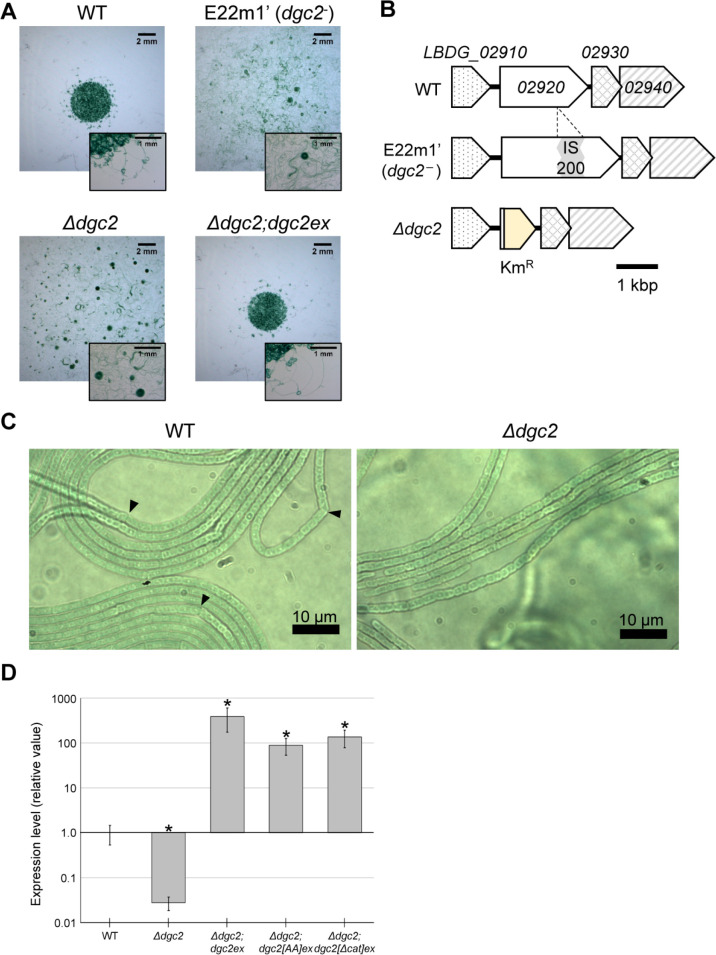
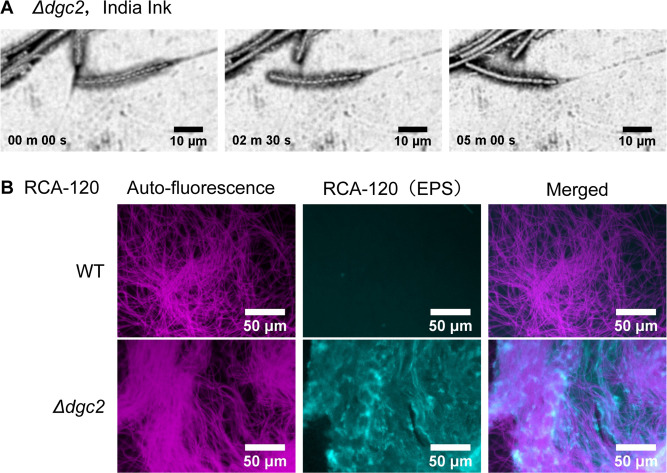
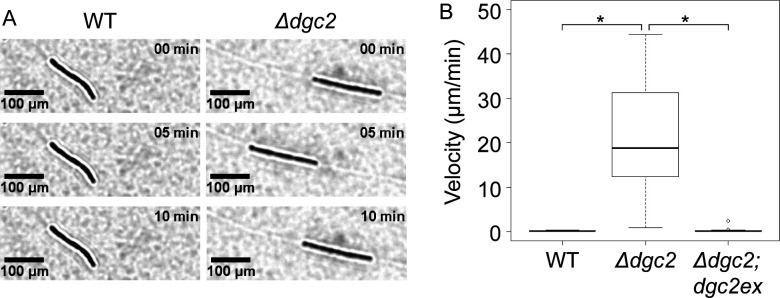
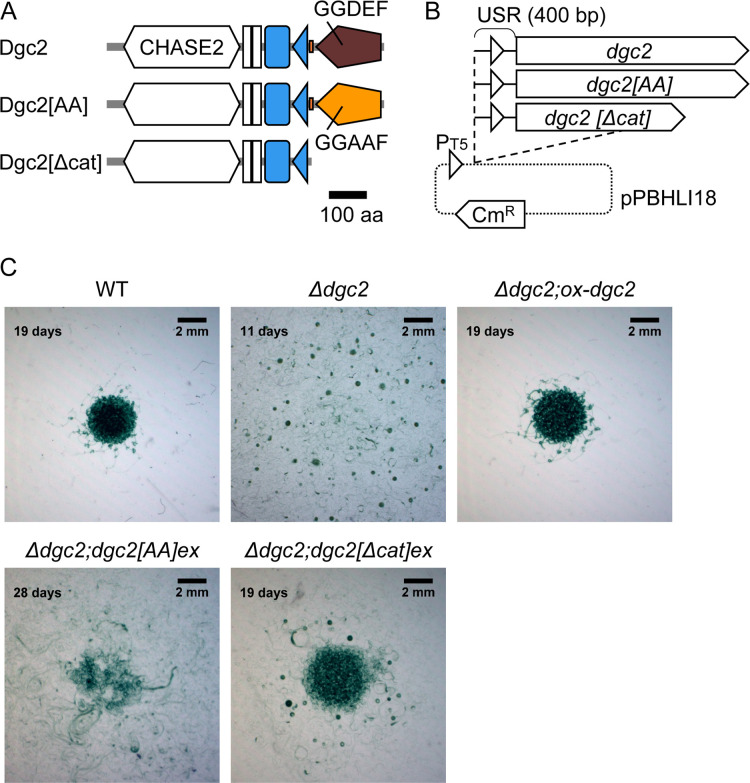
Colony pattern formations of bacteria with motility manifest complicated morphological self-organization phenomena. is a filamentous cyanobacterium, which has been used as a genetic model organism for studying metabolism including photosynthesis and nitrogen fixation. A widely used type strain [wild type (WT) in this article] of this species has not been reported to show any motile activity. However, we isolated a spontaneous mutant strain that shows active motility (gliding activity) to give rise to complicated colony patterns, including comet-like wandering clusters and disk-like rotating vortices on solid media. Whole-genome resequencing identified multiple mutations in the genome of the mutant strain. We confirmed that inactivation of the candidate gene () in the WT background was sufficient to give rise to motility and morphologically complex colony patterns. This gene encodes a protein containing the GGDEF motif which is conserved at the catalytic domain of diguanylate cyclase (DGC). Although DGC has been reported to be involved in biofilm formation, the mutant significantly facilitated biofilm formation, suggesting a role for the gene in suppressing both gliding motility and biofilm formation. Thus, is expected to be an excellent genetic model for studying dynamic colony pattern formation and to provide novel insights into the role of DGC family genes in biofilm formation. IMPORTANCE Self-propelled bacteria often exhibit complex collective behaviors, such as formation of dense-moving clusters, which are exemplified by wandering comet-like and rotating disk-like colonies; however, the molecular details of how these structures are formed are scant. We found that a strain of the filamentous cyanobacterium deficient in the GGDEF protein gene elicits motility and complex and dynamic colony pattern formation, including comet-like and disk-like clusters. Although c-di-GMP has been reported to activate biofilm formation in some bacterial species, disruption of unexpectedly enhanced it, suggesting a novel role for this GGDEF protein for inhibiting both colony pattern formation and biofilm formation.
具有运动性的细菌菌落模式形成表现出复杂的形态自组织现象。是一种丝状蓝细菌,已被用作研究包括光合作用和固氮在内的代谢的遗传模式生物。该物种广泛使用的模式菌株(本文中的野生型(WT))尚未报道有任何运动活性。然而,我们分离出了一种自发突变菌株,该菌株表现出活跃的运动性(滑行活性),在固体培养基上产生复杂的菌落模式,包括彗星状的游动簇和盘状的旋转涡旋。全基因组重测序确定了突变菌株基因组中的多个突变。我们证实,在WT背景下候选基因()的失活足以产生运动性和形态复杂的菌落模式。该基因编码一种含有GGDEF基序 的蛋白质,该基序在二鸟苷酸环化酶(DGC)的催化结构域中保守。尽管据报道DGC参与生物膜形成,但突变体显著促进了生物膜形成,表明基因在抑制滑行运动性和生物膜形成方面的作用。因此,有望成为研究动态菌落模式形成的优秀遗传模型,并为DGC家族基因在生物膜形成中的作用提供新的见解。重要性 自推进细菌通常表现出复杂的集体行为,例如形成密集移动的簇,以彗星状游动和盘状旋转菌落为例;然而,这些结构如何形成的分子细节却很少。我们发现,一种缺乏GGDEF蛋白基因的丝状蓝细菌菌株引发运动性以及复杂和动态的菌落模式形成,包括彗星状和盘状簇。尽管据报道c-di-GMP在一些细菌物种中激活生物膜形成,但的破坏意外地增强了它,表明这种GGDEF蛋白在抑制菌落模式形成和生物膜形成方面有新的作用。