Song Jingyi, Duivenvoorde Loes P M, Grefte Sander, Kuda Ondrej, Martínez-Ramírez Felipe, van der Stelt Inge, Mastorakou Dimitra, van Schothorst Evert M, Keijer Jaap
Human and Animal Physiology, Wageningen University, Wageningen, The Netherlands.
Laboratory of Metabolism of Bioactive Lipids, Institute of Physiology, Czech Academy of Sciences, 14220, Prague 4, Czech Republic.
Pflugers Arch. 2023 Nov;475(11):1265-1281. doi: 10.1007/s00424-023-02854-4. Epub 2023 Sep 1.
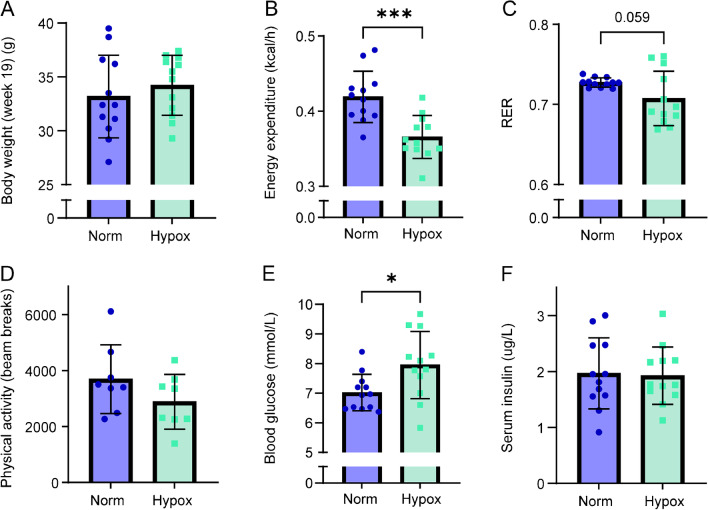
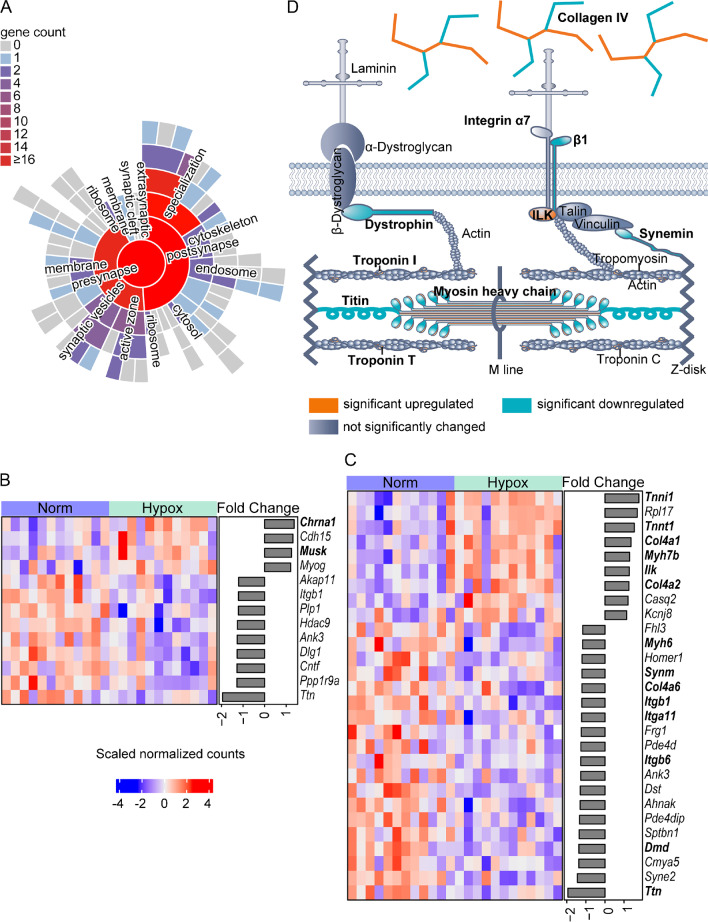
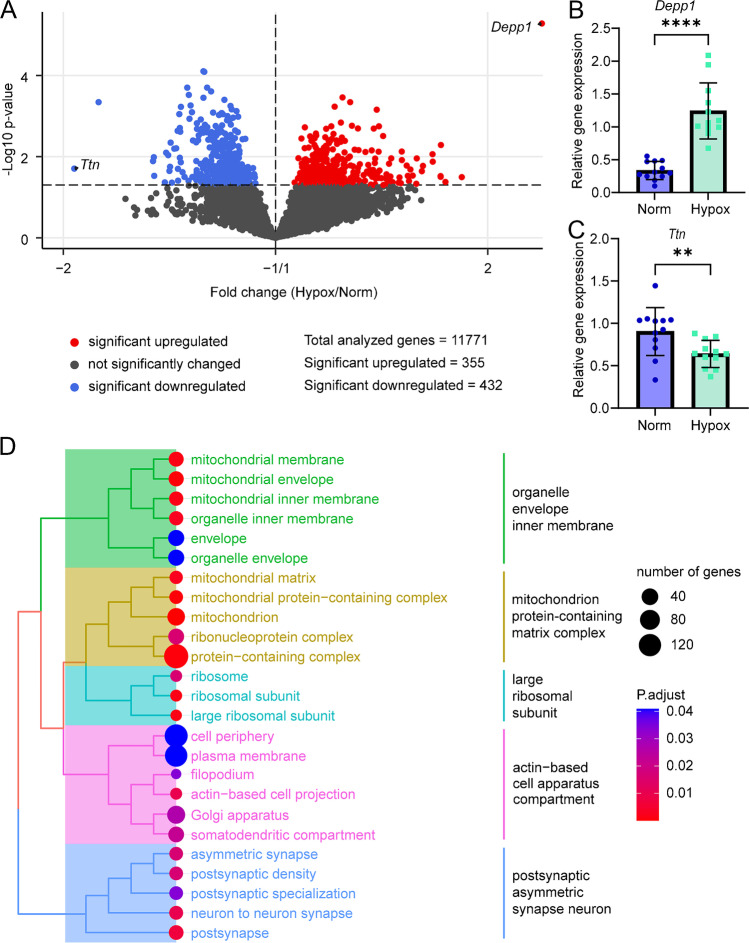
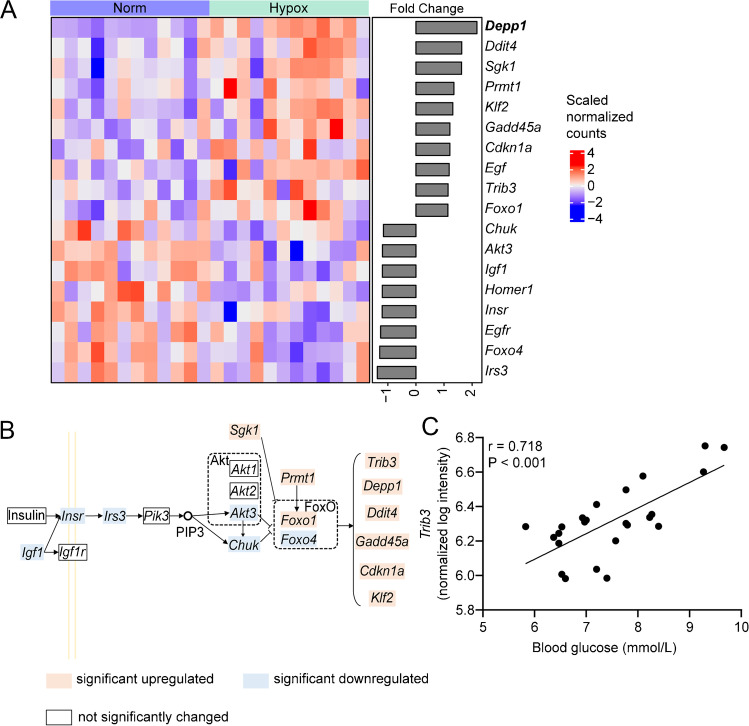
Skeletal muscle relies on mitochondria for sustainable ATP production, which may be impacted by reduced oxygen availability (hypoxia). Compared with long-term hypoxia, the mechanistic in vivo response to acute hypoxia remains elusive. Therefore, we aimed to provide an integrated description of the Musculus gastrocnemius response to acute hypoxia. Fasted male C57BL/6JOlaHsd mice, fed a 40en% fat diet for six weeks, were exposed to 12% O normobaric hypoxia or normoxia (20.9% O) for six hours (n = 12 per group). Whole-body energy metabolism and the transcriptome response of the M. gastrocnemius were analyzed and confirmed by acylcarnitine determination and Q-PCR. At the whole-body level, six hours of hypoxia reduced energy expenditure, increased blood glucose and tended to decreased the respiratory exchange ratio (RER). Whole-genome transcriptome analysis revealed upregulation of forkhead box-O (FOXO) signalling, including an increased expression of tribbles pseudokinase 3 (Trib3). Trib3 positively correlated with blood glucose levels. Upregulated carnitine palmitoyltransferase 1A negatively correlated with the RER, but the significantly increased in tissue C14-1, C16-0 and C18-1 acylcarnitines supported that β-oxidation was not regulated. The hypoxia-induced FOXO activation could also be connected to altered gene expression related to fiber-type switching, extracellular matrix remodeling, muscle differentiation and neuromuscular junction denervation. Our results suggest that a six-hour exposure of obese mice to 12% O normobaric hypoxia impacts M. gastrocnemius via FOXO1, initiating alterations that may contribute to muscle remodeling of which denervation is novel and warrants further investigation. The findings support an early role of hypoxia in tissue alterations in hypoxia-associated conditions such as aging and obesity.
骨骼肌依靠线粒体来持续产生三磷酸腺苷(ATP),而这一过程可能会受到氧供应减少(缺氧)的影响。与长期缺氧相比,机体对急性缺氧的体内反应机制仍不清楚。因此,我们旨在全面描述腓肠肌对急性缺氧的反应。将禁食的雄性C57BL/6JOlaHsd小鼠喂食40%脂肪含量的饮食六周后,使其暴露于12%氧气的常压缺氧环境或常氧环境(20.9%氧气)中6小时(每组n = 12)。通过酰基肉碱测定和定量聚合酶链反应(Q-PCR)分析并确认了全身能量代谢和腓肠肌的转录组反应。在全身水平上,6小时的缺氧降低了能量消耗,升高了血糖,并使呼吸交换率(RER)有下降趋势。全基因组转录组分析显示叉头框-O(FOXO)信号上调,包括TRIB3假激酶3(Trib3)的表达增加。Trib3与血糖水平呈正相关。肉碱棕榈酰转移酶1A上调与RER呈负相关,但组织中C14-1、C16-0和C18-1酰基肉碱显著增加表明β-氧化未受调节。缺氧诱导的FOXO激活也可能与纤维类型转换、细胞外基质重塑、肌肉分化和神经肌肉接头去神经支配相关的基因表达改变有关。我们的结果表明,肥胖小鼠暴露于12%氧气的常压缺氧环境6小时会通过FOXO1影响腓肠肌,引发可能有助于肌肉重塑的改变,其中去神经支配是新发现且值得进一步研究。这些发现支持了缺氧在衰老和肥胖等缺氧相关疾病的组织改变中的早期作用。