Industrial and Management Systems Engineering, Benjamin M. Statler College of Engineering and Mineral Resources, West Virginia University, Morgantown, West Virginia, United States of America.
PLoS One. 2023 Sep 1;18(9):e0291064. doi: 10.1371/journal.pone.0291064. eCollection 2023.
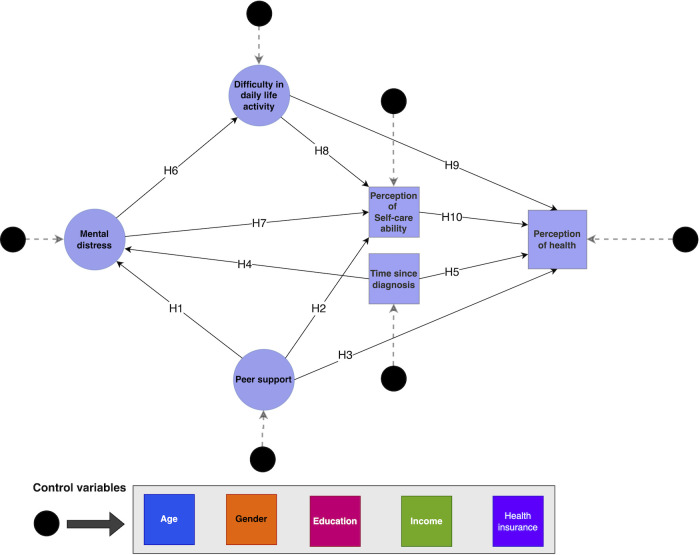
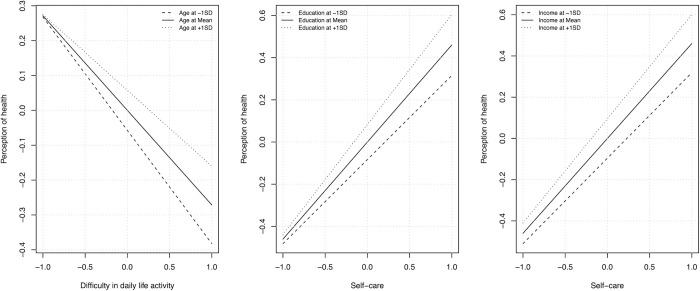
This study investigates the complex interrelationships between peer support, mental distress, self-care abilities, health perceptions, and daily life activities among cancer patients and survivors while considering the evolving nature of these experiences over time. A cross-sectional survey design is employed, utilizing de-identified data from the National Cancer Institute's 2022 nationally representative dataset, which comprises responses from 1234 participants, including 134 newly diagnosed patients undergoing cancer treatment. Partial least squares structural equation modeling is employed for data analysis. The results reveal that peer support significantly reduces mental distress and positively influences the perception of self-care abilities and health perceptions among cancer patients and survivors. Additionally, the study finds that mental distress negatively affects daily life activities and self-care abilities. This means that when cancer patients and survivors experience high levels of mental distress, they may struggle with everyday tasks and find it challenging to care for themselves effectively. The research also shows that mental distress tends to decrease as time passes since diagnosis and health perceptions improve, highlighting the resilience of cancer patients and survivors over time. Furthermore, the study uncovers significant moderating effects of age, education, and income on the relationships between daily life activity difficulties, perception of self-care ability, and perception of health. In conclusion, this research provides a comprehensive understanding of the intricate associations between the variables of interest among cancer patients and survivors. The findings underscore the importance of peer support and targeted interventions for promoting well-being, resilience, and quality of life in this population, offering valuable insights for healthcare providers, researchers, and policymakers. Identifying moderating effects further emphasizes the need to consider individual differences when designing and implementing support systems and interventions tailored to the unique needs of cancer patients and survivors.
本研究调查了癌症患者和幸存者之间同伴支持、精神困扰、自我护理能力、健康感知和日常生活活动之间的复杂相互关系,同时考虑了这些经验随时间的演变性质。采用横断面调查设计,利用美国国立癌症研究所 2022 年全国代表性数据集的匿名数据,该数据集包含 1234 名参与者的回复,其中包括 134 名正在接受癌症治疗的新诊断患者。使用偏最小二乘结构方程模型进行数据分析。结果表明,同伴支持显著降低了精神困扰,并积极影响了癌症患者和幸存者对自我护理能力和健康感知的看法。此外,研究发现精神困扰会对日常生活活动和自我护理能力产生负面影响。这意味着当癌症患者和幸存者经历高水平的精神困扰时,他们可能会在日常生活任务中挣扎,并发现难以有效地照顾自己。研究还表明,随着时间的推移,自诊断以来,精神困扰会减少,健康感知会改善,这突显了癌症患者和幸存者随时间推移的恢复力。此外,该研究揭示了年龄、教育和收入对日常生活活动困难、自我护理能力感知和健康感知之间关系的显著调节作用。总之,本研究提供了对癌症患者和幸存者中感兴趣变量之间复杂关联的全面理解。研究结果强调了同伴支持和有针对性的干预措施对于促进该人群的幸福感、恢复力和生活质量的重要性,为医疗保健提供者、研究人员和政策制定者提供了有价值的见解。确定调节作用进一步强调了在设计和实施支持系统和干预措施时,需要考虑个体差异,以满足癌症患者和幸存者的独特需求。