Zekai Tahir Burak Women's Health Research and Education Hospital, Obstetrics and Gynecology, Ankara, Turkey.
Medicine (Baltimore). 2023 Sep 1;102(35):e34754. doi: 10.1097/MD.0000000000034754.
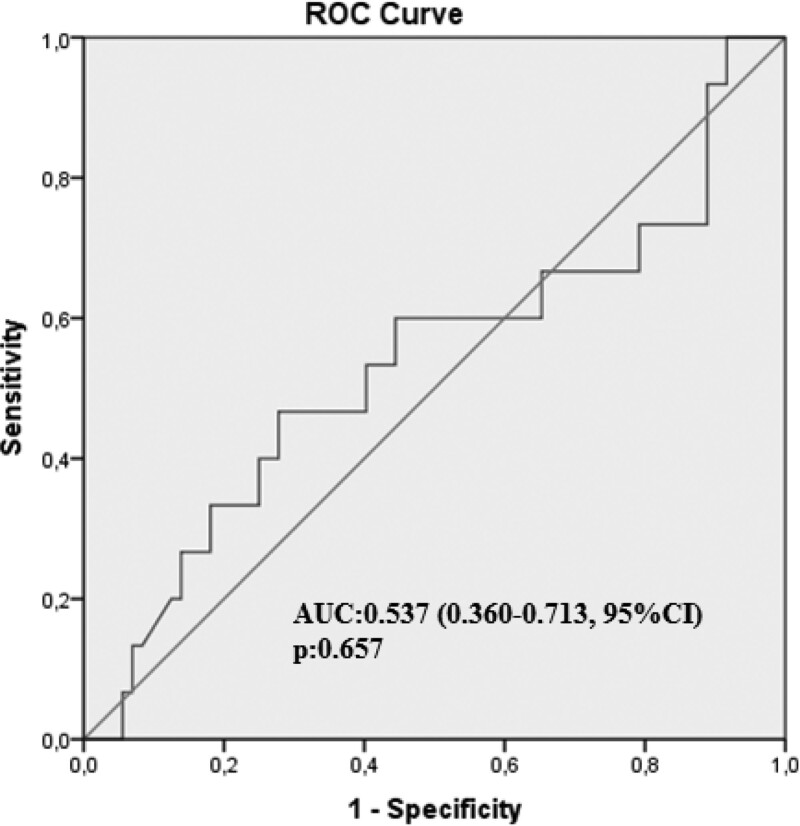
This study aimed to determine whether serum mid-luteal progesterone (MLP) levels measured in the current treatment cycles of infertile women undergoing controlled ovarian hyperstimulation and intrauterine insemination following the sequential use of clomiphene citrate and gonadotropin may predict pregnancy. A total of 107 consecutive anovulatory women were included in this prospective cohort study. Patients with other causes of infertility were also excluded from the study. None of the patients received progesterone treatment for luteal phase support. The data recorded for each woman included age, body mass index, infertility type and duration, basal hormone levels, and previous and current cycle characteristics with MLP levels. Ovulation was confirmed using MLP and sonographic evaluation in all patients. An MLP level of > 3 ng/mL was regarded as a sign of ovulation. After treatment, the patients were divided into 2 groups according to the presence or absence of pregnancy, and the obtained data were compared between the groups. There were no significant differences in age, body mass index, or basal hormone levels between the 2 groups (all P > .05). However, the duration of infertility was significantly shorter in the pregnancy group (P = .003). The anovulation rate in this cohort was 18.7% (n = 20). A total of 15 (14%) were examined. MLP levels were 25.1 ± 13.8 ng/mL and 18.3 ± 14.5 ng/mL in the pregnant and nonpregnant groups, respectively (P:.089). Based on the receiver operating characteristic curve analysis, it was determined that there was no predictive value of the mid-luteal phase progesterone level for pregnancy in patients in whom ovulation was detected. Mid-luteal serum progesterone levels did not predict pregnancy in infertile women who underwent controlled ovarian hyperstimulation with sequential clomiphene citrate plus gonadotropin treatment and intrauterine insemination.
本研究旨在确定在接受枸橼酸氯米酚和促性腺激素序贯治疗后进行控制性卵巢超刺激和宫腔内人工授精的不孕女性当前治疗周期中测量的血清中黄体中期孕激素(MLP)水平是否可以预测妊娠。这项前瞻性队列研究共纳入了 107 名连续的排卵障碍女性。研究还排除了因其他原因导致不孕的患者。没有患者接受孕激素治疗黄体期支持。每位女性的记录数据包括年龄、体重指数、不孕类型和持续时间、基础激素水平以及当前周期的特征和 MLP 水平。所有患者均通过 MLP 和超声评估确认排卵。血清 MLP 水平>3ng/ml 被认为是排卵的标志。治疗后,根据是否妊娠将患者分为两组,并对两组之间的数据进行比较。两组之间的年龄、体重指数或基础激素水平无显著差异(均 P>.05)。然而,妊娠组的不孕持续时间明显较短(P =.003)。本队列的排卵障碍率为 18.7%(n = 20)。共检查了 15 例(14%)。妊娠组和未妊娠组的 MLP 水平分别为 25.1±13.8ng/ml 和 18.3±14.5ng/ml(P:.089)。根据受试者工作特征曲线分析,确定在检测到排卵的患者中,黄体中期孕激素水平对妊娠无预测价值。在接受枸橼酸氯米酚和促性腺激素序贯治疗后进行控制性卵巢超刺激和宫腔内人工授精的不孕女性中,黄体中期血清孕激素水平不能预测妊娠。